What if you could retire near Florida’s Gulf Coast without paying a landlord hundreds of dollars every month just to keep your home on its lot?
It sounds almost too good to be true.
Especially when you look at how expensive retirement has become in many parts of Florida.
But tucked away in Palm Harbor is a 55-and-older manufactured home community with a different approach to housing.
It’s called Westwind I Resident Owned Community.
And one of the most interesting things about it isn’t the palm trees, nearby beaches, or sunny Florida weather.
It’s the ownership structure.
Instead of a traditional mobile home park owned by an outside landlord, Westwind I is described as a resident-owned community.
An article published in September 2026 even claimed that monthly lot fees could be as low as about $160.
That’s an eye-catching number.
But before anyone starts packing boxes, there’s an important detail to understand.
That figure has not been independently confirmed as the community’s current monthly charge, and it would not represent the full cost of owning and living in a home.
Still, the idea behind Westwind I is worth exploring.
Here’s what makes this Florida community different, why its location appeals to retirees, and what you should check before considering a move.
Where Is Westwind I in Florida?
Westwind I is located in Palm Harbor, an unincorporated community in Pinellas County on Florida’s Gulf Coast.
The address provided for the community is:
3301 Alternate U.S. Highway 19, Palm Harbor, FL 34683
Palm Harbor sits between Dunedin and Tarpon Springs, northwest of Tampa.
That location puts residents near some of the Tampa Bay area’s most popular coastal destinations.
You can spend a morning exploring downtown Dunedin.
Head north to the Greek restaurants and sponge docks of Tarpon Springs.
Or plan a beach day at Honeymoon Island State Park.
For retirees who want a quieter residential setting while remaining close to shopping, restaurants, medical services, and outdoor recreation, Palm Harbor is an appealing place to consider.
And unlike a vacation destination where everything revolves around tourists, Palm Harbor is also a year-round residential community.
What Makes Westwind I Different?
The key feature is its resident-owned model.
In a traditional manufactured home park, a company or individual owns the land.
Residents may own their homes but pay rent for the lots beneath them.
That creates a financial concern.
Even after paying off the home, a homeowner may still face increases in lot rent.
A resident-owned community can work differently.
In a cooperative-style arrangement, homeowners generally hold ownership interests in an association that owns the community property.
That gives residents a role in governing the community through its rules, elected leadership, and voting procedures.
It’s an important distinction.
Resident-owned does not necessarily mean every homeowner individually owns the exact parcel of land beneath their home.
The ownership rights depend on the community’s legal documents.
In Florida, cooperative ownership arrangements are addressed under Chapter 719 of the Florida Statutes.
For buyers, that means the association documents matter just as much as the home itself.
Does It Really Cost Only $160 a Month?
This is the claim that makes Westwind I stand out.
A September 2026 article reported that lot fees could run as low as approximately $160 per month.
If accurate for a particular home or ownership arrangement, that would be a notably low recurring charge for a Gulf Coast retirement community.
But there are two reasons to be careful.
First, I could not independently confirm that $160 is the current fee for new buyers in October 2026.
Second, even a low monthly community fee is only one part of the housing budget.
A buyer may also need to pay for:
- The purchase price of the manufactured home
- Any required cooperative share or ownership interest
- Property taxes or other applicable assessments
- Homeowners insurance and windstorm coverage
- Utilities, internet, and maintenance
- Repairs and possible special assessments
Some expenses may be included in an association fee, while others may be billed separately.
That’s why the most useful question isn’t simply, “Is the monthly fee $160?”
It’s this:
“What would my complete monthly and annual housing costs be if I bought a home here today?”
Ask for the current written fee schedule and a full breakdown before making a financial decision.
Why Resident-Owned Communities Appeal to Retirees
For many retirees, predictable housing costs matter more than having the biggest house.
That’s especially true for people living on Social Security, pensions, retirement savings, or other fixed sources of income.
A resident-owned community can offer several potential advantages.
Residents Have a Voice
In a cooperative arrangement, members generally have voting rights and participate in decisions through the association.
That can give homeowners more influence over community management than they would have in a conventional landlord-owned park.
Money Goes Toward Community Expenses
Monthly assessments may help pay for shared maintenance, operations, insurance, and other association obligations.
Residents can review how those funds are managed under the association’s governing rules.
There May Be More Stability
Collective ownership can reduce the risk of an outside park owner selling the property and changing its business strategy.
But it doesn’t eliminate financial risk.
Fees can still rise when expenses increase.
Associations may also need to collect special assessments for major repairs or unexpected costs.
Resident ownership is a different model, not a promise that monthly charges will never change.
What Is Life Like in Palm Harbor?
The location is one of Westwind I’s strongest selling points.
Palm Harbor offers access to beaches, waterfront parks, walking trails, shopping, and the wider Tampa Bay area.
And you don’t need to travel far to find something enjoyable to do.
✅ Honeymoon Island State Park
One of the best-known nearby destinations is Honeymoon Island State Park.
Located off Dunedin, the park is popular for its Gulf beaches, nature trails, birdwatching, and coastal scenery.
It’s the kind of place where you can spend a peaceful morning walking beside the water.
Or simply bring a chair and enjoy the view.
✅ Downtown Dunedin
Dunedin is known for its walkable downtown, local restaurants, independent businesses, and relaxed coastal atmosphere.
It’s a great option for an afternoon out without planning a major trip.
The city also connects to the Pinellas Trail, a popular route for walking and cycling.
✅ Tarpon Springs Sponge Docks
Head north and you’ll find one of Florida’s most distinctive waterfront districts.
Tarpon Springs is famous for its Greek heritage and historic sponge industry.
Visitors come for the restaurants, bakeries, shops, and waterfront atmosphere.
For anyone who enjoys exploring local history and food, it’s an easy addition to a weekend itinerary.
✅ Clearwater Beach
Clearwater Beach is another well-known Gulf Coast destination within driving distance of Palm Harbor.
Its wide sandy beach and sunset views make it a popular destination for both visitors and locals.
The trade-off is that the area can be busy, especially during peak tourism periods.
Still, having multiple coastal destinations nearby is a major attraction for people considering retirement in northern Pinellas County.
What About the Community Amenities?
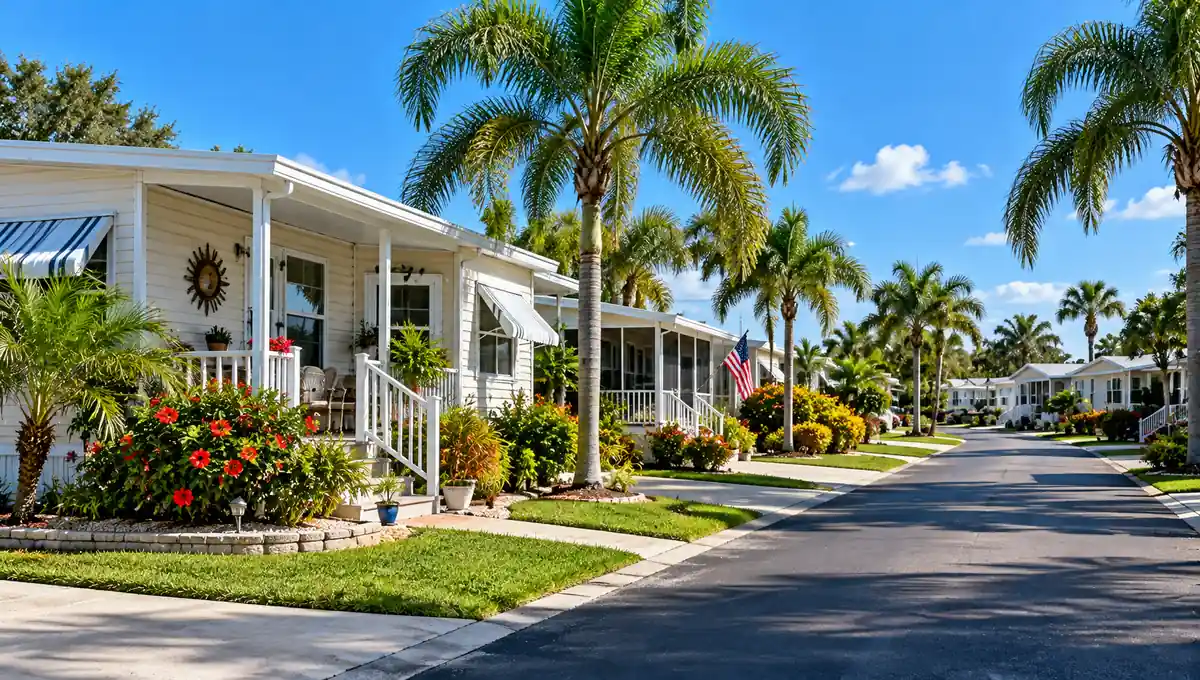
The original description of Westwind I mentions landscaped streets, manufactured homes with porches, and recreational facilities such as shuffleboard and bocce courts.
Those are features often associated with active-adult communities.
They can make daily life more enjoyable by giving residents places to spend time outdoors and socialize.
However, amenities can change over time.
Before buying, confirm which facilities are currently available, whether they’re included in regular fees, and whether any major renovations are planned.
It’s also worth asking about organized activities and community rules.
A retirement community should fit your lifestyle, not just your budget.
What Are the Downsides of Living Here?
Every retirement housing option has trade-offs.
And Palm Harbor is no exception.
✅ Hurricane and Flood Risks
Pinellas County is exposed to tropical storms, hurricanes, heavy rain, and coastal flooding.
Manufactured homes can face particular risks during severe wind events.
A buyer should check the property’s flood zone, evacuation zone, home construction standards, and insurance availability.
The home’s age and installation details also matter.
✅ Insurance Costs
Florida insurance expenses can be significant.
The cost of insuring a manufactured home may depend on its age, condition, construction, location, and coverage options.
Get insurance quotes before committing to a purchase.
✅ Community Rules
A 55-plus community may have rules about occupancy, pets, rentals, guests, renovations, and exterior changes.
Read those rules carefully.
Don’t assume that owning a cooperative share means you can make every decision independently.
✅ Resale Considerations
Manufactured homes and cooperative interests can have different resale and financing considerations from conventional houses.
Ask about buyer approval procedures, transfer fees, financing restrictions, and recent comparable sales.
Seven Questions to Ask Before Buying at Westwind I
Before making an offer, I’d want written answers to these questions.
1. What is the current monthly association fee?
Ask for the exact amount for the specific property, not an old advertised figure.
2. Is a cooperative share included in the asking price?
Find out what ownership interest transfers with the home.
3. Are there special assessments?
Ask about existing assessments and any major expenses being considered.
4. What does the monthly fee cover?
Confirm which utilities, services, amenities, and maintenance items are included.
5. What insurance coverage is required?
Request information about association coverage and the insurance a homeowner must purchase separately.
6. What are the age, pet, and occupancy restrictions?
Make sure the rules match your household and lifestyle.
7. Can I review the association’s financial documents?
Look at budgets, reserve information, financial reports, and governing documents before buying.
These questions are more useful than relying on one attractive monthly payment advertised online.
Is Westwind I a Good Place to Retire?
It could be worth considering for buyers who want to explore resident-owned manufactured home living near Florida’s Gulf Coast.
The location is attractive.
The cooperative ownership model may appeal to people who want a greater say in community decisions.
And a lower recurring community fee could make a meaningful difference to a retirement budget.
But affordability depends on the full picture.
A home with a low monthly association fee can still be expensive if the purchase price, insurance, repairs, or assessments are high.
Likewise, resident ownership can offer advantages without guaranteeing that costs will remain unchanged.
The smartest approach is to compare the total cost of living here with other retirement housing options in Palm Harbor and surrounding communities.
Westwind I: Quick Details
🔹 Community: Westwind I Resident Owned Community
🔹 Location: Palm Harbor, Florida
🔹 Address: 3301 Alternate U.S. Highway 19, Palm Harbor, FL 34683
🔹 Community type: Advertised as a resident-owned 55-plus manufactured home community
🔹 Reported monthly fee: As low as approximately $160 in a September 2026 article; current fee not independently confirmed
🔹 Nearby attractions: Honeymoon Island State Park, downtown Dunedin, Tarpon Springs, and Clearwater Beach
🔹 Important: Confirm current fees, home availability, cooperative ownership terms, and association rules directly before making plans.
The Bottom Line
Finding affordable retirement housing in Florida can feel increasingly difficult.
That’s why communities like Westwind I attract attention.
The idea of living near the Gulf Coast, having a voice in how your neighborhood is managed, and potentially keeping recurring housing costs lower is understandably appealing.
But the biggest lesson isn’t that you can retire in Palm Harbor for $160 a month.
It’s that resident-owned communities offer a different approach to housing, and that approach may be worth exploring.
If you’re considering a move, focus on the current numbers, ownership documents, insurance costs, and long-term financial health of the association.
Because the best retirement home isn’t simply the one with the lowest advertised monthly fee.
It’s the one you can comfortably afford for years to come.

Florida Is Hosting a Free Air Show With the Blue Angels and Thunderbirds This October
8 Incredible Places in Florida You Need to Experience at Least Once