I stood in Tallinn’s Town Hall Square as snow drifted past the giant Christmas tree, and I felt like I had stepped inside a snow globe.
Medieval spires, roasted almonds, and glowing market stalls won me over instantly.
If you’re searching for the best Tallinn attractions in December, I’ve got you.
These 14 winter spots turned my trip into something magical, and they’ll warm your heart even when your fingers freeze.
1. Town Hall Square Christmas Market
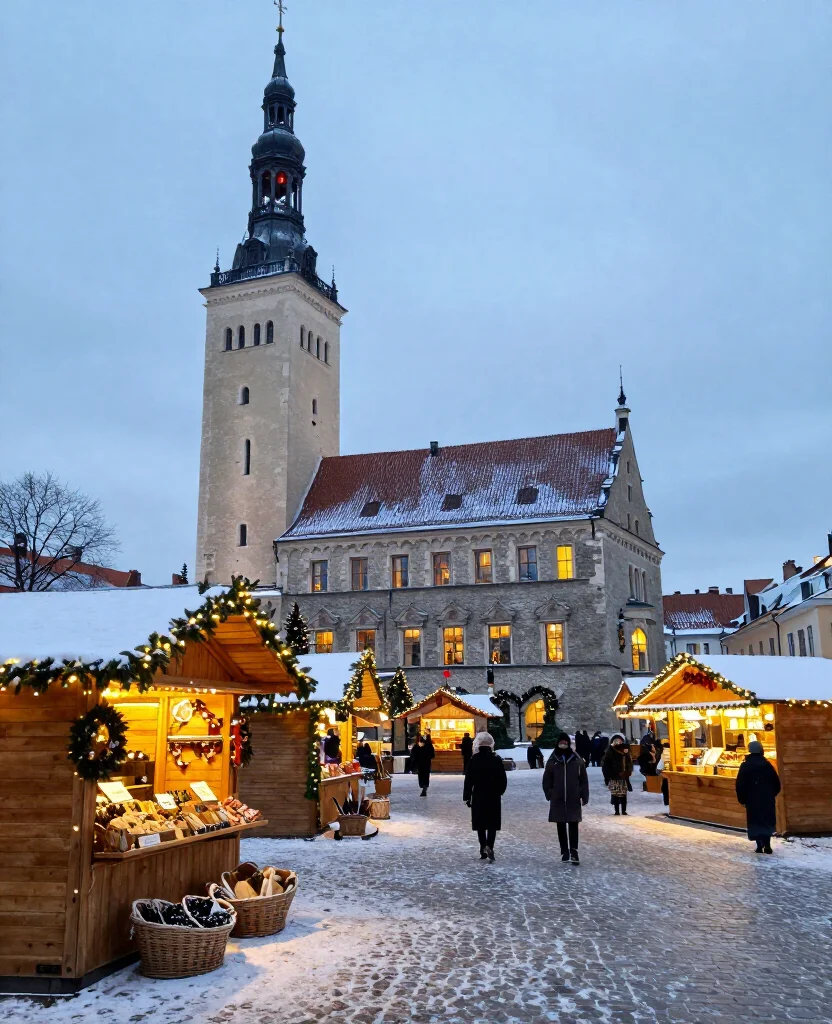
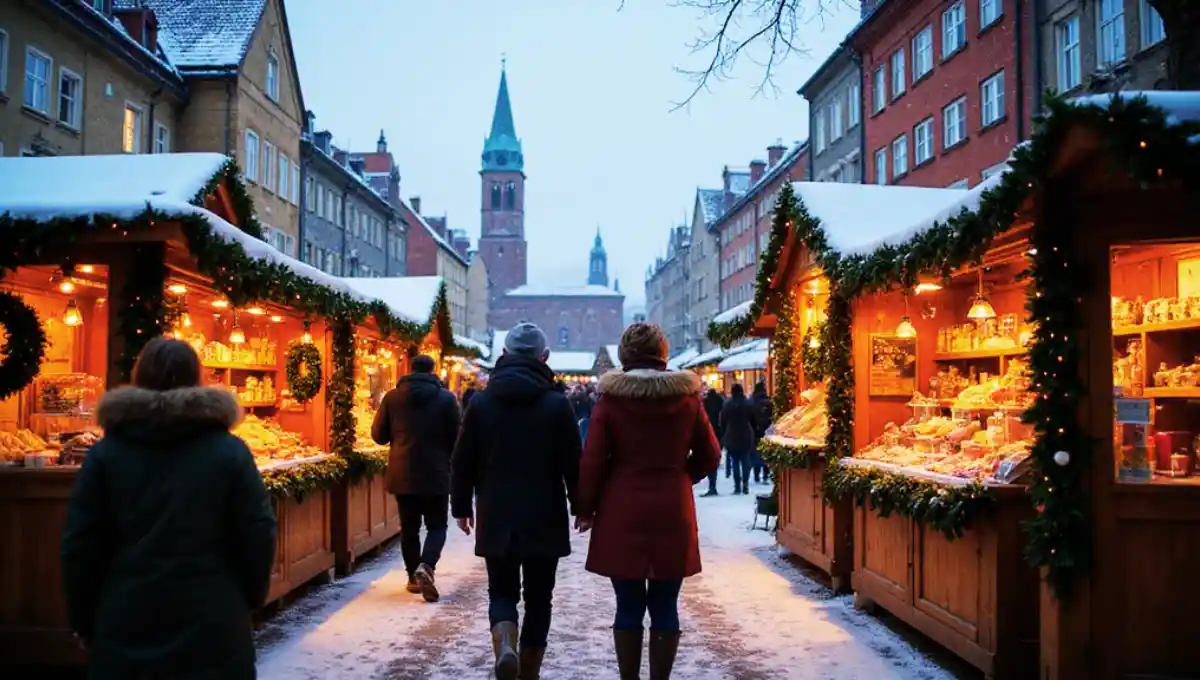
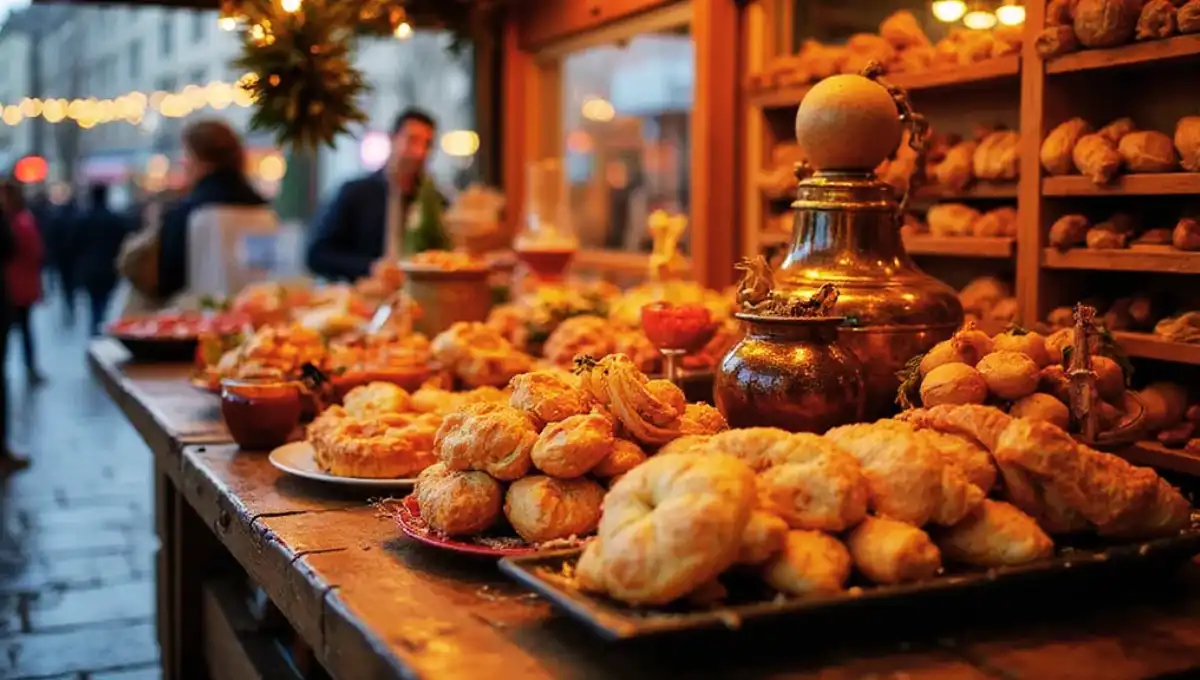
Town Hall Square gives you an instant taste of Tallinn in December.
Medieval buildings surround wooden stalls filled with evergreen branches, golden lights, wool goods, candles, and handmade ornaments.
The market’s small size makes it easy to explore, while the tall Town Hall creates a memorable backdrop for photographs.
Follow the smell of cinnamon, roasted almonds, gingerbread, sausages, and warm berry drinks as you browse.
Visit in the morning for quieter paths and clearer views of the architecture.
Late afternoon brings a different mood, when blue winter light meets the market’s glowing lamps.
Wear waterproof boots because old paving stones can become slippery after snow or freezing rain.
A wide-angle lens suits the full square, while a shorter lens captures steaming cups and decorated stall windows.
Plan your market visit around these simple ideas:
– Check official dates and opening hours before planning your route
– Sample hot berry drinks beside fresh gingerbread and roasted almonds
– Photograph the Town Hall from the square’s eastern entrance
– Return after sunset for glowing stalls and festive street scenes
Weekend evenings can feel crowded, especially during music performances, so choose a weekday morning for peaceful photographs.
Nearby cafés offer a warm break, and surrounding lanes lead toward St Catherine’s Passage and Toompea.
With food, lights, history, and cheerful winter energy, Town Hall Square makes a welcoming first stop.
📹 Related Video: Magical Tallinn Christmas Market Experience 2023
2. Alexander Nevsky Cathedral and Toompea Hill
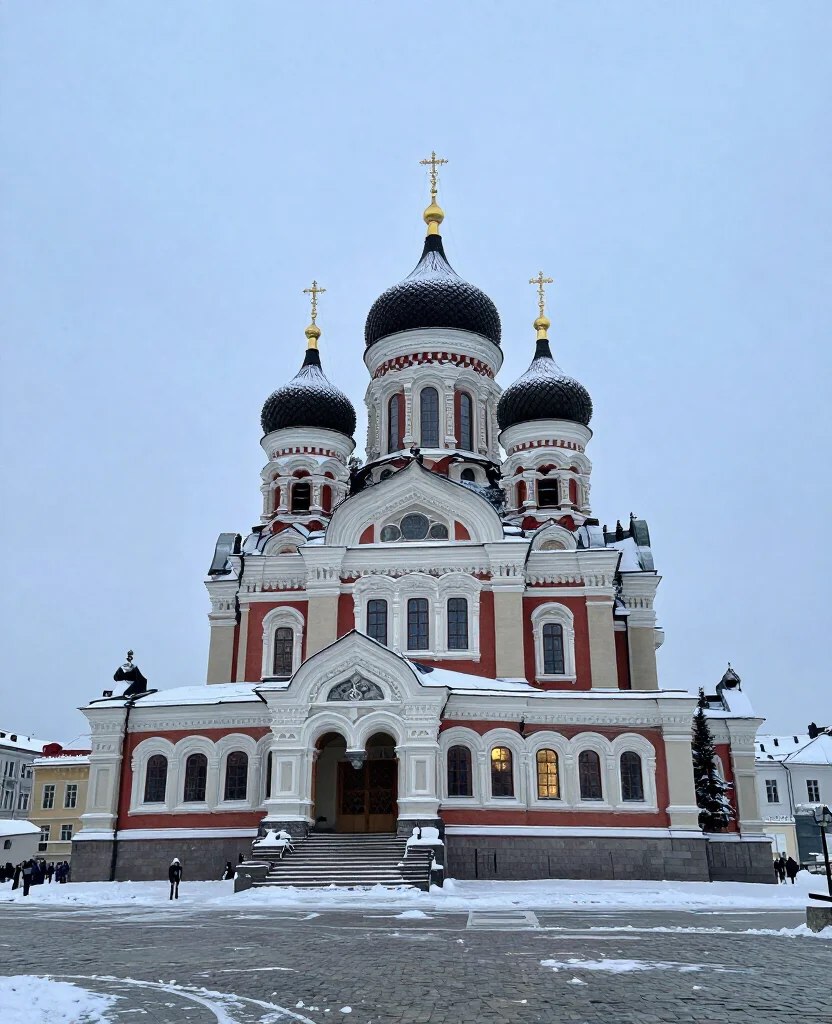
Alexander Nevsky Cathedral brings bold color and rich detail to snowy Toompea Hill.
Its red-and-white walls, dark onion domes, patterned windows, and ornate trim stand out against a pale December sky.
The cathedral is still used for worship, so enter quietly, dress respectfully, and check current rules before taking indoor photographs.
Even from outside, the steps and surrounding square offer plenty to study.
Pair the cathedral with a gentle walk around Toompea instead of making it a rushed stop.
Morning light gives the façade a soft, cool appearance, while sunset warms the red walls before the sky turns deep blue.
Snow often gathers along the square edges, creating clean lines around the building.
Sturdy footwear matters because stone steps can become slick after repeated freezing and thawing.
Use these ideas for a more comfortable visit:
– Frame the cathedral from Lossi plats with snowy foreground
– Look for window patterns, domes, and carved exterior details
– Keep voices low near entrances and active worship spaces
– Carry a lens cloth for snowflakes and damp winter air
The open hilltop can feel colder than the sheltered streets below, especially when wind moves across the square.
Warm up in a nearby café before continuing toward Kohtuotsa or Patkuli.
The cathedral’s strong colors, quiet atmosphere, and elevated setting make it one of Tallinn’s most rewarding winter photography stops.
Also Read: What to Wear in Tallinn in December?
3. Kohtuotsa Viewing Platform for Rooftop Views
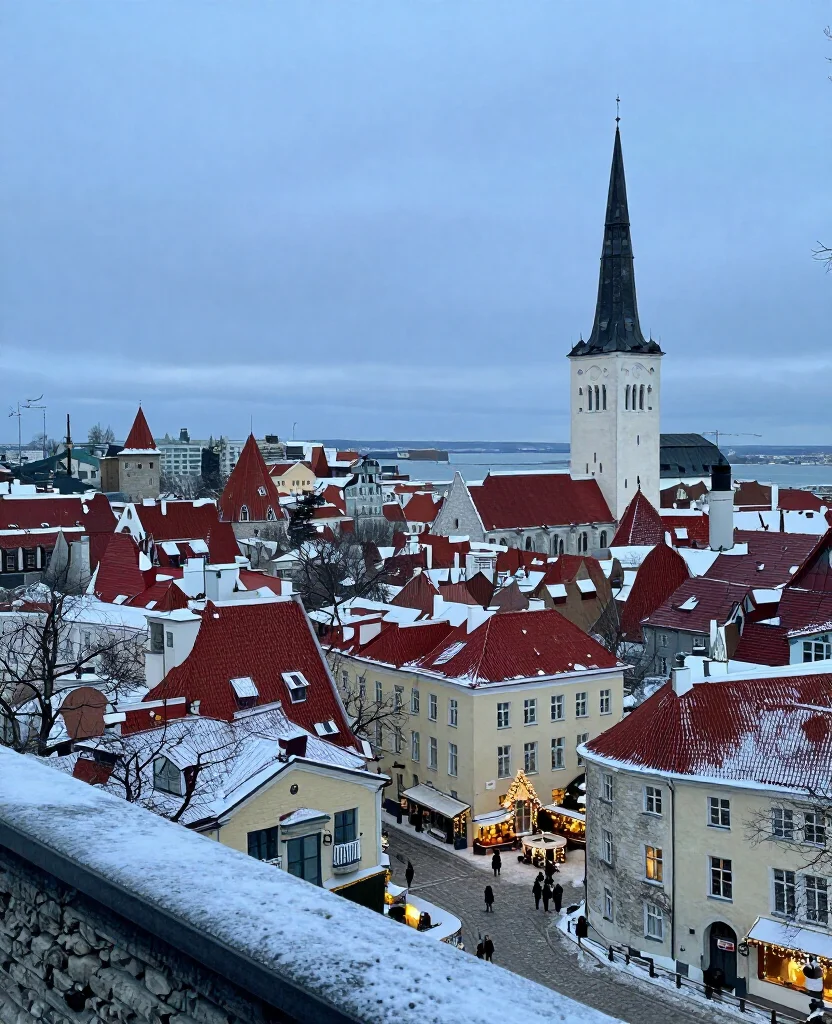
Kohtuotsa Viewing Platform gives you a classic Tallinn panorama without a long walk.
Below, red roofs, church towers, pale walls, and narrow streets form layers across the Old Town.
Snow outlines the rooftops and makes the medieval layout easier to see.
On clear days, the view extends past the historic center toward newer neighborhoods and the distant sea.
Arrive near sunrise for soft pink light, or come before sunset and stay through blue hour.
Tour groups may gather here, but visitors usually move along quickly, leaving short openings for photographs.
A wide lens captures the broad city scene, while a telephoto lens brings snowy towers and clustered roofs closer together.
Thin gloves with touch-friendly fingertips help you adjust camera settings without freezing your hands.
Improve your viewpoint with these practical steps:
– Check visibility forecasts before chasing distant skyline views
– Use vertical framing for rooftops, towers, and winter sky
– Let the railing guide viewers through the composition
– Stand safely back and leave room for other visitors
The platform is exposed, so wind can make the temperature feel sharply colder.
Snow and ice may cover the walking surface, especially after a mild day followed by freezing weather.
Combine Kohtuotsa with the nearby cathedral and Patkuli platform for an easy Toompea route.
When Old Town lamps begin glowing below, the view feels especially magical.
4. Patkuli Viewing Platform and the City Wall
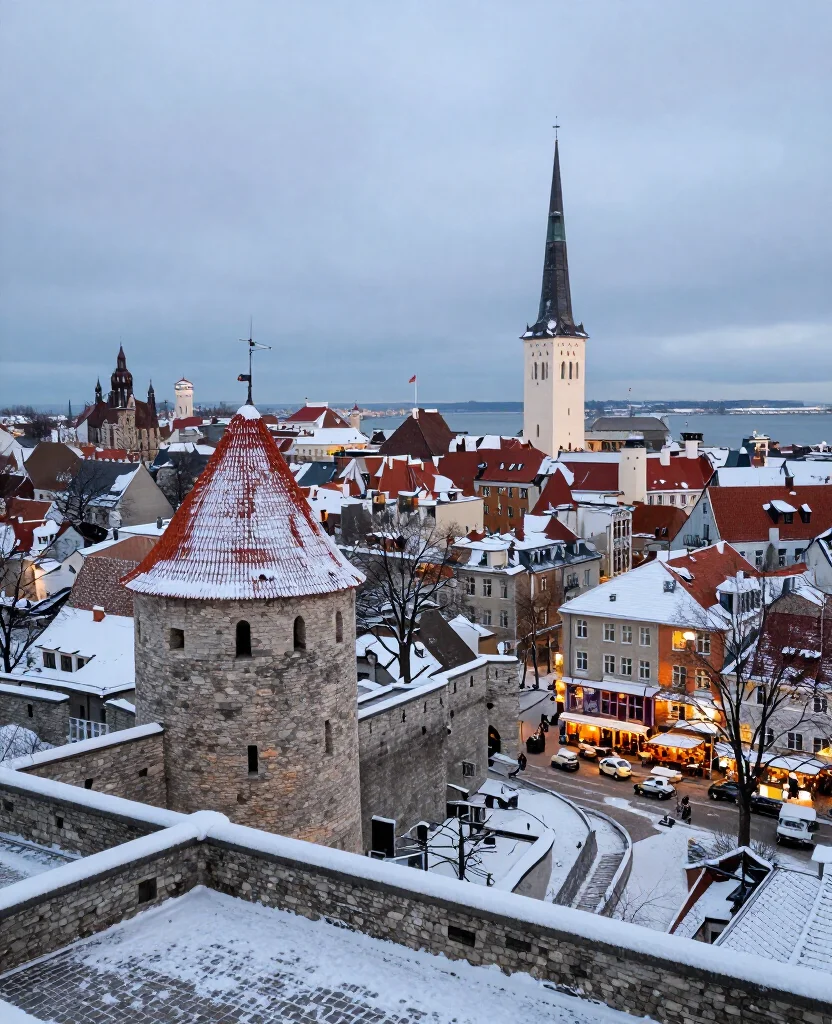
Patkuli Viewing Platform offers a powerful winter view with Tallinn’s old defensive wall in the foreground.
Rounded towers, pale rooftops, church spires, and the newer skyline stretch beyond the stone fortifications.
Fresh snow brightens the wall’s uneven surface and highlights its heavy medieval shape.
The scene feels grand, yet you can enjoy it during a short stop between nearby attractions.
This viewpoint also helps you understand Tallinn’s changing levels.
Toompea rises above the lower Old Town, and the panorama clearly shows that shift.
Flat December light is useful here because it reveals rough stone without creating deep shadows.
Mist or falling snow can hide distant buildings, leaving the wall and closest towers as the strongest subjects.
Small changes in position often improve the view more than expensive equipment.
Make the most of this elevated stop:
– Visit after snowfall for clean white wall edges
– Switch between wide and telephoto lenses for variety
– Secure camera straps before stepping into windy areas
– Compare Patkuli with Kohtuotsa instead of rushing through both
Steps and uneven stones may become icy, so leave extra time for careful walking.
Morning visits feel quiet and pale, while early evening brings warm windows beneath a cool blue sky.
Nearby Kiek in de Kök and Toompea lanes fit naturally into the route.
For winter photography, Patkuli delivers history, texture, and a strong sense of place.
5. St Olaf’s Church Tower and the Medieval Skyline
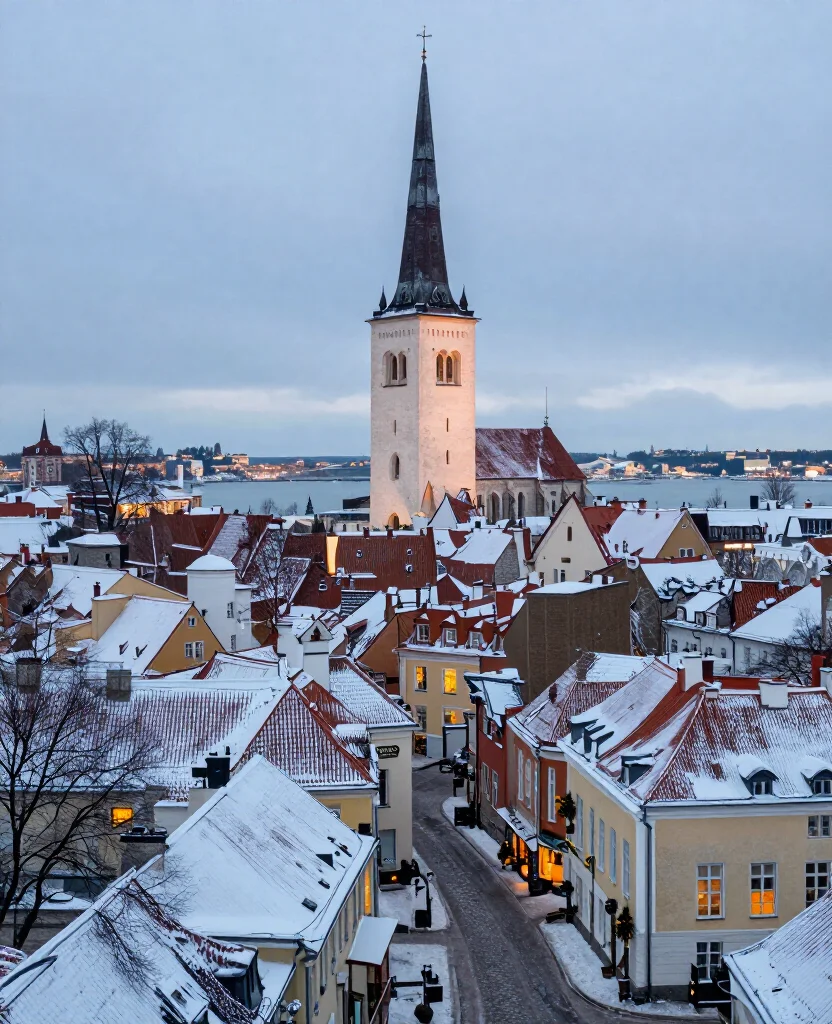
St Olaf’s Church gives Tallinn’s skyline its most dramatic vertical shape.
Its tall spire rises above red roofs and narrow streets, creating a strong subject for winter photographs.
If the tower viewing area opens in December, you can look across snowy rooftops toward church towers, the harbor, and the wide gray sky.
Seasonal hours and weather closures can change, so confirm access before building your day around the climb.
The church remains worthwhile even when the tower is closed.
From street level, the pale walls and sharp spire appear between medieval buildings along the northern Old Town.
Snow resting on ledges and rooflines helps separate the church from its surroundings.
Visit during daylight for skyline details, then explore the nearby lanes after sunset when lamps create warmer scenes.
Keep these points in mind before climbing:
– Confirm tower hours and weather restrictions before arrival
– Wear boots with strong grip for narrow winter stairways
– Use a telephoto lens to isolate the spire between rooftops
– Carry a small camera bag through crowded stair sections
The climb may feel cold and challenging, especially when steps are icy or narrow.
Still, the reward is different from Toompea’s viewpoints because you become part of the medieval roofscape.
Whether photographed from above or below, St Olaf’s Church adds height, character, and a memorable finish to a December walking route.
6. Tallinn City Wall and Nunna Tower
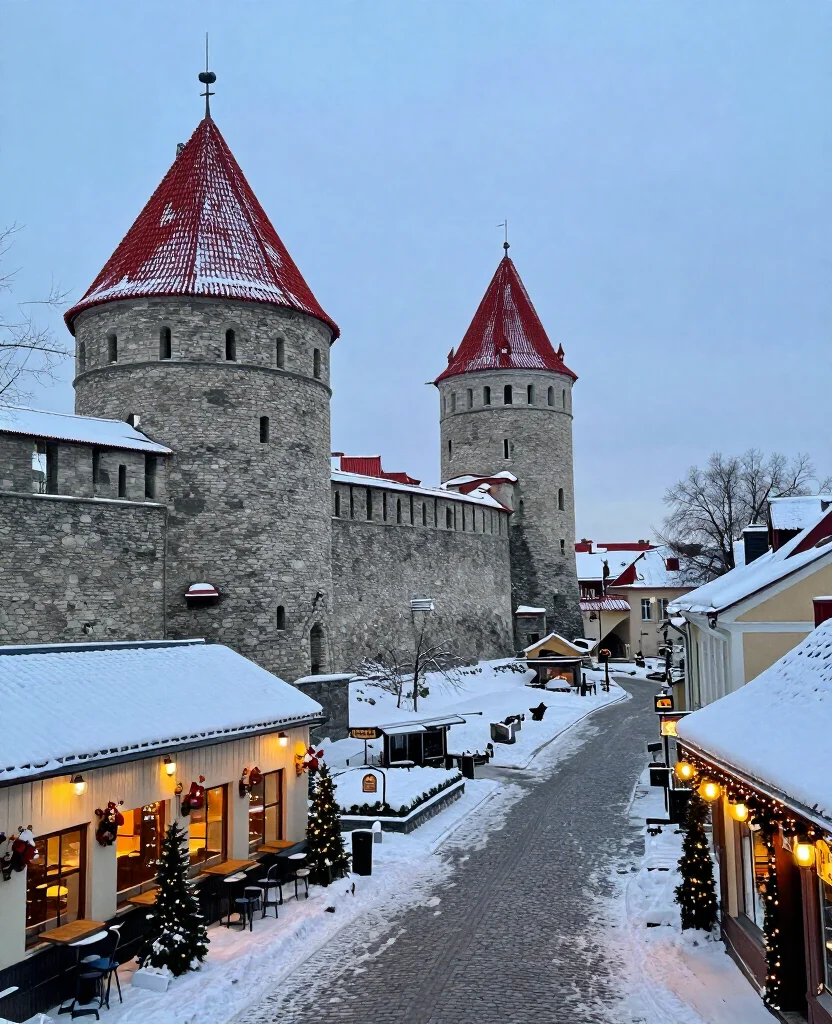
Tallinn’s city wall lets you experience the city’s medieval history at street level.
Weathered stones, rounded towers, wooden roofs, and narrow lanes become even more striking under a layer of snow.
Nunna Tower is a favorite subject because its curved form and red roof stand out against a pale winter sky.
If the elevated wall route is open, it offers a closer look at the fortifications and the dense Old Town below.
Walking beside the wall often feels calmer than exploring the main market streets.
Snow muffles footsteps, while lamps and glowing windows add warm color against gray stone.
Look for repeating arches, narrow openings, and rooftops peeking over the defenses.
Cloudy weather can be helpful because soft light brings out texture without harsh contrast.
Access varies by season, weather, and maintenance, so treat the wall walk as an option rather than a guarantee.
Build a safer, richer wall route with these tips:
– Check seasonal tower access before visiting the fortifications
– Wear boots with deep tread on uneven old stones
– Photograph walls during daylight and lamps at blue hour
– Explore Nunna Tower, Kiek in de Kök, and nearby gates
The wall has no single entrance, so a little planning saves time.
Even closed sections remain beautiful from surrounding streets, and nearby attractions provide easy alternatives.
For photographers, the rough stone, snow, repairs, and changing light offer more visual interest than a polished landmark.
Every section feels touched by age.
You might also like

7. St Catherine’s Passage for Quiet Cobblestone Details
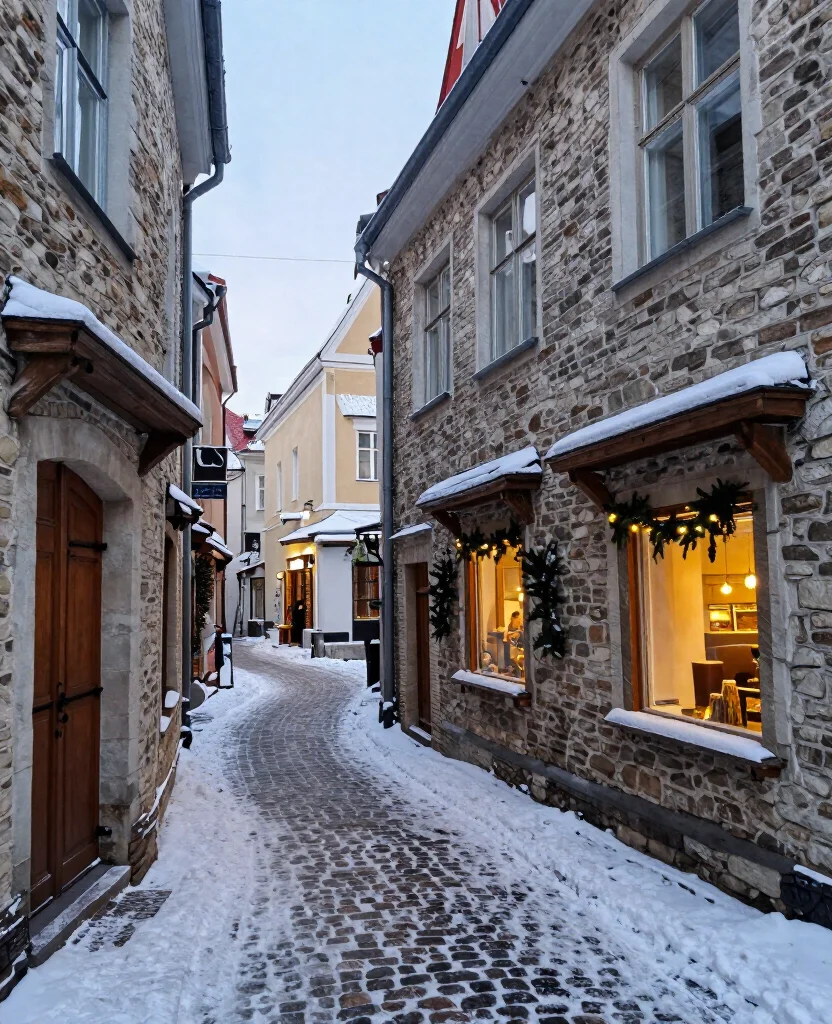
St Catherine’s Passage gives you a quieter view of Tallinn’s winter character.
The narrow lane winds between old stone walls and historic buildings lined with craft studios, wooden doors, carved beams, and iron details.
A thin layer of snow can soften the uneven cobbles and make the passage feel almost timeless.
It is a short walk, but slowing down reveals far more than a quick pass toward the next square.
Morning visits usually bring fewer people and cleaner footprints.
Later in the day, warm studio windows and small lamps add color between the cool stone walls.
Use the lane’s edges as leading lines, but keep the composition simple because too many details can make the narrow space feel crowded.
Waterproof shoes are useful where melting snow refreezes on the cobbles.
Look closely and photograph these small features:
– Capture wooden doors, iron hinges, beams, and lanterns
– Visit early for quiet paths and undisturbed snow
– Use a 24–35mm lens for depth without crowding doorways
– Leave craft studio entrances clear during every photograph
Nearby cafés and bakeries make natural places to warm up.
The passage also connects easily with other Old Town streets, so it fits into almost any walking plan.
One glowing window, one old doorway, and a clean curve of snowy stones can tell a richer story than a crowded panorama.
This small lane proves that winter atmosphere often hides in the details.
8. Viru Gate and the Old Town Entrance
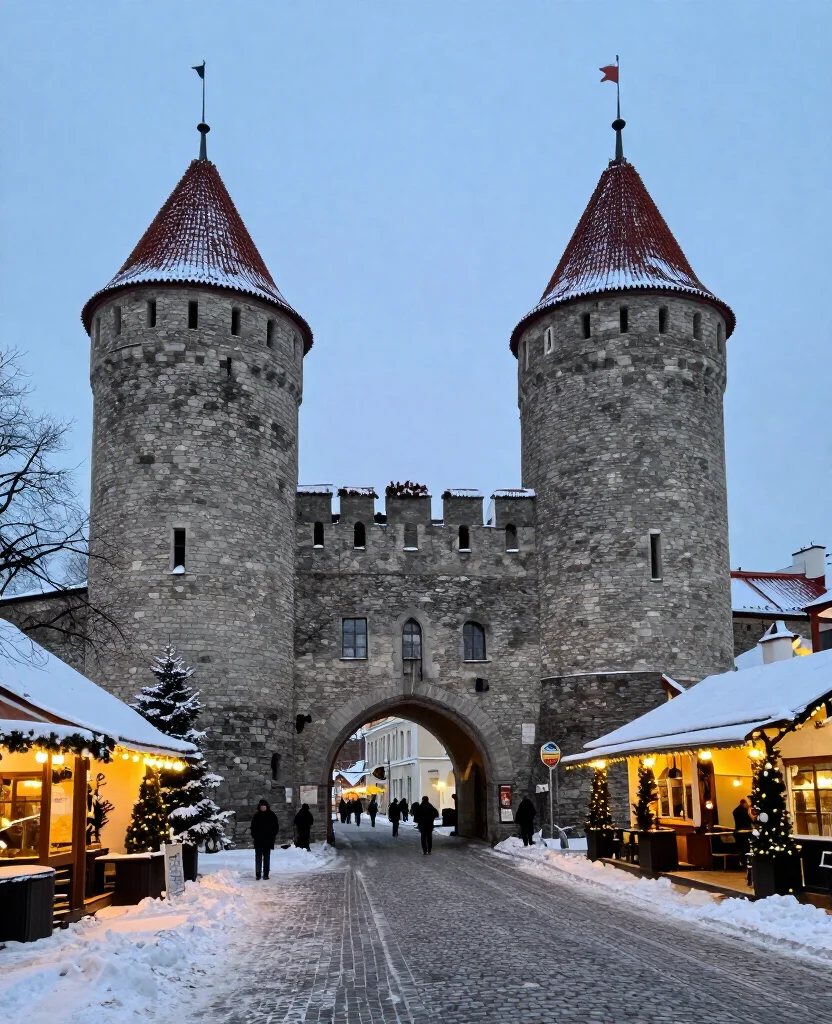
Viru Gate gives you a clear and colorful entrance to Tallinn’s historic center.
Its twin medieval towers rise beside a lively street decorated with winter lights, seasonal greenery, and occasional snow.
From here, you can walk toward Town Hall Square, St Catherine’s Passage, or Toompea without losing your sense of direction.
The gate is easy to reach from the modern city and makes a useful meeting point for first-time visitors.
Arrive early if you want open views of the towers and pointed roofs.
Fresh snow highlights the stonework, while evening lighting adds a warm glow around the entrance.
A centered photograph feels formal and balanced, but stepping sideways brings people, trees, and Old Town buildings into the frame.
Let passersby show the gate’s scale without allowing the crowd to become the main subject.
Try these simple ways to enjoy Viru Gate:
– Begin a morning Old Town walk from the entrance
– Return after sunset for warmly lit medieval towers
– Watch carefully for slippery paving near street crossings
– Wait between tour groups for cleaner architectural photographs
The area becomes busy during holiday weekends and late afternoons, giving it an energetic rather than quiet mood. Nearby cafés offer shelter when snow or rain arrives.
Public transport and short walks from central Tallinn are easier than driving into the Old Town.
As both a practical starting point and a strong winter landmark, Viru Gate deserves a place on your December route.
9. Kadriorg Palace and Snowy Park Paths
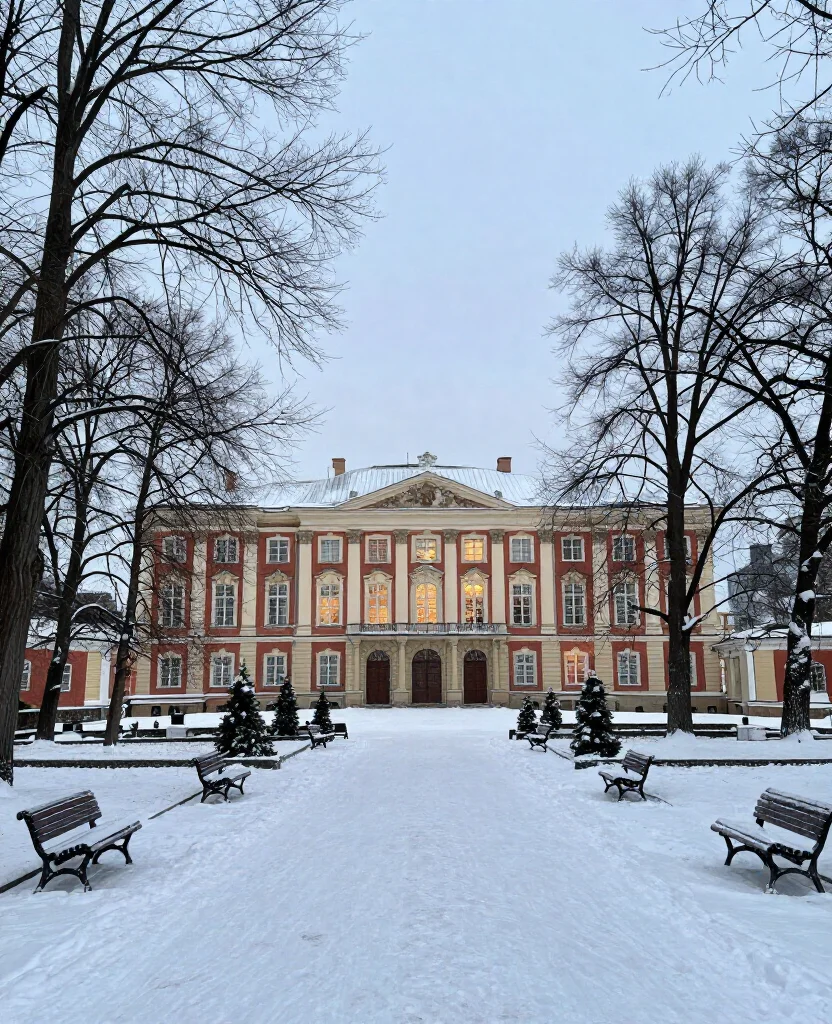
Kadriorg Palace offers a welcome change from Tallinn’s compact medieval streets.
The elegant Baroque building sits within a broad park of snowy paths, bare trees, statues, garden borders, and quiet open lawns.
Warm cream and pink tones on the palace façade stand out against white ground and gray winter branches.
This combination of architecture and nature makes Kadriorg a strong choice when you want more breathing room in your photographs.
Visit around midday when limited December light is brightest.
Wide paths are easy to follow, although packed snow and ice can gather near steps and benches.
Photograph the front façade, then explore side paths for views framed by branches and old homes.
Kumu Art Museum provides a useful indoor alternative if wind, rain, or wet snow makes the park uncomfortable.
Add variety to your park visit with these ideas:
– Walk a full palace loop instead of photographing only the façade
– Search for snow-covered branches, statues, benches, and borders
– Wear warm layers for exposed paths and open garden spaces
– Pair the palace with Kumu for art and shelter
Opening times and winter access can change, especially for palace interiors and garden areas.
A slow walk followed by coffee near the museums creates an easy half-day plan.
Kadriorg may feel less festive than the Christmas market, but its calm setting balances a busy city itinerary.
The park adds soft colors, open space, and a peaceful winter rhythm to your Tallinn visit.
10. Pirita Promenade and the Baltic Sea Horizon
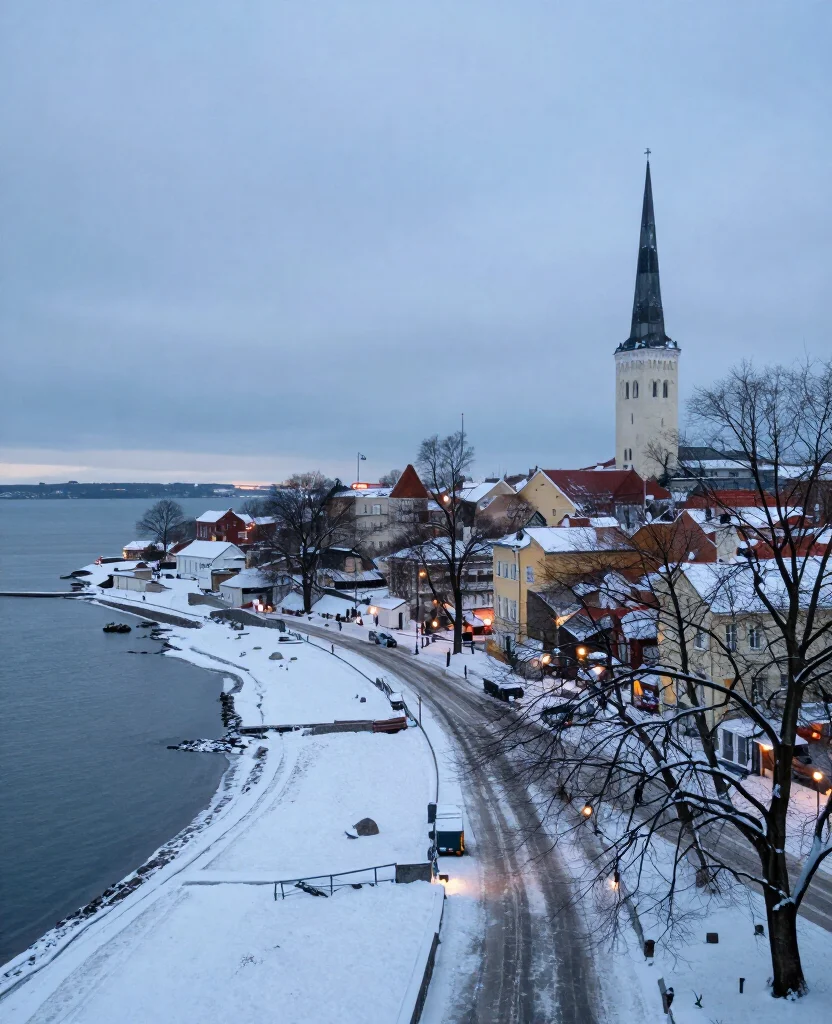
Pirita Promenade shows you Tallinn on a much larger scale.
The Baltic Sea opens toward a long horizon, while the Old Town skyline sits in the distance behind wind-shaped snow and dark water.
Clear December air can make church spires and rooftops appear surprisingly sharp.
The coast feels refreshing after hours among narrow lanes, but changing weather means you need to prepare carefully.
Fresh snow along the path creates natural lines toward the water, while low winter light reveals ripples, sand, and footprints.
Use a wide lens for the full meeting of shore, sky, and city.
A telephoto lens brings distant towers closer and compresses the skyline against the sea.
Sunrise and late afternoon usually offer the softest color, though dramatic clouds can make any safe visit worthwhile.
Prepare for the coastline with these practical choices:
– Dress for strong coastal wind, not only the forecast temperature
– Keep spare batteries inside an inner coat pocket
– Stay on public paths and avoid unstable ice near water
– Combine the promenade with nearby Pirita Convent ruins
Heavy snowfall or powerful wind may make the promenade unpleasant, especially with delicate camera equipment.
On calmer days, it offers some of Tallinn’s most spacious winter scenes.
A short walk can make the city feel connected to the sea, sky, and wider landscape.
That open perspective brings welcome balance to a December itinerary centered on the Old Town.
11. Pirita Convent Ruins in the Winter Quiet
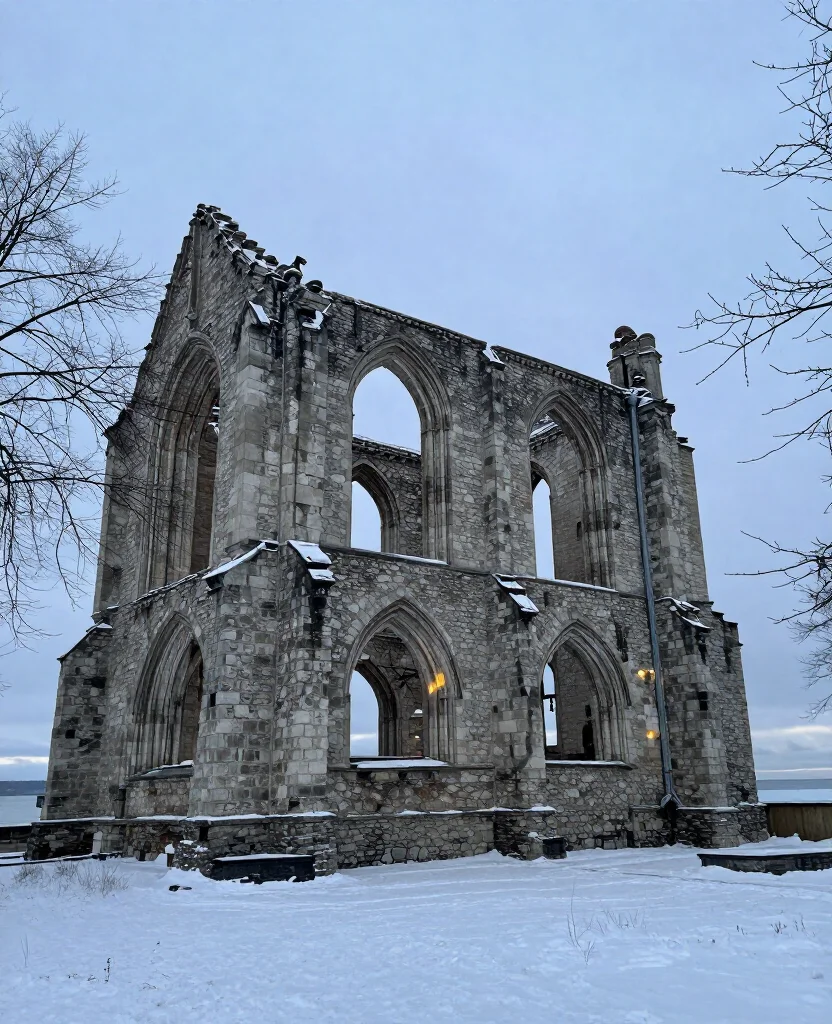
Pirita Convent Ruins create one of Tallinn’s most peaceful winter scenes.
Tall stone walls, open arches, broken doorways, and a roofless church stand in a quiet area near the coast.
Snow gathers inside the former church and along the masonry, while bare branches frame the arches without hiding their shape.
The distance from central Tallinn helps the site feel removed from busy streets and holiday crowds.
Overcast weather suits the ruins because soft light shows the stone’s texture without harsh contrast.
Use the open roof to include a pale winter sky, or frame distant trees through a doorway.
Late afternoon brings cooler blue tones, while nearby lamps and windows may add small pockets of warmth.
Wide lenses work well for the full height of the church, while a standard lens captures cracks, stones, and weathered edges.
Plan a respectful visit with these simple reminders:
– Check seasonal access, tickets, and weather closures first
– Wear waterproof boots for snowy, wet ground inside
– Stay behind barriers and never climb historic masonry
– Pair the ruins with Pirita Promenade for a coastal half-day
The site can feel exposed during strong wind, so allow extra time for travel and warm clothing.
Even a short visit offers history, texture, and a quiet mood that busy city attractions cannot match.
The ruins also give photographers natural frames and strong shapes in every direction.
For December travelers, Pirita Convent reveals a slower, more reflective side of Tallinn.
You Might Also Like
12. Seaplane Harbour and Noblessner Waterfront
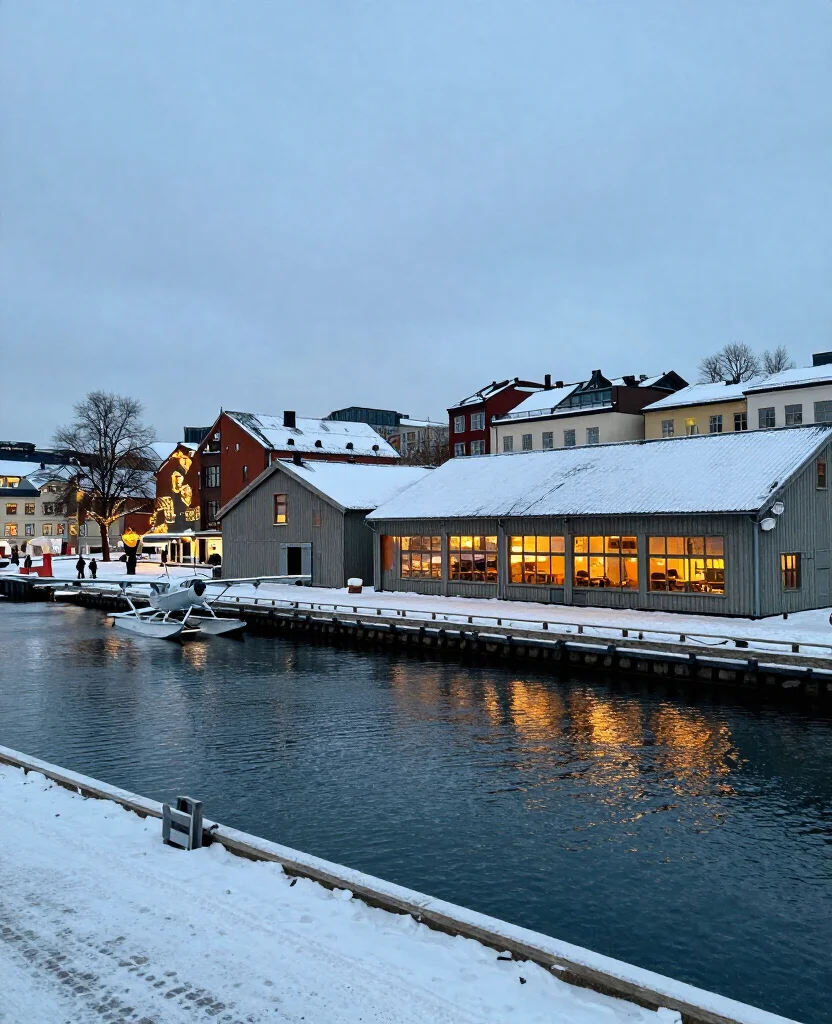
Seaplane Harbour and Noblessner bring a modern maritime mood to your Tallinn winter plans.
The museum fills a historic seaplane hangar with large naval exhibits, while the nearby waterfront combines dark water, industrial buildings, new apartments, cafés, and broad promenades.
This area works especially well on wet or windy days because the museum offers warmth without giving up strong visual surroundings.
Snow and low light make the harbor feel clean, cool, and spacious.
Spend time outside before entering the museum, then return to the waterfront as evening arrives.
Railings, reflections, warehouse walls, and snow-covered edges create useful lines for photographs.
Noblessner’s modern architecture looks striking beside preserved harbor structures, giving you a clear contrast between old industry and new design.
Bring a warm outer layer because the promenade can feel much colder than the museum interior.
Build an easy waterfront afternoon with these steps:
– Check museum hours and allow time for major exhibits
– Use rails and harbor edges as leading lines
– Photograph reflections before evening darkness hides the water
– Wear grippy shoes on wet or icy paving
Cafés around Noblessner offer convenient places to rest, though December hours may vary.
Public transport, taxis, and longer walks can connect the district with central Tallinn.
This waterfront does not replace the Old Town, but it adds sea air, industrial texture, and modern design to your photo collection.
It is a smart second-day choice when you want a change of pace.
13. Kumu Art Museum and Kadriorg’s Creative Side
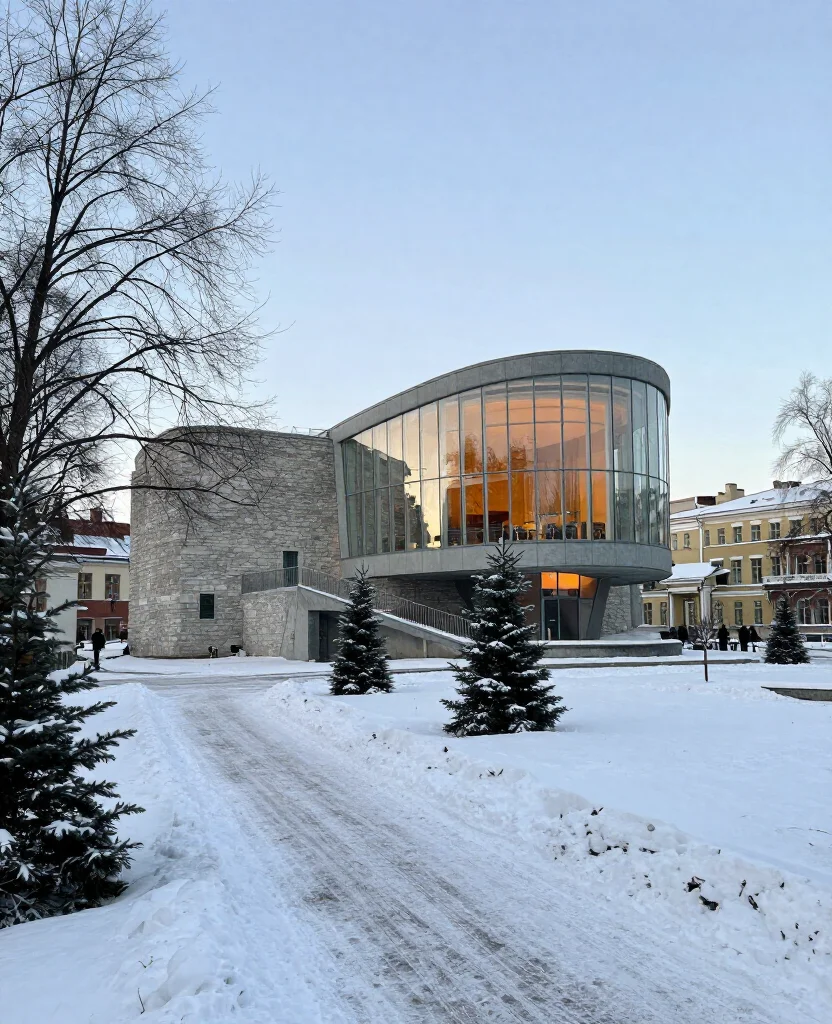
Kumu Art Museum gives you a warm, thoughtful escape when December weather turns wet, snowy, or windy.
Its modern building rises beside Kadriorg Park, offering exhibitions focused on Estonian art, design, and history.
Curved stone, broad glass sections, bare trees, and white paths create an interesting exterior scene before you even enter.
The museum adds a fresh modern note to an itinerary filled with medieval towers and old stone lanes.
Combine Kumu with Kadriorg Palace for an easy half-day of contrasting styles.
Explore the park while daylight lasts, then move indoors for exhibitions and a slower afternoon.
Photography rules may differ between galleries, so check signs and staff guidance.
Inside, the warm rooms also give cold hands, wet coats, and tired feet a welcome break.
Make the museum stop easier with these practical choices:
– Check current exhibitions, tickets, and camera rules online
– Visit the park first while December daylight remains bright
– Organize wet coats and shoes before entering gallery spaces
– Plan a nearby warm drink after exploring the collections
Kumu may not provide the classic postcard view, but its difference is valuable.
It connects Tallinn’s creative present with the city’s historic setting and gives your trip more range.
Outside, clean lines look sharp against snow and bare branches.
Inside, the calm galleries offer time to learn, rest, and enjoy the city without standing in the cold.
14. Tallinn TV Tower for a High Winter Panorama
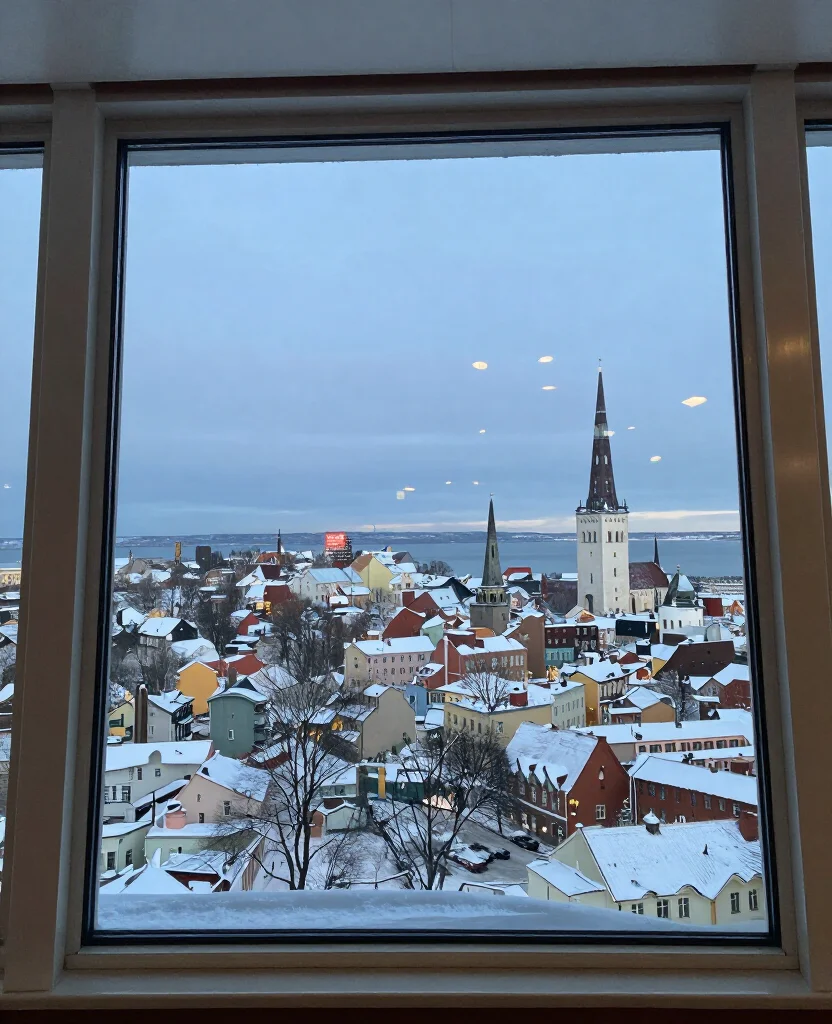
Tallinn TV Tower gives you a broad view that feels far removed from the Old Town’s narrow streets.
From the observation level, the city reaches toward forests, suburbs, coastline, snowy fields, and the Baltic Sea.
Clear winter air can sharpen the horizon, while low sunlight adds soft pink or gold to the landscape.
This is the place to understand how the historic center fits into the much larger Tallinn region.
Because the main viewing area is indoors, the tower remains useful during cold, wet, or snowy weather.
Glass reflections can affect photographs, so wear a dark jacket and keep your lens close to the window without pressing against it.
A telephoto lens helps isolate distant neighborhoods and coastline details, while a wide lens captures the circular panorama and interior structure.
Outdoor areas may have seasonal restrictions, so check conditions before relying on them.
Use these tips for clearer tower photographs:
– Visit during daylight hours for detailed landscape views
– Avoid flash because it reflects strongly against the glass
– Keep equipment dry while moving between warm and cold areas
– Check transport options before leaving the Old Town center
The tower requires more travel planning than Toompea’s viewpoints, but the change in scale makes the journey worthwhile.
After close views of walls, doors, and rooftops, the open panorama shows Tallinn’s forests, coast, and wider neighborhoods.
Nearby sights can fill a full day, though the observation level alone offers plenty to see.
It provides a satisfying final view of snowy Tallinn from above.
Conclusion: Let Tallinn’s Winter Light Lead the Way
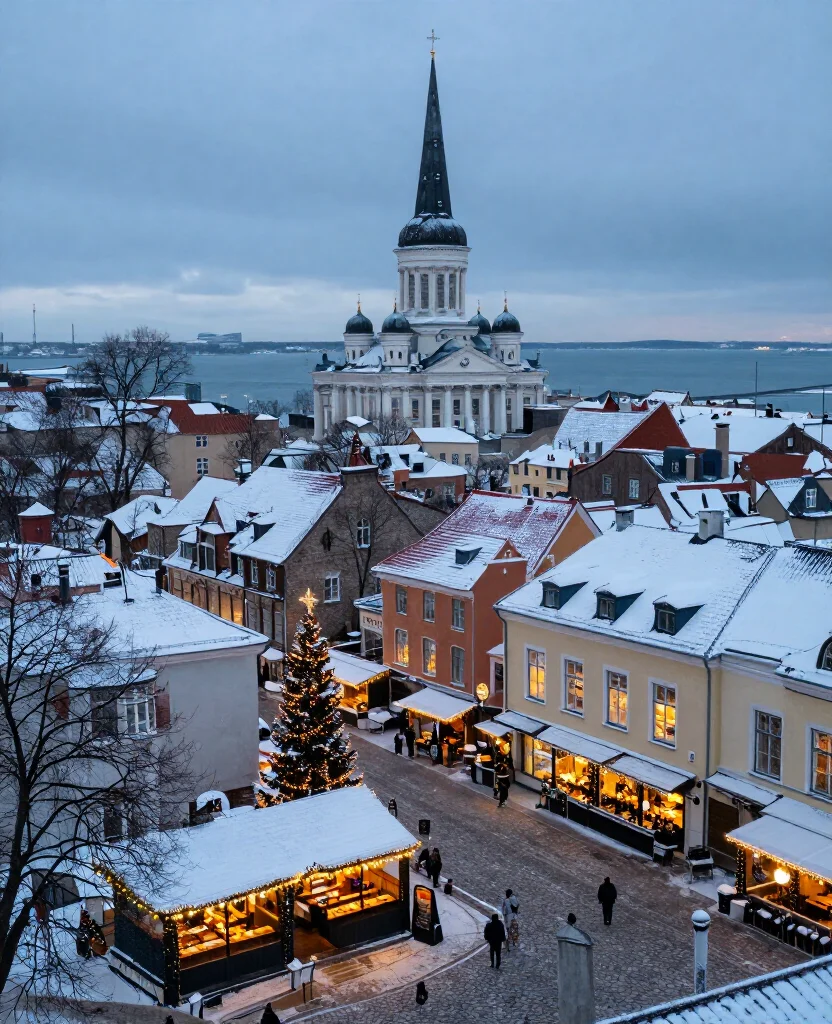
Tallinn in December is at its best when you mix famous landmarks with slower, quieter stops.
Spend time among the lights of Town Hall Square, climb toward the best viewpoints in Tallinn, then leave room for snowy parks, sea air, old walls, and a warm café window along the way.
Pack for ice, wind, and short daylight, and you will come home with more than pretty photographs—you will have a winter memory that feels completely your own.
Frequently Asked Questions
Q. Is Tallinn worth visiting in December?
Yes. The Christmas market, snowy medieval Old Town, and cozy cafés make it one of Europe’s most atmospheric winter cities, with fewer crowds than in summer.
Q. What is the weather like in Tallinn in December?
Usually around -5°C to 1°C (23°F to 34°F), with wind off the Baltic Sea, damp air, and occasional snow. Dress in warm layers, a windproof coat, and waterproof boots.
Q. What are the best indoor attractions in Tallinn in winter?
Kumu Art Museum, Seaplane Harbour, the Town Hall Pharmacy, the cafés of Telliskivi Creative City, and a traditional Estonian sauna are all great ways to warm up.
Q. When does the Tallinn Christmas market start?
It usually opens in mid to late November and runs into early January. Check the official dates for this year before your trip.
Q. How many days do I need in Tallinn in December?
Two to three days covers the Old Town, the Christmas market, and a few museums, with time left for a sauna and café breaks.

10 Stylish San Francisco Outfits for August That Will Keep You Cool and Chic!
10 Must-Have San Francisco Outfits for June That’ll Make You the Envy of Every Tourist!

10 Must-Have Outfits for San Francisco in May That Will WOW the Locals!
