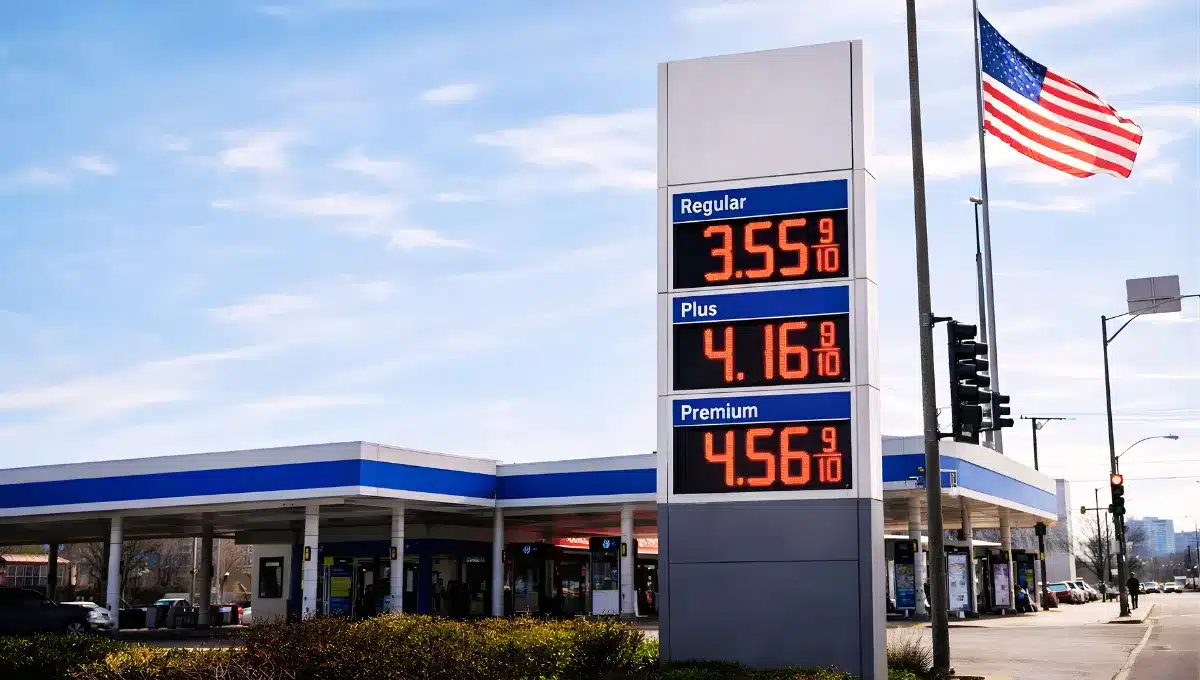
I stopped at a gas station this morning and did a double take at the pump. The price had jumped again.
And it’s not just my neighborhood. Gas prices across the United States have suddenly surged, rising 11 cents per gallon overnight, according to the latest report from AAA.
The national average now sits at $3.11 per gallon, the highest price Americans have seen in more than three months.
But here’s the worrying part — experts say the increase might only be the beginning.
⛽ Why Gas Prices Are Rising
The sudden spike is linked to growing conflict involving Iran, which is sending shockwaves through the global energy market.
Much of the concern centers on the Strait of Hormuz, a narrow but critical waterway that carries about 20% of the world’s oil supply.
When tensions threaten that route, oil markets react fast.
And they already have.
- Brent crude oil jumped to about $80.83 per barrel
- U.S. crude oil climbed to roughly $77.45 per barrel
Those increases quickly trickle down to drivers at the pump.
📈 Prices Could Climb Even Higher
According to GasBuddy analyst Patrick De Haan, Americans might see prices rise another 30 cents per gallon by the end of the week.
That means the national average could soon approach $3.40 per gallon.
For families already dealing with higher grocery and housing costs, this could hurt.
Economists say rising fuel costs are a direct hit to household spending power.
⚡ It’s Not Just Gas
Energy costs are climbing in other places too.
Natural gas prices are also rising, which could push up home heating and electricity bills.
One major reason: a drone attack forced Ras Laffan Industrial City in Qatar to shut down liquefied natural gas production temporarily.
That plant produces around 20% of the world’s LNG supply.
If disruptions continue, global energy prices could stay elevated.
🚗 What Drivers Should Expect
For now, the big question is how long the tension lasts.
If oil prices stay high, gas prices could keep climbing.
But if the situation stabilizes, the spike might be short-lived.
Either way, millions of drivers are already feeling the impact.
And judging by the numbers at the pump this morning, the pain may only be starting.