What to wear in Chamonix in December? I asked myself that on the Aiguille du Midi cable car, my fingers numb and my cute town jacket suddenly useless against the alpine wind.
Chamonix winter weather is freezing, snowy, and breathtaking, with Mont Blanc glowing above the village.
After some chilly lessons, I’ve gathered 15 outfit essentials that kept me warm on the slopes, along Rue du Docteur Paccard, and through every cozy après-ski fondue stop.
1. Start with a Merino Thermal Base Layer
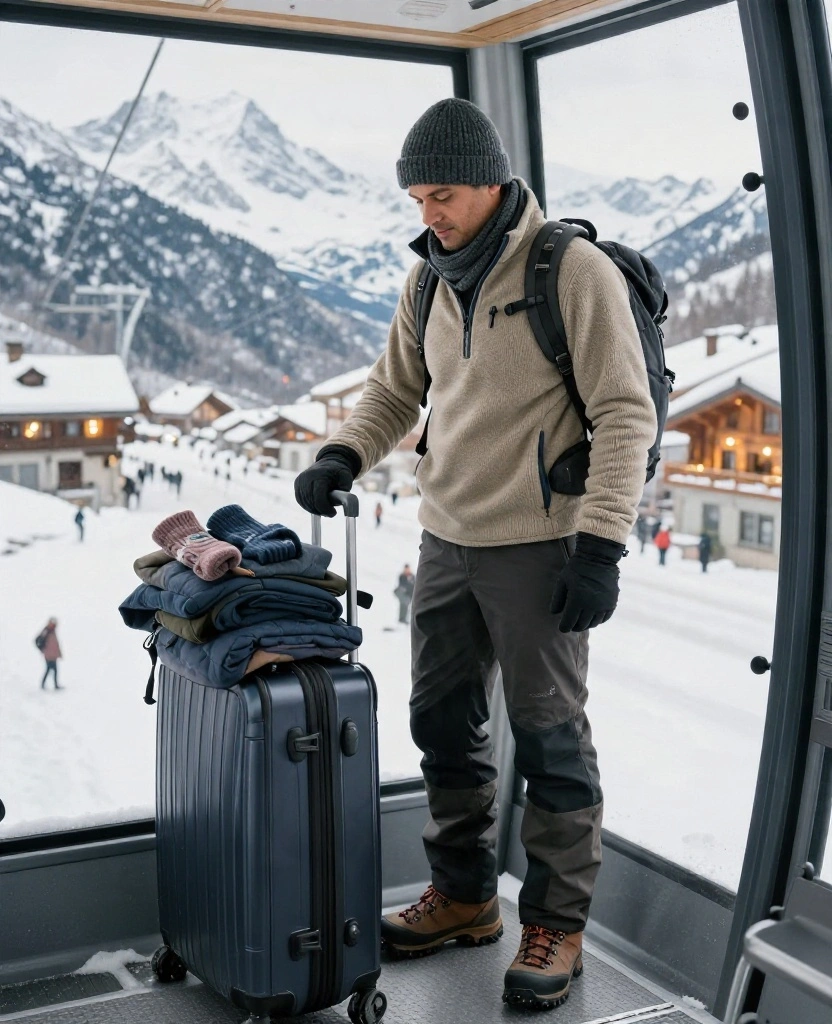
Cold mornings in Chamonix feel much easier when warmth starts next to your skin.
A merino thermal top and leggings create a slim base that fits under fleeces, sweaters, and puffers without making you feel stuffed.
The fabric feels soft, moves sweat away from your body, and stays comfortable through long travel days.
Merino works because it balances warmth and breathability.
Wear it for cable-car queues, snowy viewpoints, village walks, or relaxed evenings when the chalet feels cool.
Outfit Pieces:
– Long-sleeved merino thermal top in black, charcoal, cream, or navy
– Full-length merino leggings with a close but flexible fit
– Merino blend with nylon or elastane for added stretch and strength
– Medium-weight fabric for December, rather than a thin summer base layer
– Two tops and one or two bottoms for a short trip
Styling Tips:
– Choose a smooth fit that does not pull across your shoulders, waist, or knees.
– Tuck the thermal top into your leggings or trousers to stop cold air reaching your back.
– Pick black or neutral base layers so they disappear under lighter sweaters.
– Hang merino after wearing it, then let it air overnight before washing.
– Skip cotton outdoors because it absorbs moisture and dries slowly.
Use the thermal layer as the quiet foundation for every winter outfit.
It also works under a wool dress or lined trousers when you want a warmer dinner look.
Start with a Merino Thermal Base Layer
Editor’s Choice




2. Add a Fleece Midlayer for Easy Warmth
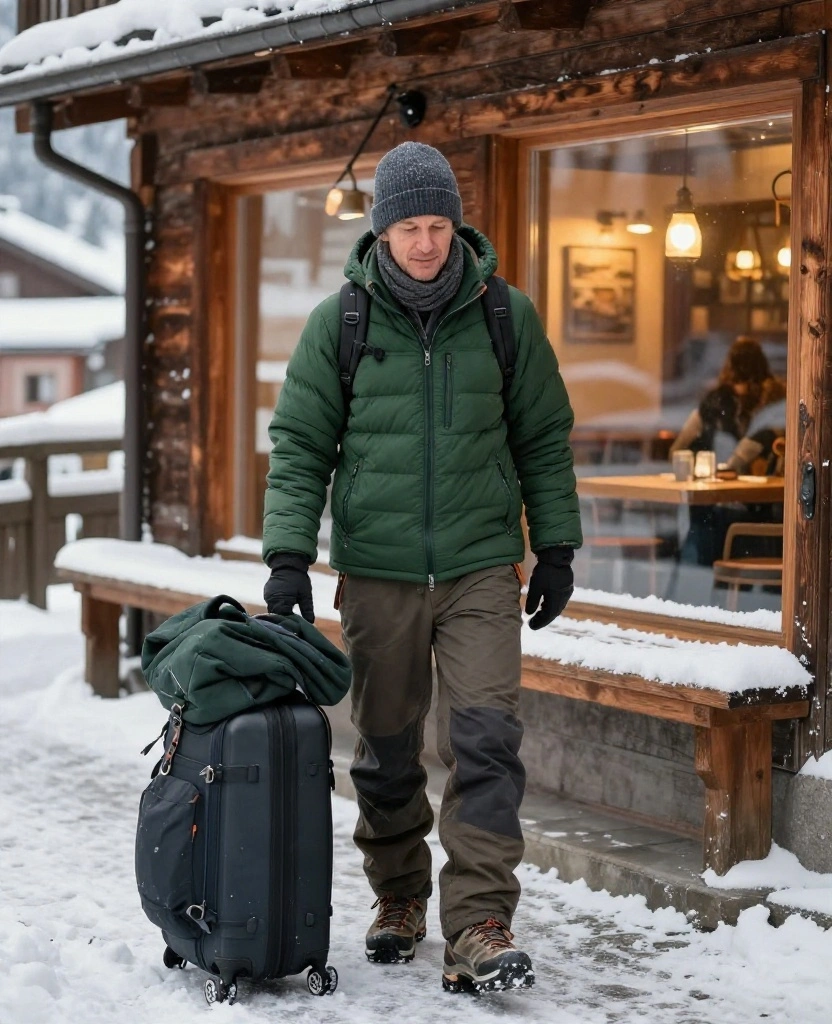
A fleece midlayer adds warmth without the weight of several thick jumpers.
It is ideal when you move from a cold village street to a warm café, since you can unzip it or remove it in seconds.
The soft texture also feels comfortable under a puffer during cable-car rides and outdoor walks.
Fleece works well because it traps warm air while allowing moisture to escape.
Wear it for sightseeing, easy hikes, lift queues, or travel days when temperatures keep changing.
Outfit Pieces:
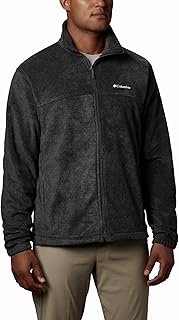
– Medium-weight fleece jacket in charcoal, forest green, navy, rust, or cream
– Full-zip or half-zip front for quick temperature control
– High collar that protects your neck from drafts
– Zippered pockets for a phone, room key, or lip balm
– Smooth outer surface that slides easily under a puffer
– Slightly longer back hem for extra coverage when sitting
Styling Tips:
– Wear the fleece over a close-fitting merino top to avoid bulky folds.
– Keep the zip partly open indoors, then close it before heading outside.
– Choose a calm fleece color if your coat is bright and a richer color if your coat is neutral.
– Make sure the cuffs sit neatly inside your jacket sleeves.
– Keep it near the top of your daypack so you can grab it quickly.
One good fleece can handle most active days.
Swap it for a fine wool sweater when you want the same warmth with a softer village style.
Add a Fleece Midlayer for Easy Warmth
Editor’s Choice



Also Read: 17 Historical Places to Visit in Valletta in December
3. Bring One Proper Insulated Puffer Jacket
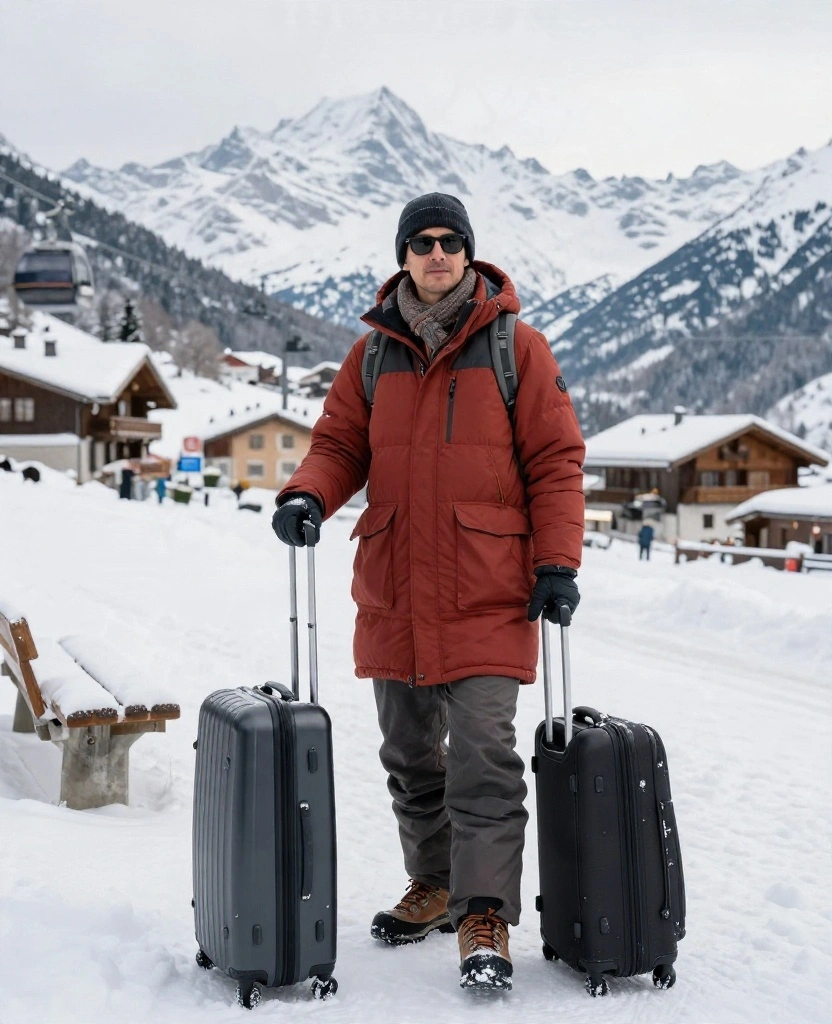
Your puffer will likely become the coat you wear most, so comfort matters more than a trendy finish.
A well-insulated jacket keeps you warm during outdoor queues, evening walks, and bright but freezing afternoons.
Down feels light and packs small, while synthetic fill keeps working better if snow or rain makes the coat damp.
A longer puffer works because it covers your lower back and upper thighs.
It shines during village sightseeing, cable-car rides, market visits, and dinners that require a walk through cold streets.
Outfit Pieces:
– Hip-length or mid-thigh puffer in black, cream, navy, red, cobalt, or mustard
– Down or synthetic insulation suited to cold December weather
– Adjustable hood, high collar, and cuffs that block wind
– Two-way zip for easier walking and sitting
– Roomy pockets for gloves, a phone, and a lift pass
– Enough space for a merino top and fleece underneath
Styling Tips:
– Try the coat over your complete base and midlayer before packing it.
– Choose a shaped or lightly relaxed fit, not an oversized cut that leaves cold gaps.
– Match black boots and gloves with a bright puffer for a clean contrast.
– Wear the puffer during travel to save suitcase space.
– Add a waterproof shell over it when snow or rain starts soaking the outer fabric.
A neutral puffer repeats easily, while a bold shade adds color against snowy scenery.
Use a shell as backup rather than asking one coat to handle every condition.
Bring One Proper Insulated Puffer Jacket
Editor’s Choice


4. Keep a Waterproof Shell for Wind and Snow
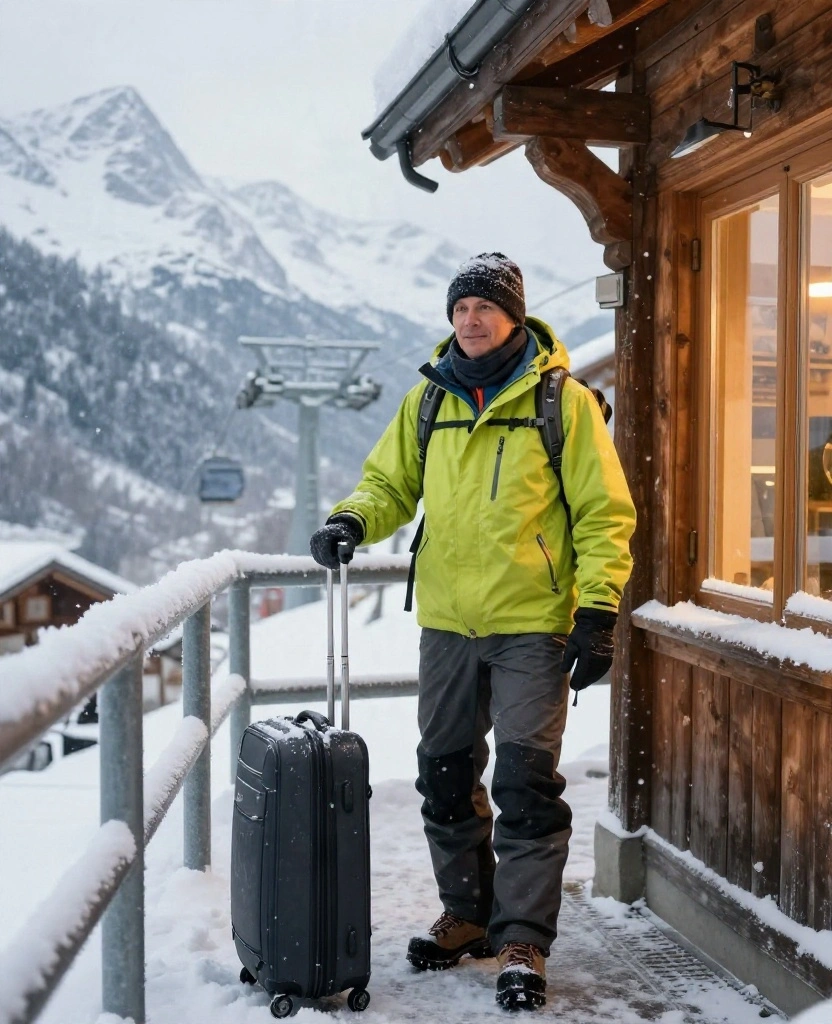
A waterproof shell protects your warm layers from wet snow, drizzle, and sharp mountain wind.
It gives you more freedom than one heavy coat because you can wear it over a fleece on mild days or over a puffer when conditions turn rough.
This makes it useful for lift stations, open viewpoints, and walks near the Mer de Glace.
The shell works through protection rather than insulation.
It keeps moisture outside while your merino, fleece, or sweater holds heat close to your body.
Outfit Pieces:
– Lightweight waterproof shell in black, navy, olive, cream, or bright red
– Adjustable hood that covers a beanie and stays secure in wind
– Protected or sealed zippers
– Longer hem that reaches over the hips
– Underarm vents or pit zips for uphill walks
– Roomy cut that fits over a fleece or puffer
Styling Tips:
– Try the shell over every layer you plan to wear before leaving home.
– Keep the hem loose enough for walking, sitting, and climbing stairs.
– Tuck glove cuffs under adjustable sleeves to stop snow entering.
– Choose a simple shell color if your puffer or fleece has a strong pattern.
– Keep it at the top of your daypack instead of buried in your suitcase.
A packable shell can protect a puffer from wet chairlift seats and slushy benches.
Wear it alone with a fleece during warmer afternoons, then add insulation when the sun disappears.
Keep a Waterproof Shell for Wind and Snow
Editor’s Choice


5. Pack a Wool Sweater for Village Days and Dinners
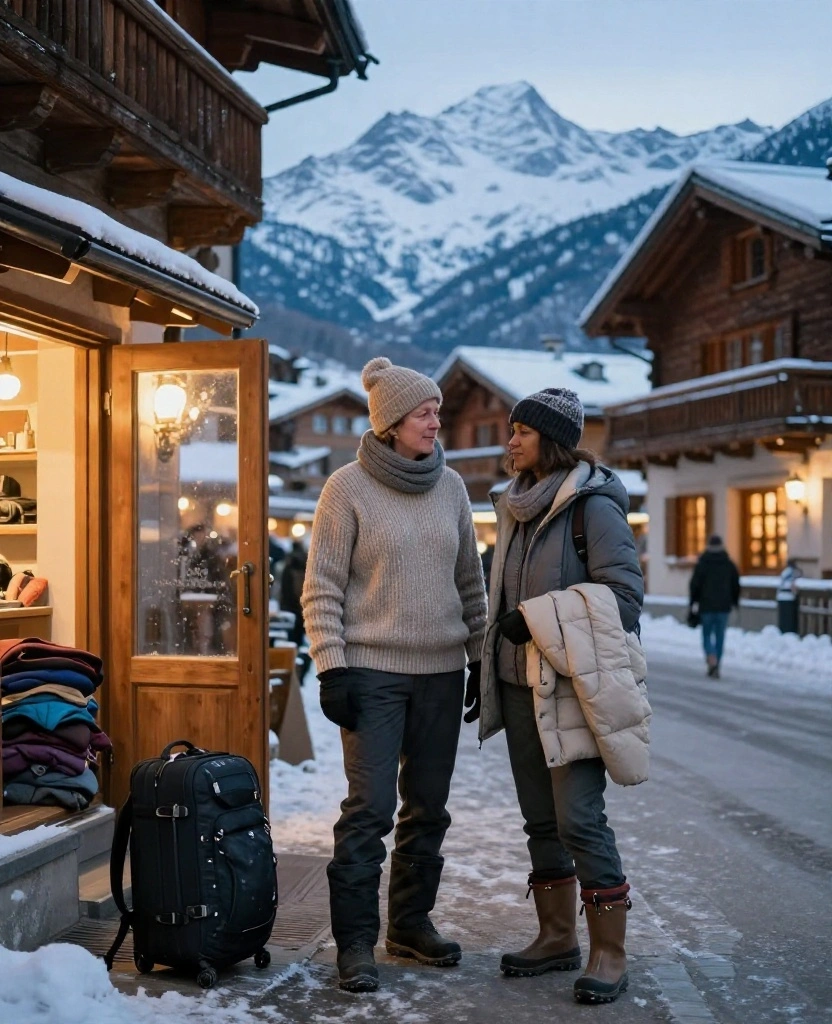
A wool sweater gives your winter wardrobe a softer, less technical feel.
It looks right at a bakery, café, village shop, or chalet dinner while still adding useful warmth.
Merino, lambswool, and wool blends all work, though a blend may feel easier to wash and less likely to irritate sensitive skin.
The best sweater has enough room for a thermal top but stays slim enough under a puffer.
It brings texture to simple trousers and makes repeated winter outfits look more considered.
Outfit Pieces:
– Medium-weight merino, lambswool, or wool-blend sweater
– Crew neck in oatmeal, cream, charcoal, deep green, or burgundy
– Mock neck or half-zip option for extra coverage
– Relaxed fit with fitted shoulders and a neat hem
– Dark travel trousers, denim for indoor use, or a simple thermal skirt
– Clean waterproof boots and a soft wool scarf
Styling Tips:
– Layer the sweater over a thin thermal top, not a bulky fleece.
– Use a slight front tuck with trousers to show your waist without losing warmth.
– Keep the hem below your waistband so cold air cannot reach your back.
– Match cream with tan boots, burgundy with camel, or deep green with dark denim.
– Fold the sweater in a breathable cube and air it instead of washing after every wear.
One good knit can cover several evenings and daytime café stops.
Change the scarf, trousers, or base layer to create a fresh look without packing another bulky sweater.
📹 Related Video: 8 Sweaters & Jumpers You Might Need For Winter
6. Choose Waterproof Trousers or Snow Pants
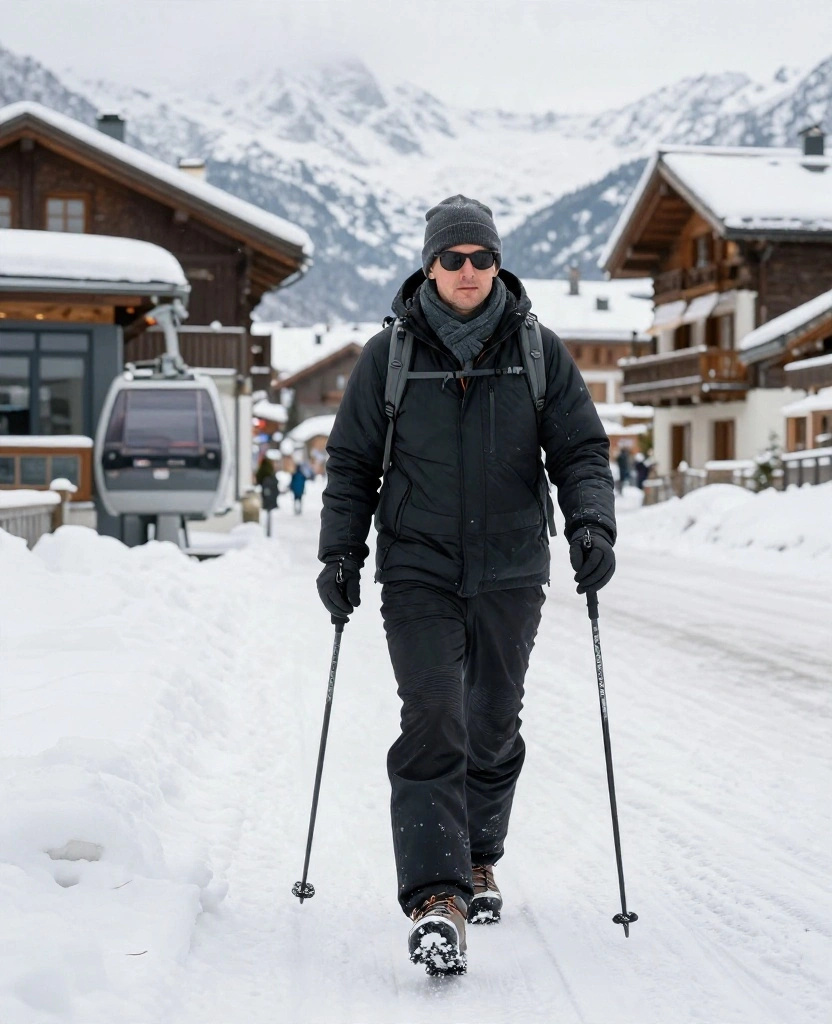
Wet legs can end a snowy day quickly, especially when you sit on a damp bench or walk through slush.
Waterproof trousers or snow pants block wind and keep your thermal layer dry during sledding, snowshoeing, ski lessons, and long lift days.
They can also make casual sightseeing much more comfortable when snow is falling.
The right pair balances protection with movement.
A clean, lightly tapered cut works for town walks, while insulated pants with gaiters and reinforced cuffs suit active mountain plans.
Outfit Pieces:
– Waterproof trousers in black, charcoal, dark olive, or navy
– Thermal leggings underneath for extra warmth
– Straight or lightly tapered cut for easy boot fitting
– Insulated snow pants with ankle gaiters for skiing or sledding
– Adjustable waist tabs for flexible layering
– Reinforced cuffs that resist wet snow and boot rubbing
Styling Tips:
– Sit, bend, climb stairs, and take long strides before buying or packing them.
– Wear a fitted thermal layer underneath instead of several thick bottoms.
– Tuck trouser cuffs over boot collars without letting fabric drag on the ground.
– Pair bright snow pants with a neutral puffer and simple accessories.
– Keep a clean-cut pair for town if you want a less sporty appearance.
One pair is enough for most trips.
Hang them to dry after use, and switch to lined travel trousers for indoor lunches when the streets are clear.
7. Wear Waterproof Hiking Boots with Real Grip
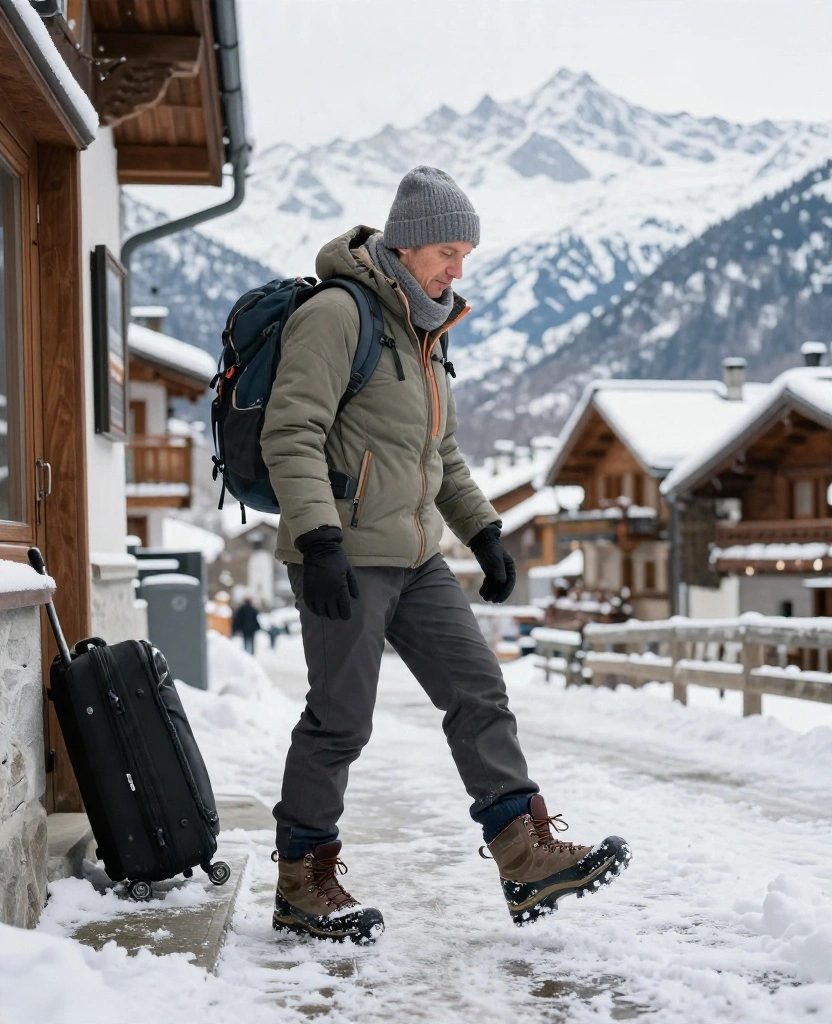
Your boots decide how confidently you move through Chamonix in December.
Snowy paths may hide ice, while village streets can turn wet and uneven after fresh snowfall.
Waterproof hiking boots with deep rubber lugs keep your feet dry and give you better control than smooth fashion soles.
They work because they combine ankle support, warmth, and traction in one useful piece.
Wear them for bakery runs, short trails, cable-car transfers, and evening walks through the village.
Outfit Pieces:
– Waterproof leather or sealed synthetic hiking boots
– Deep-lug rubber sole for packed snow and wet pavement
– Padded ankle collar and firm heel counter
– Mid-height design that supports the ankle without feeling stiff
– Lace hooks or speed laces that work with gloves
– Removable thermal insoles for extra warmth
Styling Tips:
– Leave room for your toes to move, but keep the heel from lifting.
– Try boots late in the day with your thickest planned socks.
– Break them in with short walks before your trip.
– Match dark boots with black trousers for a longer leg line, or use tan boots with cream and camel layers.
– Brush off salt and slush, then dry boots away from direct radiator heat.
Snow boots offer more warmth, while hiking boots feel easier on long village walks.
Choose the pair that suits your plans, and never rely on cotton sneakers for wet snow.
You might also like
8. Give Your Feet Warm Wool Socks
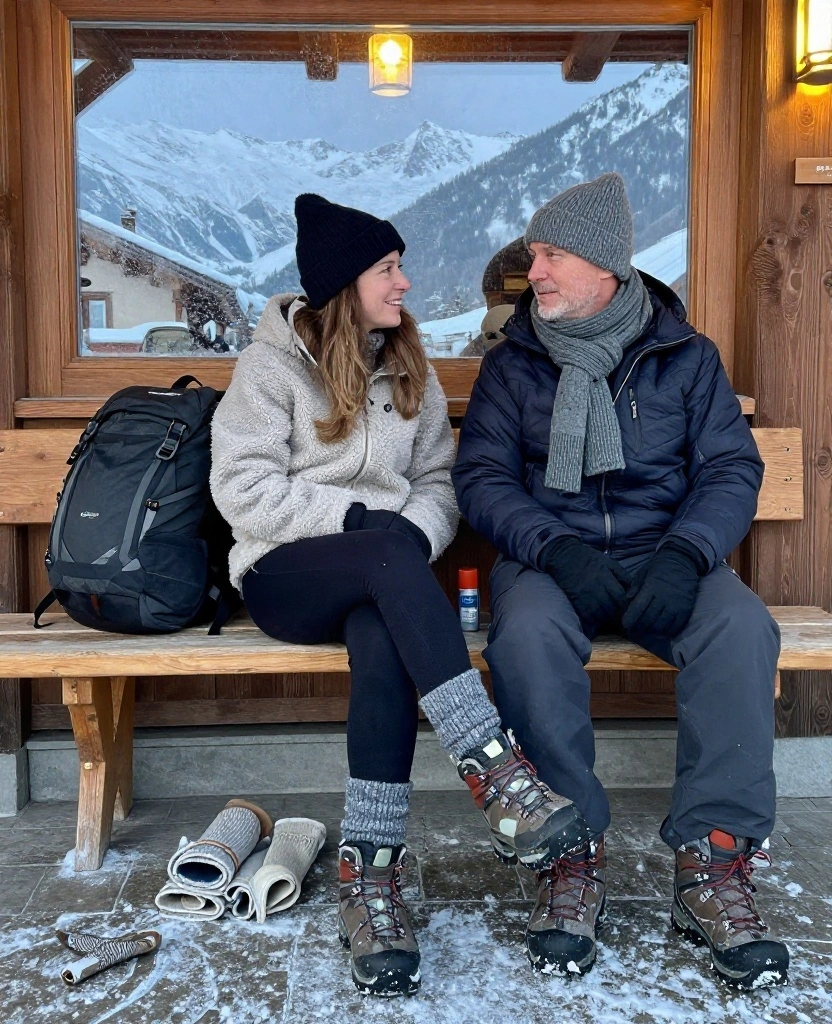
Warm socks can change the whole feel of a winter outfit.
Merino wool manages moisture, cushions each step, and keeps feet comfortable inside hiking boots without the clammy feel of cotton.
A medium-weight pair is usually enough for December sightseeing when your boots already provide insulation.
Good socks work by keeping the fit comfortable, not by adding endless layers.
Tight boots can reduce circulation and make your feet colder, so test every sock and boot combination before travel.
Outfit Pieces:
– Three pairs of medium-weight merino socks for a short trip
– Crew or knee-high length that covers the space above your boot
– Reinforced heel and toe for frequent walking
– Flat seams to reduce rubbing
– Thin liner socks for travelers who need extra warmth
– Ski-specific socks for close-fitting ski boots
Styling Tips:
– Wear one medium wool pair unless your boots have generous extra room.
– Choose socks that reach above the boot collar so skin stays covered.
– Carry one dry pair in your daypack during long outdoor days.
– Keep clean and worn pairs in separate small bags or packing cubes.
– Remove damp socks at night and dry them fully before wearing them again.
Bright socks can add a small flash of color when you sit down, while neutral pairs disappear under trousers.
Dry feet stay warmer, so never leave wet socks balled inside your boots overnight.
9. Protect Your Head and Neck with a Beanie and Neck Warmer
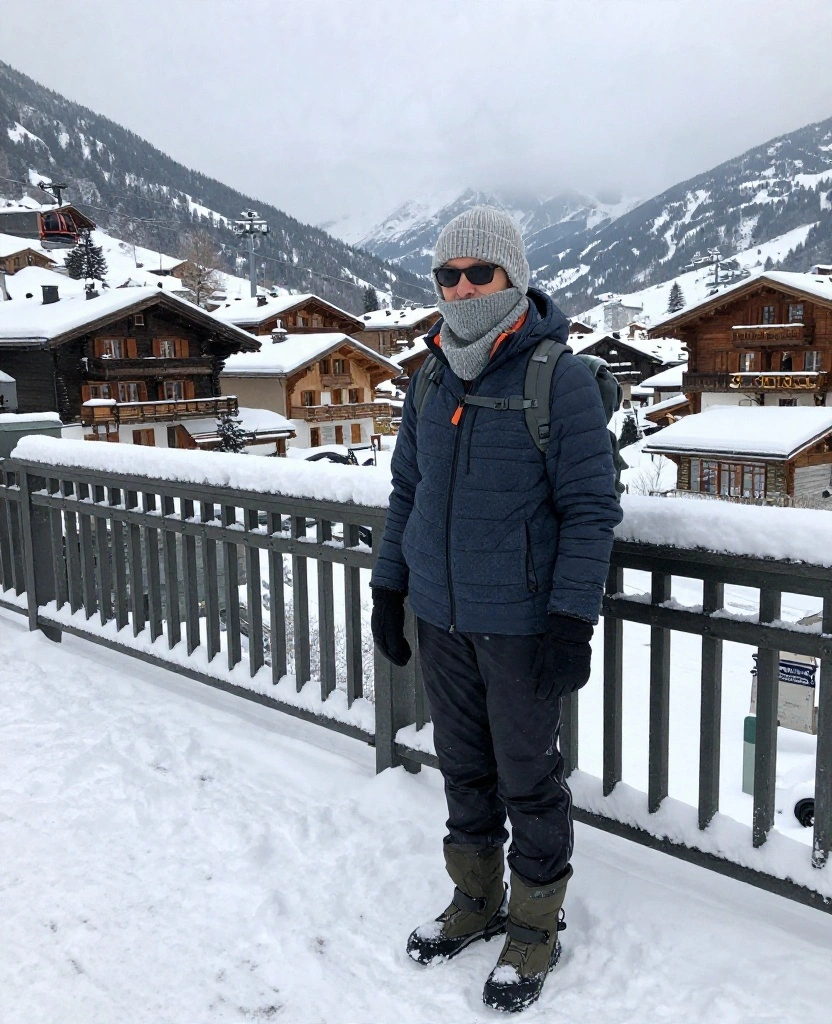
A beanie and neck warmer take up very little room but make cold wind far easier to handle.
Covered ears and a protected neck help you stay outside while waiting for a lift, walking through the village, or enjoying a snowy viewpoint.
These accessories also add color and texture to a simple puffer outfit.
A neck gaiter works well because it stays close to your body and does not flap through snow or catch on equipment.
A larger scarf feels softer for cafés and dinners, giving you two different looks from one winter coat.
Outfit Pieces:
– Cuffed wool-blend beanie that covers both ears
– Fleece or merino neck warmer for active outdoor use
– Oversized wool scarf for village dinners and cafés
– Optional thin balaclava for strong wind or high-altitude activity
– Berry red, mustard, cream, forest green, or charcoal accessories
Styling Tips:
– Choose a snug beanie that stays on without leaving a tight forehead mark.
– Wear the neck warmer inside your jacket collar to block drafts.
– Match the beanie to your gloves for a tidy color link.
– Use a bright accessory with a black or navy coat to lift the outfit.
– Avoid large pom-poms if you plan to wear a helmet.
Pack one practical set and one softer scarf if evenings are part of your plan.
Let wet knitwear dry naturally, and keep it away from direct radiator heat to protect its shape.
Protect Your Head and Neck with a Beanie and Ne…
Editor’s Choice


10. Choose Gloves That Stay Warm and Useful
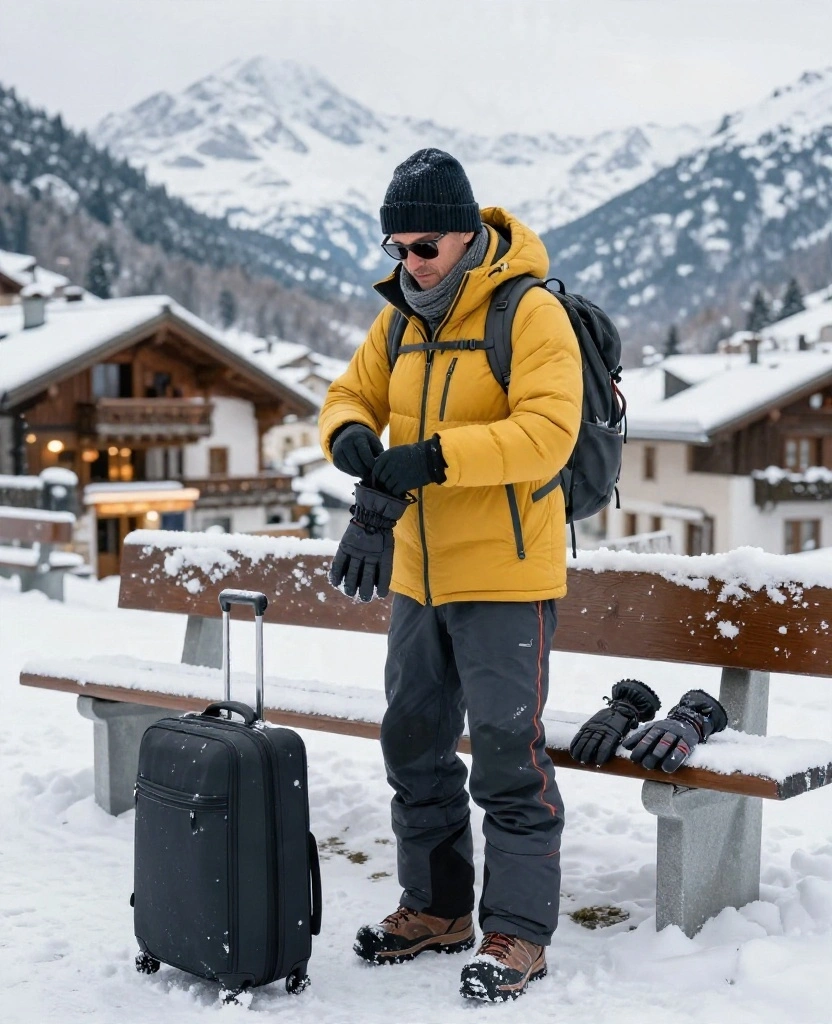
Cold hands can shorten an otherwise lovely day, especially when you are standing still at a lift station.
Choose gloves that block wind, resist light snow, and let you manage zippers, lift passes, and phone screens.
Insulated gloves offer control, while mittens usually feel warmer when you spend long periods outdoors without moving.
The best choice depends on how active you will be.
A glove-and-mitten combination gives you flexibility for sightseeing, skiing, sledding, and quick photos in snowy streets.
Outfit Pieces:
– Insulated waterproof gloves with a warm fleece lining
– Thin merino or synthetic glove liners
– Waterproof mittens for skiing, sledding, or snow play
– Wrist straps or glove clips to prevent accidental loss
– Long cuffs that fit under or over jacket sleeves
– Touchscreen fingertips for occasional phone use
Styling Tips:
– Choose mittens when warmth matters more than finger control.
– Wear thin gloves under mittens only if the full combination leaves room.
– Tuck glove cuffs under your jacket sleeves before tightening the closures.
– Match gloves to your beanie or scarf for a simple coordinated finish.
– Keep a spare lightweight pair in your daypack if snow is falling.
Touchscreen fabric helps, but it should not replace warmth and fit.
Dry gloves inside your room overnight, and never leave them on a wet boot rack where melting snow can soak them.
11. Add Sunglasses and Snow-Friendly Eye Protection
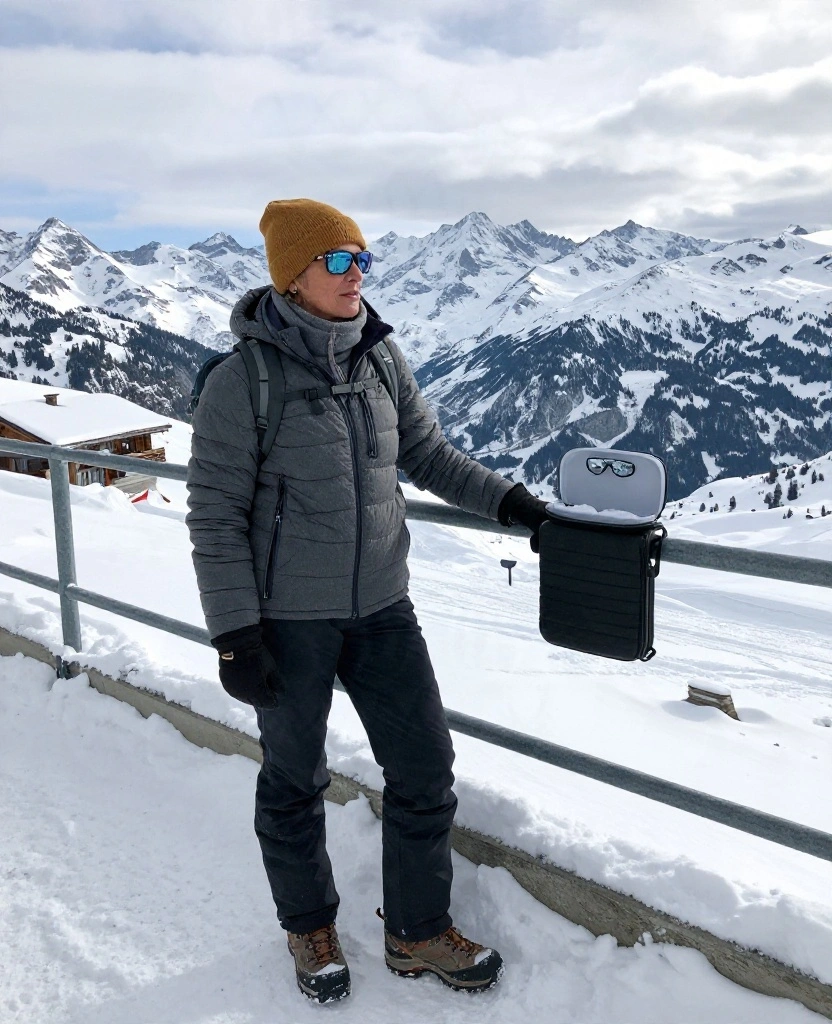
Winter sunlight can feel surprisingly strong when it bounces off fresh snow.
Sunglasses reduce glare, protect your eyes from ultraviolet rays, and make bright village streets easier to navigate.
Larger frames also shield your face from cold wind near lifts and exposed viewpoints.
For skiing, snowboarding, or higher mountain areas, goggles offer better coverage.
They block wind and falling snow while helping you see clearly when the weather changes from bright sun to cloud.
Outfit Pieces:
– Full-UV sunglasses with medium or large frames
– Wraparound style for windy viewpoints and open lift stations
– Snow goggles with lenses suited to changing light
– Anti-fog treatment for active days
– Hard case and dry microfiber cloth
– Optional retainer strap for walking or cable-car rides
Styling Tips:
– Choose frames that sit comfortably with your beanie and hood.
– Keep sunglasses in a case rather than loose inside your daypack.
– Use lighter lenses in cloudy conditions so you can still see uneven snow.
– Coordinate black, tortoiseshell, or dark brown frames with your boots and bag.
– Keep the cleaning cloth in a sealed pocket so it stays dry.
One dependable pair covers most sightseeing days.
Prescription travelers can arrange prescription sunglasses or over-glasses options before leaving, avoiding a rushed resort purchase.
12. Carry a Small Waterproof Daypack
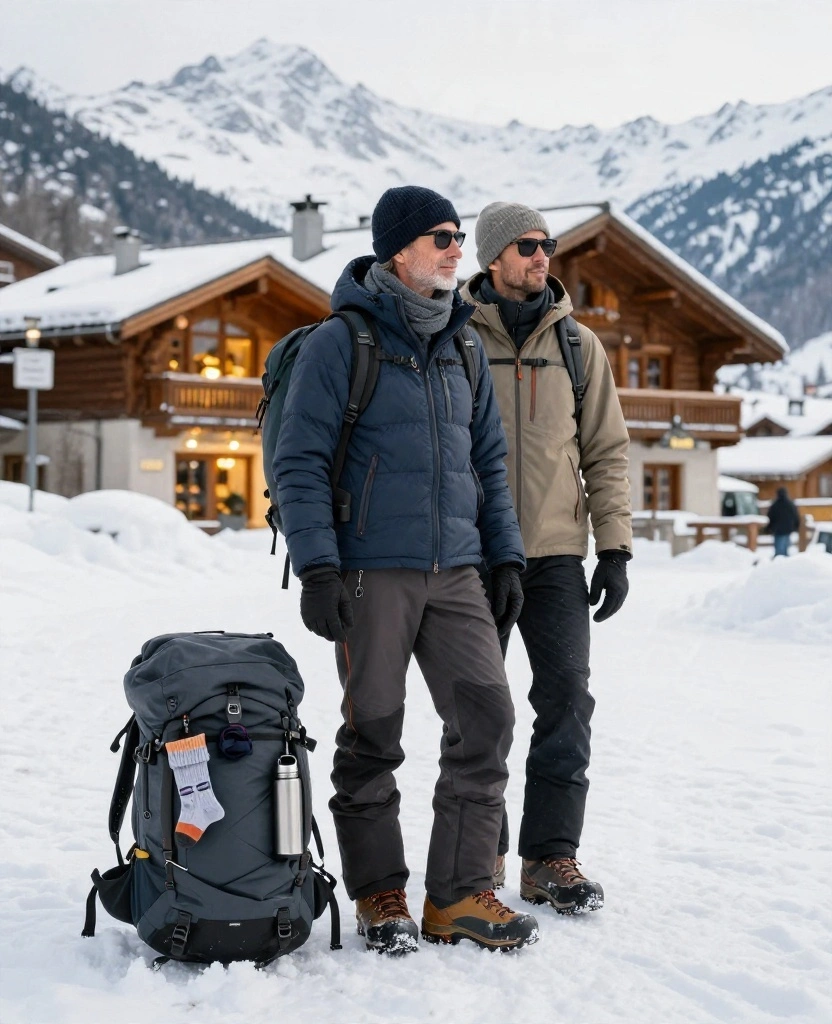
A small daypack keeps your hands free while carrying the layers you remove during the day.
You may leave the hotel in a puffer, take off your fleece at lunch, then need both pieces again after sunset.
A compact waterproof backpack keeps those extras, snacks, and emergency items close without feeling like heavy hiking gear.
The right pack works with winter clothing because its straps adjust over a puffer and its pockets remain easy to reach.
It suits village walks, cable-car trips, casual trails, and full sightseeing days.
Outfit Pieces:
– Fifteen- to twenty-liter water-resistant daypack
– Padded shoulder straps and adjustable chest strap
– Pack liner or small dry bag for extra snow protection
– Side pocket for a water bottle or thermos
– Inside zip pocket for a phone, passport, and accommodation key
– Neutral black, olive, navy, or tan finish
Styling Tips:
– Place heavier items close to your back for better balance.
– Keep a shell, gloves, and spare socks near the top.
– Store damp accessories in a separate waterproof pouch.
– Match the pack color to your boots for a tidy outfit line.
– Test the straps over your full coat before traveling.
A small pack looks less bulky than a large technical bag and works with every winter outfit.
Add a secure zipper if you expect busy cable-car queues, and leave room for a layer or small souvenir.
You Might Also Like
13. Build a Comfortable Town-and-Cable-Car Outfit
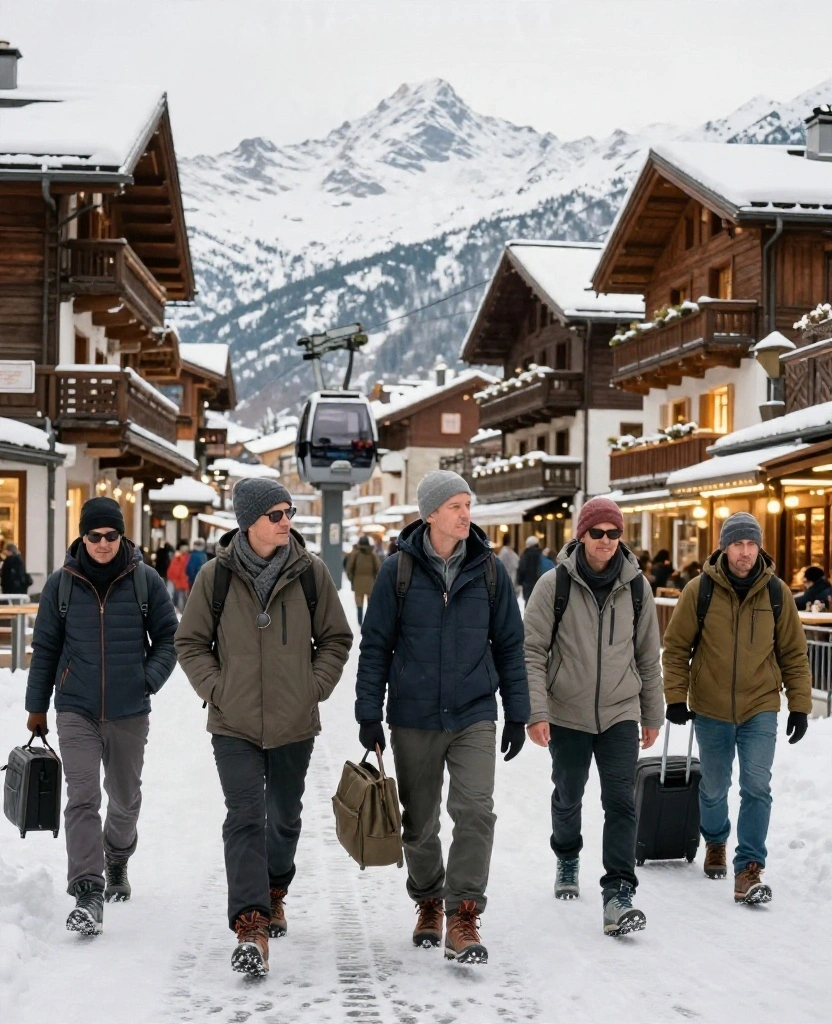
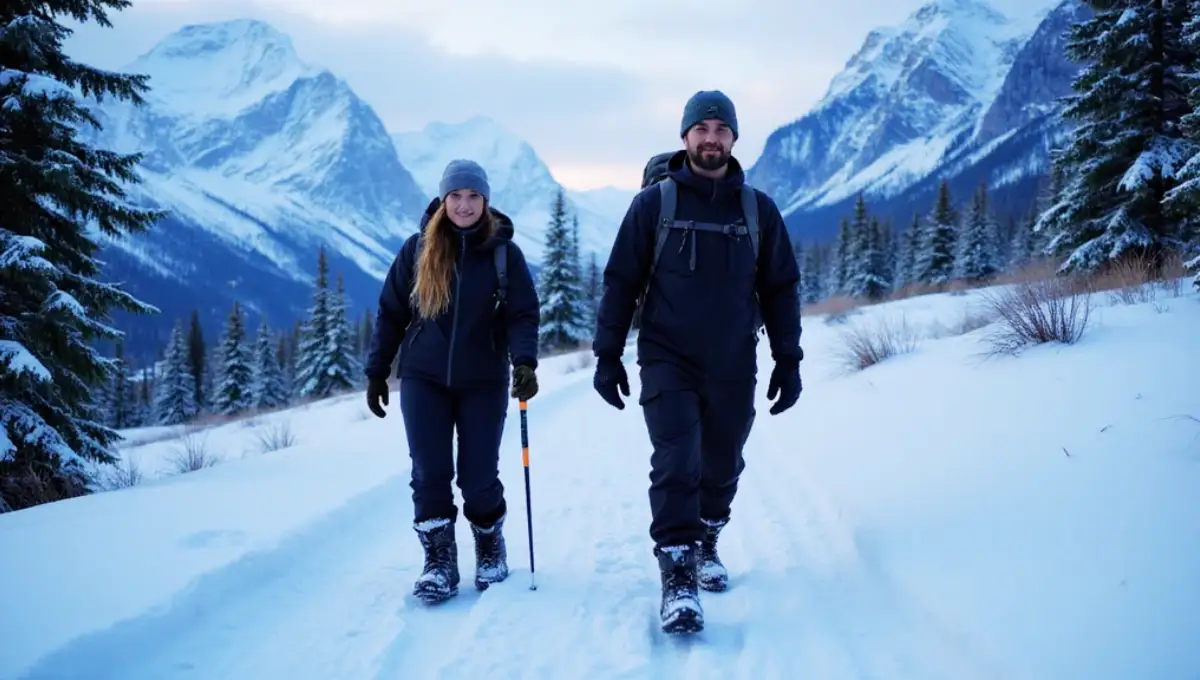
The most useful Chamonix outfit can handle coffee, village streets, a cable-car ride, and lunch without a full change.
Build it with slim layers that work together: merino next to your skin, fleece or wool in the middle, and weather protection outside.
You stay warm outdoors, then remove one piece when the café feels cozy.
This combination works because every layer serves a clear purpose.
It looks practical without feeling like full ski gear, making it ideal for sightseeing, lift stations, casual restaurants, and short snowy walks.
Outfit Pieces:
– Merino thermal top tucked into lined trousers
– Medium fleece or wool sweater
– Insulated puffer with a waterproof shell nearby
– Waterproof trousers for snowy routes or lined travel trousers for clear streets
– Wool socks inside grippy waterproof boots
– Beanie, neck warmer, gloves, sunglasses, and compact daypack
Styling Tips:
– Keep the base layer smooth so trousers and sweaters sit neatly over it.
– Choose a two- or three-color palette, such as black, cream, and forest green.
– Wear a bright scarf or beanie to add personality without extra bulk.
– Avoid wide hems that drag through slush or catch on boot heels.
– Carry the shell and spare gloves even when the morning looks sunny.
This outfit moves easily from a bakery to a snowy viewpoint.
Swap the fleece for a wool sweater and the puffer for a cleaner coat when you plan to spend more time indoors.
14. Save a Warm, Neat Outfit for Chalet Evenings
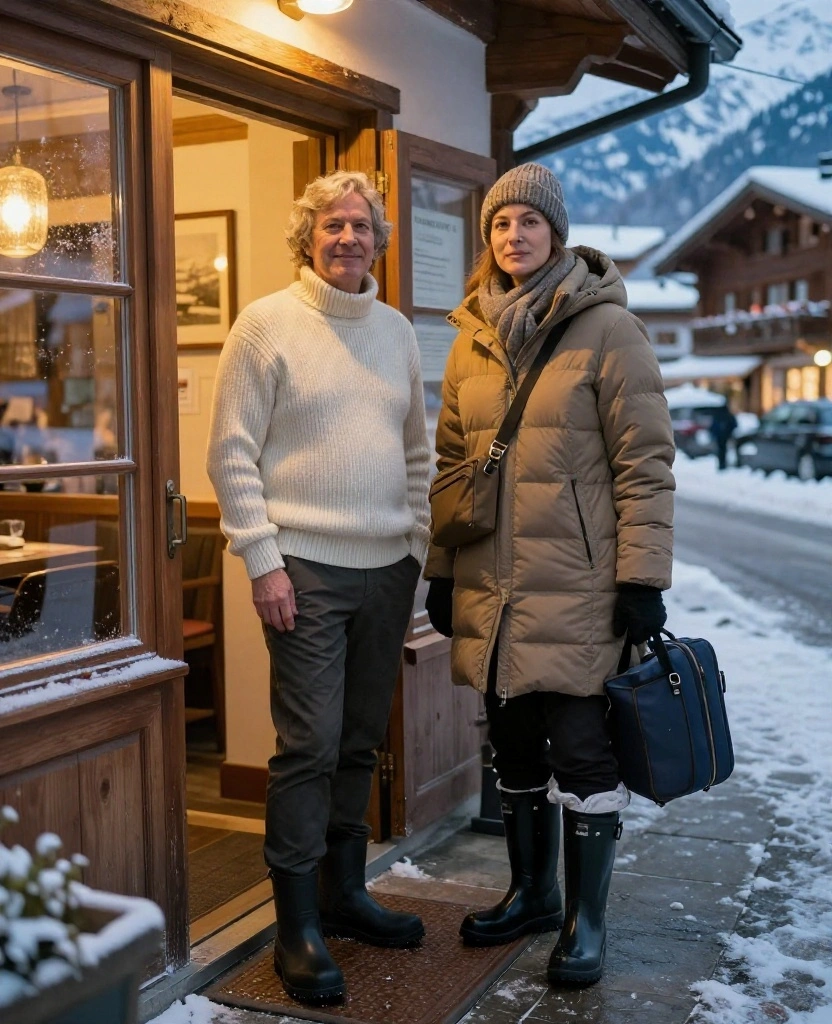
Chamonix evenings are relaxed, but you still want an outfit that feels fresh after a day outside.
A soft wool sweater, warm base layer, neat trousers, and clean waterproof boots look polished without ignoring the cold.
The same layers work for chalet dinners, village restaurants, and a short walk beneath the mountain lights.
This outfit succeeds because comfort and texture do the dressing up.
Fine knitwear, a rich scarf, and simple jewelry add interest while thermal layers and grippy boots protect you between the door and your table.
Outfit Pieces:
– Fine merino sweater or soft wool-blend knit
– Thermal camisole or slim long-sleeved base layer
– Lined trousers, dark travel pants, or skirt with thermal tights
– Clean waterproof ankle boots with a grippy sole
– Wool scarf in burgundy, camel, cream, or deep green
– Small crossbody bag and simple earrings or watch
Styling Tips:
– Choose a fine knit that fits comfortably under your puffer.
– Use a front tuck with trousers, or leave a longer sweater untucked for extra coverage.
– Keep jewelry small so it does not catch on scarves or coat layers.
– Match your scarf to your bag or boots for a finished look.
– Carry the puffer for outdoor transitions instead of relying on a thin dress coat.
Change the scarf, trousers, or base layer to repeat one sweater across several nights.
Warm, tidy, and easy to walk in is the perfect Chamonix dinner formula.
15. Pack Smart with Layers, Packing Cubes, and Small Comforts
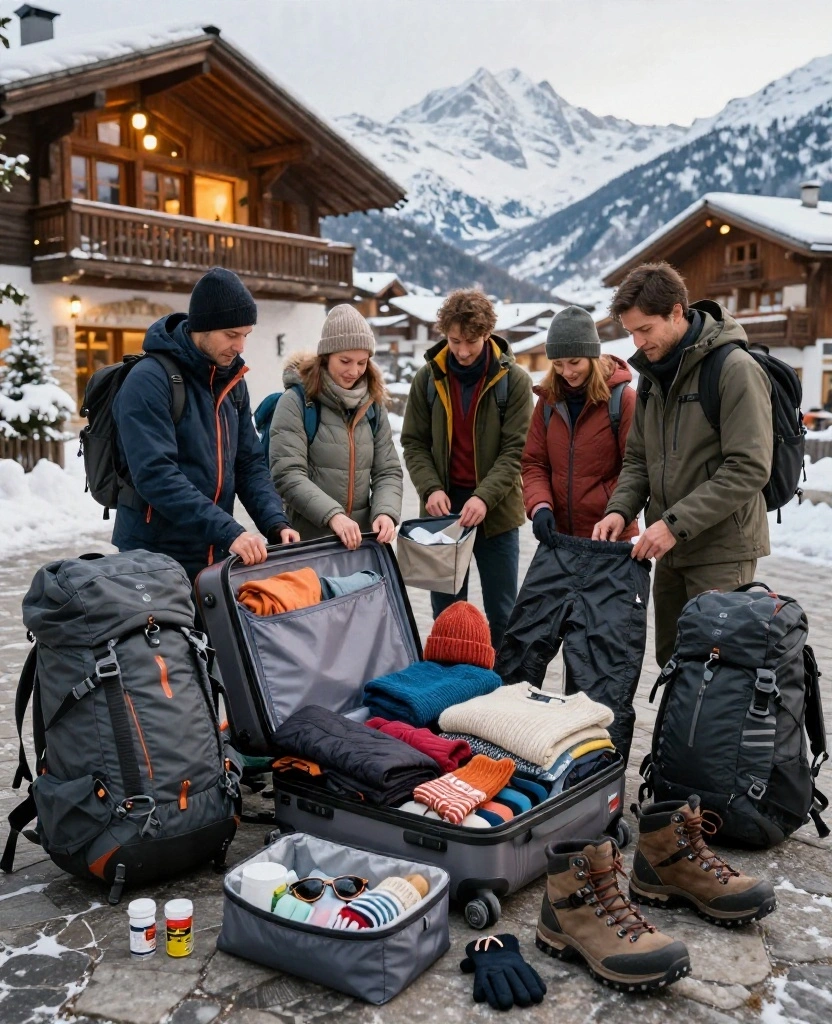
Winter clothing takes space, but a simple system keeps your suitcase manageable.
Build outfits around a small color palette, wear your puffer and boots during travel, and use packing cubes to separate base layers from evening clothes.
You will find what you need faster and avoid unpacking every item just to reach one pair of gloves.
The strongest packing plan uses pieces in several ways.
A fleece can work outdoors, a wool sweater can dress up dinner, and one pair of boots can cover snowy walks and village restaurants.
Outfit Pieces:
– Two merino thermal tops and one or two thermal bottoms
– One fleece and one wool sweater
– One insulated puffer and one waterproof shell
– One pair of waterproof trousers or snow pants
– One pair of waterproof boots and three pairs of wool socks
– Gloves, beanie, neck warmer, scarf, sunglasses, and sunscreen
– Compact daypack, laundry bag, and waterproof pouches
Styling Tips:
– Use black, charcoal, cream, and one accent color to create easy combinations.
– Wear your bulkiest coat and boots on travel day to free suitcase space.
– Pack accessories together so you can change the look without adding clothing.
– Leave space for damp layers and souvenirs.
– Test the full outfit at home, including boots, gloves, and backpack.
Add lip balm with SPF, hand cream, blister patches, detergent sheets, and needed medication.
Smart packing means choosing hard-working pieces that keep you warm, comfortable, and ready for every December plan.
Conclusion: Warm Layers Make the Trip Easier
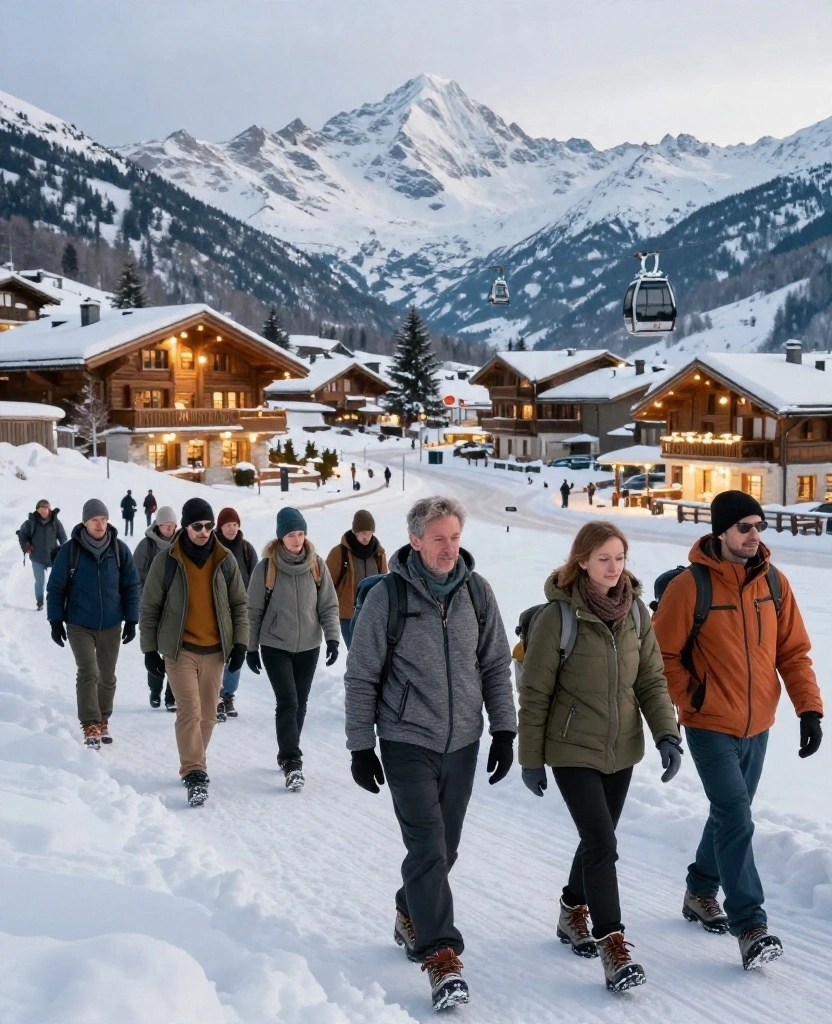
The best answer to what to wear in Chamonix in December is a flexible system.
Thermal layers for warmth, fleece or wool for insulation, waterproof outerwear for changing weather, and sturdy boots for snowy streets.
Add dry socks, useful accessories, and a small daypack, and your winter outfits can carry you from a cable-car morning to a cozy French Alps dinner.
Pack the pieces you will truly wear, test them before departure, and leave room for a little mountain magic on the way home.
Note: We aim to provide accurate product links, but some may occasionally expire or become unavailable.
If this happens, please search directly on Amazon for the product or a suitable alternative.
This post contains Amazon affiliate links, meaning we may earn a small commission if you purchase through our links, at no extra cost to you.
Frequently Asked Questions
Q. How cold is Chamonix in December?
Usually around -8°C to 2°C (18°F to 36°F) in the valley, and much colder at higher altitudes like the Aiguille du Midi, where it can drop well below -20°C with wind chill.
Q. What should I wear for the Aiguille du Midi?
Dress in full winter layers: thermal base, fleece, insulated jacket, warm gloves, hat, and sunglasses. The summit is far colder and windier than the town.
Q. What shoes should I wear in Chamonix town?
Insulated, waterproof boots with a deep tread. Streets are often icy or snowy, and slip-on ice cleats help on frosty days.
Q. Do I need to buy ski clothes, or can I rent them?
Ski equipment is easy to rent in Chamonix, but you’ll usually want your own base layers, socks, gloves, and goggles for comfort and hygiene.
Q. How much daylight does Chamonix get in December?
About eight hours, with sunrise near 8:15 a.m. and sunset around 4:45 p.m. The surrounding peaks can shade the valley earlier, so plan your slope time for midday.

10 Stylish San Francisco Outfits for August That Will Keep You Cool and Chic!

10 Must-Have San Francisco Outfits for June That’ll Make You the Envy of Every Tourist!

10 Must-Have Outfits for San Francisco in May That Will WOW the Locals!
