Denver in December brings crisp mountain air, chilly mornings, and a true winter atmosphere, with plenty of opportunities for outdoor adventures and festive city walks.
When planning what to wear in Denver in December, I focus on warm layers that are easy to adjust throughout the day.
Think thermal tops, cozy sweaters, jeans, fleece jackets, insulated coats, warm boots, and comfortable winter accessories.
These Denver outfit ideas, December packing tips, and winter looks will keep you warm and stylish.
1. Begin With a Close-Fitting Thermal Base Layer
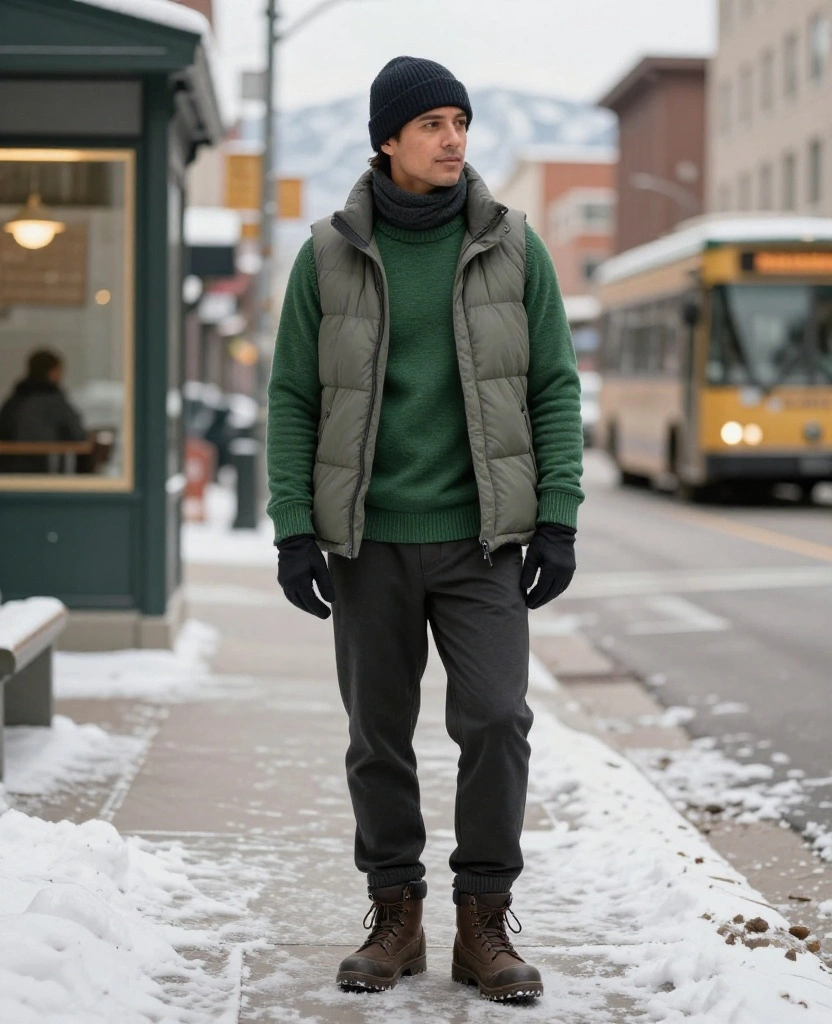
Your first layer should keep warmth close without making the rest of your outfit feel tight.
A smooth merino or moisture-wicking synthetic top creates a warm pocket next to your skin while moving sweat away during walks.
This slim foundation works for downtown errands, office commutes, and long days that move between cold streets and heated rooms.
Outfit Pieces:
– Lightweight merino crew neck in black, cream, or heather gray
– Smooth synthetic thermal top with a close but flexible fit
– High-rise lined jeans, ponte trousers, or thermal leggings
– Long-sleeve base layer with thumbholes for extra cuff coverage
– Thin merino camisole or short-sleeve top for added core warmth
Styling Tips:
– Choose a close fit that follows your shape without squeezing your chest, shoulders, or arms.
– Tuck the hem into your waistband so cold air cannot reach your lower back.
– Pick a smooth fabric under fitted sweaters to prevent ridges and bunching.
– Match the neckline to your next layer, such as a crew neck under a sweater or a mock neck under an open coat.
– Leave a small hint of burgundy, blue, or cream at the collar for a simple color accent.
A good thermal should feel almost invisible once you put it on.
Add a thin vest or short-sleeve layer when you need more warmth without adding bulky sleeves.
Begin With a Close-Fitting Thermal Base Layer
Editor’s Choice

4 Pack Women’s Thermal Shirts Fleece Lined Long Sleeve for Winter
 Amazon$29.69
100% Merino Wool Base Layer for Men Long Sleeve Crew Neck Thermal Shirt
Amazon$49.99
Mens Long Sleeve Shirts Thermal T-Shirt Slim Fit Crewneck Sweater Knitte…
Amazon$24.992. Pick Breathable Fabrics That Handle Denver’s Dry Cold
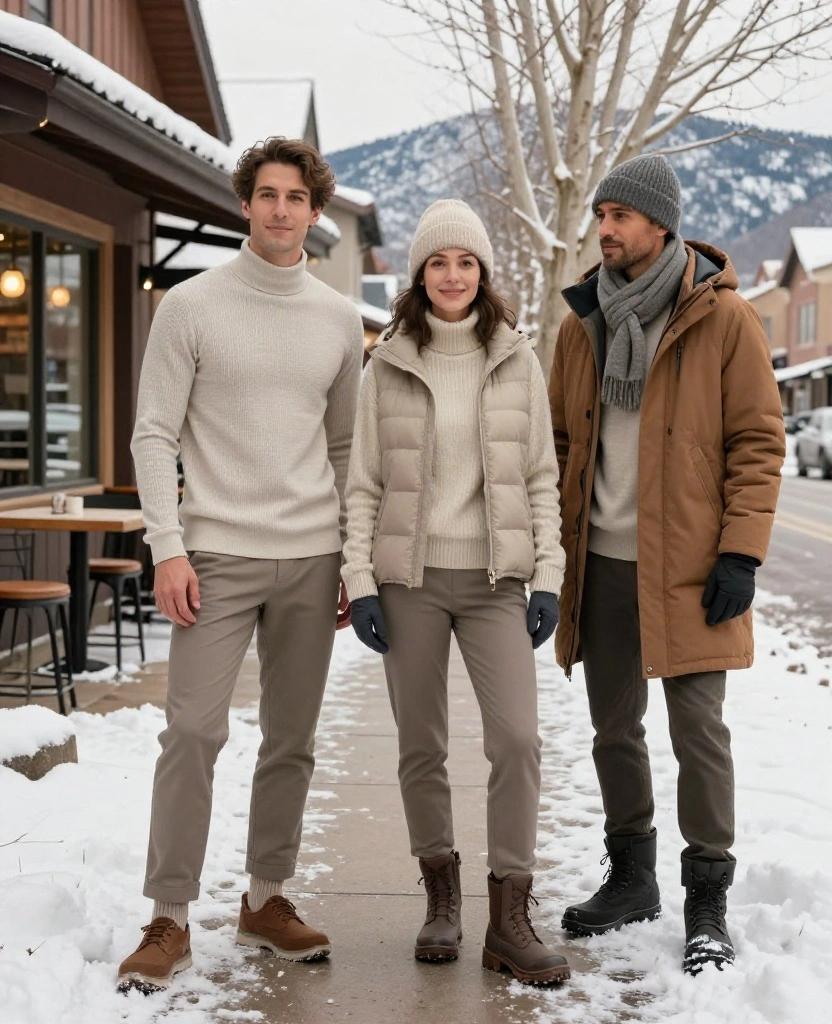
Dry cold can feel mild in bright sun and biting in the shade, so your fabric choices matter.
Breathable layers release extra heat before sweat builds up, helping you stay warmer when you stop moving.
A thoughtful mix of merino, fleece, wool, and technical fabric works for museums, outdoor walks, transit stops, and casual dinners.
Outfit Pieces:
– Fine merino base layer in charcoal or natural cream
– Lightweight grid fleece or brushed jersey mid-layer
– Wool-blend trousers, lined jeans, or technical hiking pants
– Tightly woven wool coat or treated overshirt
– Water-resistant nylon shell for snow and wet wind
Styling Tips:
– Keep merino or moisture-wicking synthetic fabric next to your skin.
– Use fine fleece or light wool for insulation instead of a thick cotton sweatshirt.
– Save cotton for a short indoor outing or wear it over a dry thermal layer.
– Add a waterproof shell when wet snow is likely, since a wool coat alone may absorb moisture.
– Combine different surfaces, such as smooth merino, soft fleece, and matte nylon, to add interest without extra thickness.
Let each fabric handle one job.
Use breathable fibers for comfort, warm fibers for insulation, and protective outer materials for wind or snow.
This approach keeps your outfit lighter and easier to adjust.
📹 Related Video: Best Fabrics for Cold Weather – From Wool to Fleece, What Actually Keeps You Warm
Pick Breathable Fabrics That Handle Denver’s …
Editor’s Choice

100% Merino Wool Base Layer Women – Long Sleeve Thermal Shirt with Socks
Amazon$53.09

Long Sleeve Jersey T-Shirt Custom Name and Number for Men Youth Gifts
Amazon$21.99Also Read: What to Wear in Austin in December?
3. Use a Thin Mid-Layer Instead of a Giant Sweater
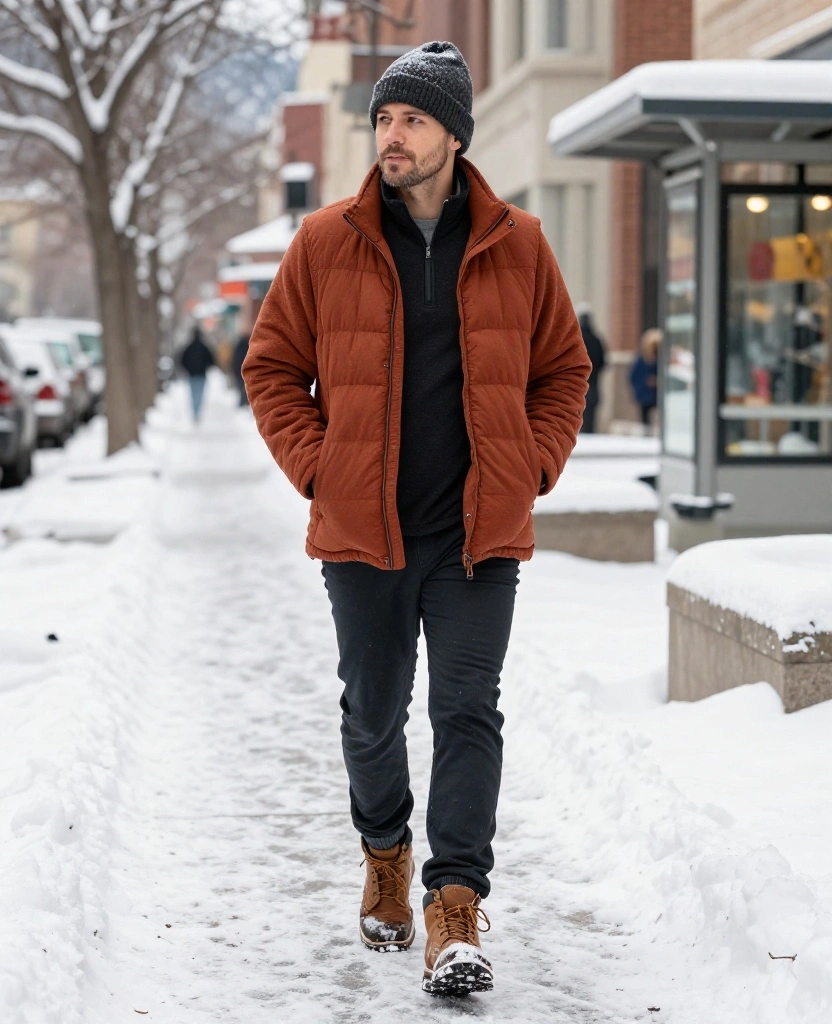
A huge sweater may feel warm at home, yet it often turns uncomfortable under a winter coat.
Thin mid-layers trap useful air while leaving room for your arms to move.
This combination works well for office days, travel, shopping, and any plan that takes you from a cold sidewalk into a heated building.
Outfit Pieces:
– Lightweight merino crew neck or mock neck
– Slim fleece quarter-zip in navy, gray, or cream
– Fine cardigan with a hip-length hem
– Thin quilted shirt jacket for travel
– Straight jeans, lined trousers, or ponte pants
– Roomy wool coat, parka, or waterproof shell
Styling Tips:
– Choose raglan sleeves or smooth armholes so the mid-layer slides under your coat.
– Keep the middle layer close to your body without making it clingy.
– Use a quarter-zip to release heat at the neck during brisk walks.
– Pair a hip-length layer with jeans or trousers, and reserve longer tops for slim leggings.
– Let a small strip of the base layer show at the collar or cuff so the outfit looks connected.
– Try cream under camel, navy under gray, or burgundy beneath black for easy color depth.
Thin layers give you more control than one bulky sweater.
Swap the fleece for a cardigan at work or a quilted shirt for a casual outdoor plan.
Use a Thin Mid-Layer Instead of a Giant Sweater
Editor’s Choice

Women’s 100% Merino Wool 2026 Fall Winter First-Line Ready to Wear Long …
Amazon$49.99
Cardigan Sweaters for Women Lightweight Fall Open Front with Pockets
Amazon$24.50
Women’s Polar Fleece Jacket Zip Up Lightweight Hiking Sweatshirt
Amazon$33.144. Add a Slim Insulated Vest for Core Warmth
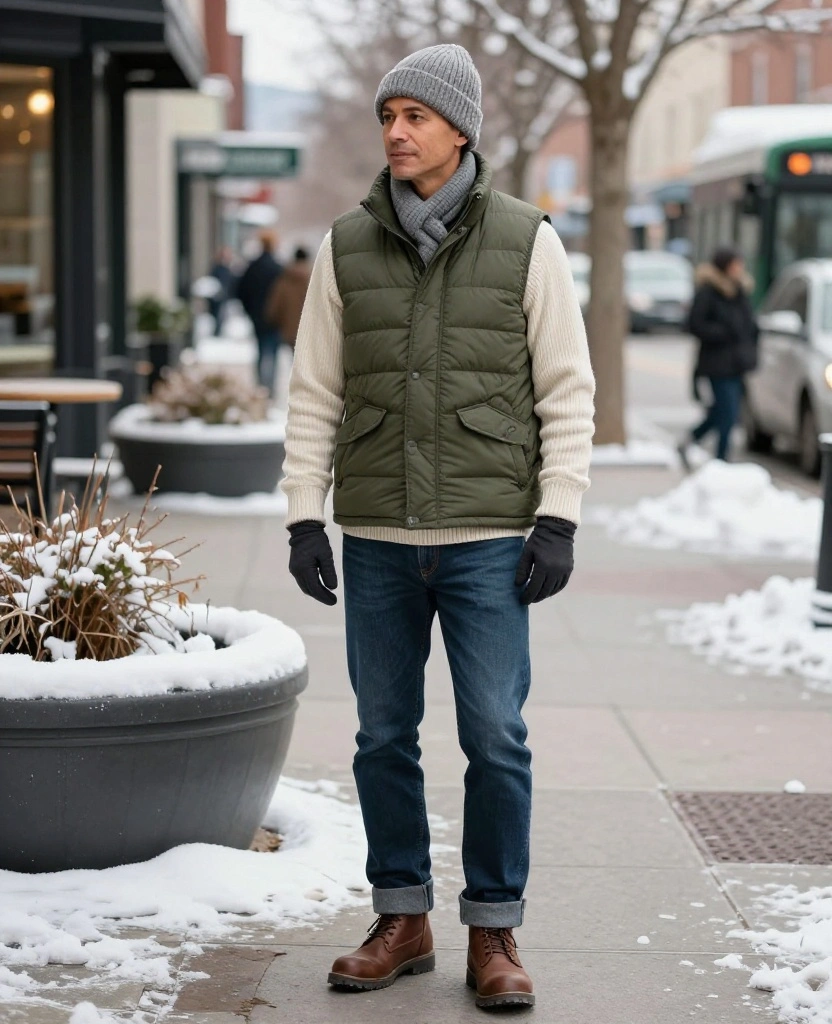
An insulated vest warms your chest and back while keeping your arms free.
That makes it useful for driving, walking, carrying bags, and moving through crowded city streets.
Wear it under a roomy coat on colder days or over a sweater when the December weather feels dry and calm.
Outfit Pieces:
– Slim down or synthetic vest with narrow quilt channels
– Merino thermal top or fitted long-sleeve shirt
– Fine fleece, cardigan, or lightweight sweater
– High-rise jeans or straight wool trousers
– Wool coat, parka, or water-resistant shell
– Medium leather crossbody bag with a flat profile
Styling Tips:
– Choose a close fit with enough room for one thin sweater underneath.
– Look for a high collar to protect your neck without needing a thick scarf.
– Use a two-way zipper if you sit often or drive between stops.
– Match the vest to your coat for a clean, long line, or choose olive, navy, or berry as a contrast over a neutral sweater.
– Keep the hem near your hip bones when wearing it under a longer coat.
– Unzip the vest indoors instead of removing every layer during a short stop.
A vest adds warmth with less arm bulk than a second sweater.
Pack one for travel, or switch from a hidden layer to a visible piece when the afternoon becomes milder.
Add a Slim Insulated Vest for Core Warmth
Editor’s Choice
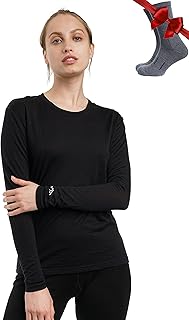
100% Merino Wool Base Layer Women – Long Sleeve Thermal Shirt with Socks
Amazon$49.99
Men’s Hooded Fleece Lined Rain Shell Jacket Waterproof Lightweight
Amazon$47.99
Women’s Lightweight Water-Resistant Packable Puffer Vest
Amazon$23.295. Choose Packable Down for Lightweight Insulation
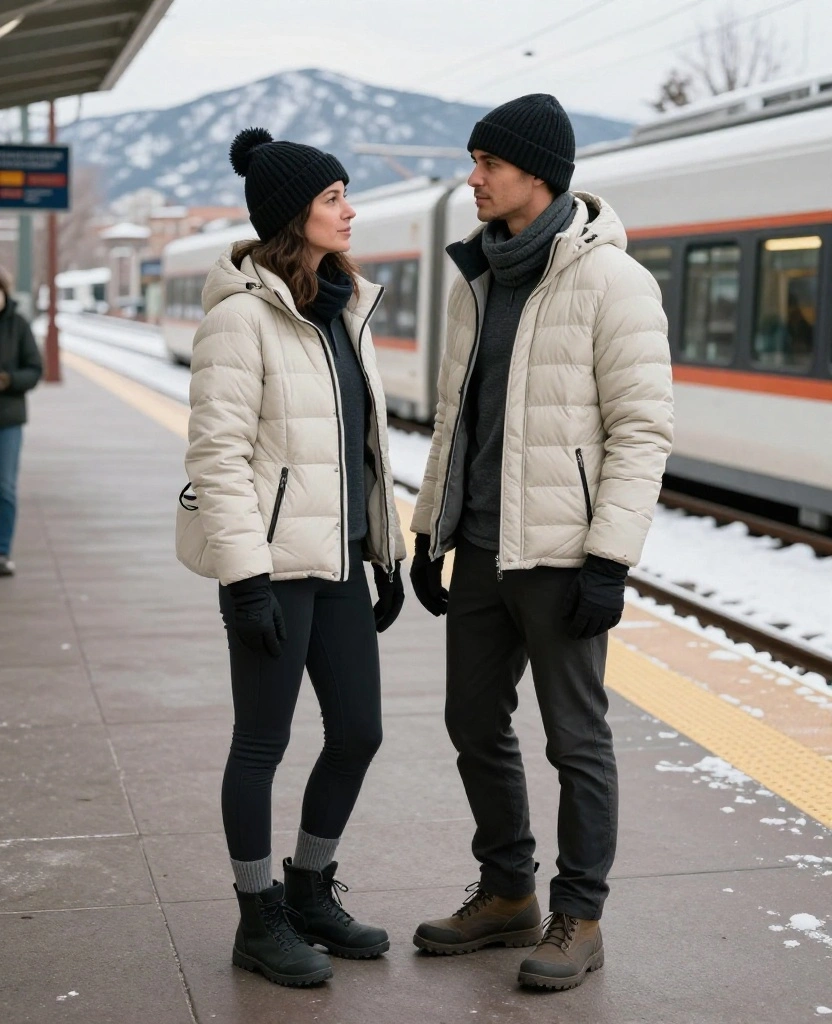
A packable down jacket gives your outfit extra warmth without weighing down your shoulders.
It is especially useful when a sunny morning turns cold after sunset or when your day includes both outdoor walks and warm indoor stops.
Wear it alone for dry weather or place it under a shell when wind and snow enter the forecast.
Outfit Pieces:
– Lightweight down jacket in black, navy, olive, or deep plum
– Synthetic insulated jacket as a damp-weather alternative
– Thin merino thermal top
– Fine fleece or fitted sweater
– Waterproof shell with enough room for one insulation layer
– Straight jeans, lined trousers, or technical pants
Styling Tips:
– Choose enough room for a thermal and thin mid-layer, but avoid a loose fit that lets warm air escape.
– Look for elastic cuffs, a drawcord hem, and a collar that closes near your chin.
– Wear a shorter jacket under a longer wool coat to prevent competing hems.
– Use synthetic fill if wet weather or easy washing matters more than the lightest weight.
– Open the zipper before entering a heated room to prevent sweating.
– Store the jacket loosely when possible so the insulation can regain its shape.
Packable insulation works for travel, outdoor cafes, and evening walks.
Add a shell for wet snow, or wear the jacket alone over a thermal top when the sky stays clear.
Choose Packable Down for Lightweight Insulation
Editor’s Choice
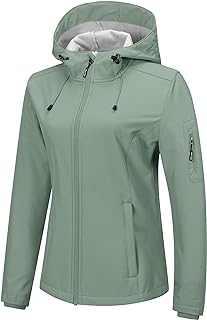
Women’s Softshell Jacket Fleece Lined Waterproof Rain Coat
Amazon$47.59
Men’s Packable Hooded Puffer Jacket Insulated Winter Coat
Amazon$50.99
6. Finish With a Windproof or Waterproof Shell
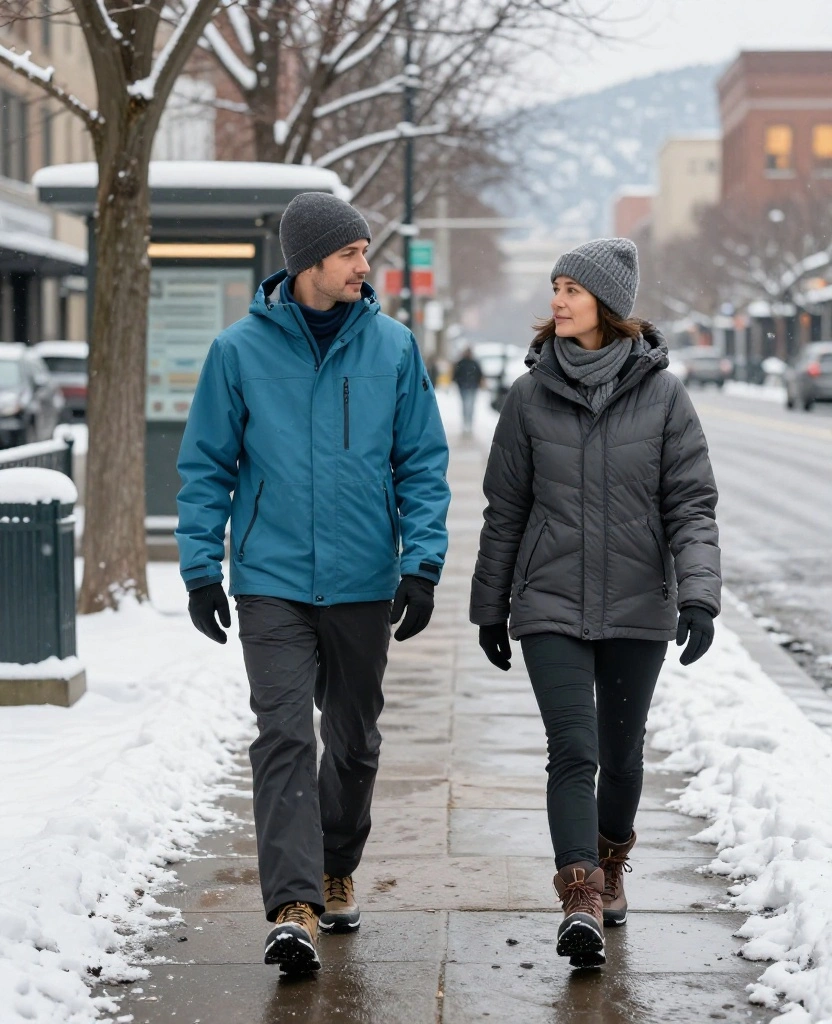
Warm insulation cannot work well when wind cuts through it.
A light shell blocks gusts, snow, and wet sidewalks while keeping the rest of your outfit slim.
This final layer helps during transit waits, outdoor events, snowy walks, and busy days when you cannot predict the weather.
Outfit Pieces:
– Windproof nylon shell in black, charcoal, olive, or navy
– Waterproof jacket with sealed seams for wet snow
– Lightweight fleece or packable down layer
– Thermal base top in merino or technical fabric
– Lined trousers or straight-leg jeans
– Waterproof boots with a grippy rubber sole
Styling Tips:
– Choose a hood, adjustable cuffs, and a hem that can close around your body.
– Use a two-way zipper for easier sitting and stair climbing.
– Pick underarm vents if you walk quickly or spend time outdoors.
– Check the forecast before choosing water-resistant or fully waterproof fabric.
– Keep the shell slightly roomy so it can cover insulation without crushing it.
– Pair a dark shell with a bright scarf or gloves when you want a clear color accent.
A good shell should protect your outfit without making you look overpacked.
Wear it over fleece for active plans or over a wool coat when wet snow threatens.
Finish With a Windproof or Waterproof Shell
Editor’s Choice

33,000ft Women’s Waterproof Softshell Jacket Hooded Fleece Lined Raincoa…
Amazon$52.69
Mens Packable Rain Jacket Lightweight Waterproof Raincoat with Hood Outd…
Amazon$19.987. Keep the Hemline and Proportions Streamlined
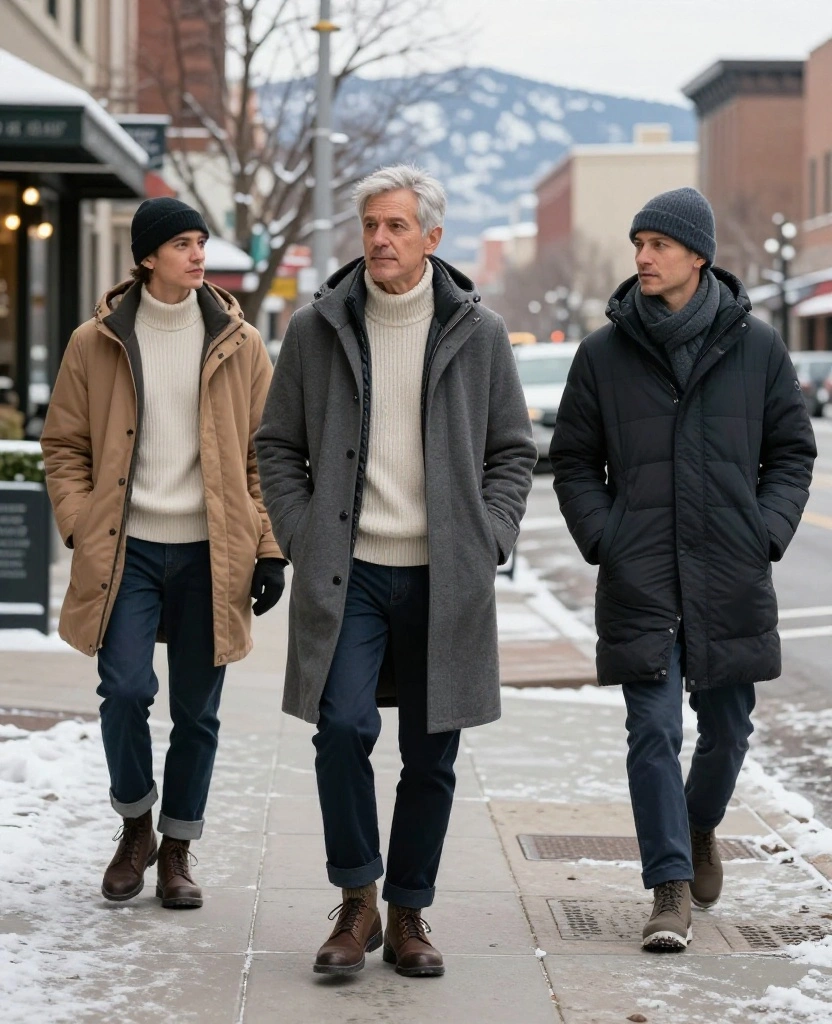
Layering looks polished when the hems support one another instead of competing at your waist.
Clean proportions also keep cold air from slipping between pieces.
This matters for work outfits, downtown walks, travel days, and any winter look where you want warmth without a puffy shape.
Outfit Pieces:
– Close-fitting thermal top tucked into high-rise bottoms
– Hip-length puffer or insulated jacket
– Knee-length wool coat for a longer outer line
– Straight jeans, lined trousers, or slim ponte pants
– Longer curved-hem base layer for extra back coverage
– Flat leather belt worn only over non-bulky layers
Styling Tips:
– Choose one main length, such as a knee coat over a short down jacket.
– Tuck the thermal layer, then leave a thin sweater untucked if it lies flat.
– Use a half-tuck only with a fine knit, not several thick layers.
– Pair a longer tunic with slim bottoms and a coat that covers most of the hem.
– Try a short puffer with high-rise jeans for a compact shape, or a long coat with straight trousers for a vertical line.
– Check the outfit while sitting and bending so the layers do not ride up.
Streamlined does not mean tight. Choose flexible fabrics and side vents that let you move.
A long coat, slim vest, and smooth trousers can look warm, balanced, and refined.
You might also like


Keep the Hemline and Proportions Streamlined
Editor’s Choice

Dalavch 2 Set Mens Thermal Underwear Long Johns Fleece Lined Base Layer …
Amazon$28.99
Women’s Casual Thicken Wool Blend Stand Collar Single Breasted Pea Coat
Amazon$41.59
Men Football Custom Puffer Coat Add Any Name Number Lightweight Water-Re…
Amazon$63.258. Build Warmth From the Waist Down With Lined Bottoms
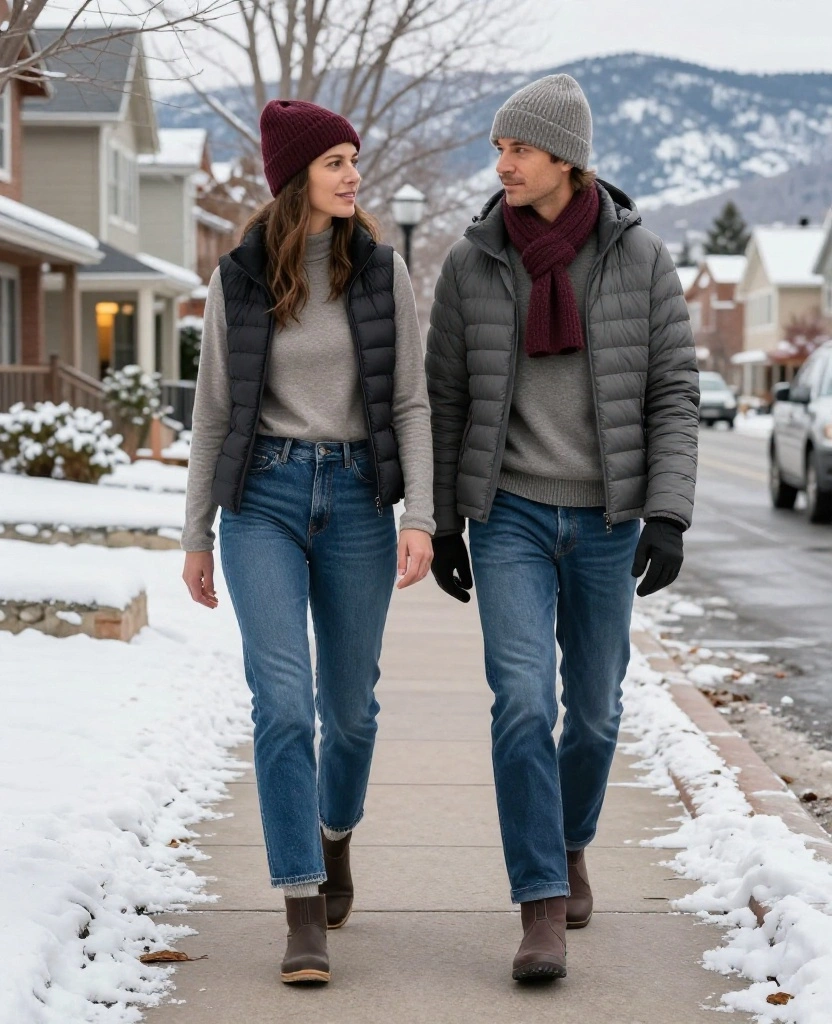
Cold legs can make even a warm coat feel useless.
Lined jeans, brushed trousers, thermal tights, and fleece leggings add heat close to your body while keeping your outfit easy to wear.
Choose the fabric based on your plans, whether you are walking downtown, working indoors, or spending hours near the foothills.
Outfit Pieces:
– Brushed-back straight jeans in dark indigo or black
– Wool-blend trousers with a soft inner finish
– Fleece-lined leggings for sweater dresses and long coats
– Thin merino tights for dresses and skirts
– Moisture-wicking thermal bottoms for outdoor activities
– Mid-calf waterproof boots with room for a warm sock
Styling Tips:
– Pick brushed fleece for city errands, merino for long outdoor days, and technical fabric for active movement.
– Leave room at the hips and knees so you can sit, climb stairs, and squat comfortably.
– Choose a smooth ankle opening that fits neatly inside winter boots.
– Avoid stacking thick socks over tight leggings because restricted circulation can make feet colder.
– Match your pant hem to your boots so wind and snow cannot reach exposed ankles.
– Add a long coat for upper-leg coverage, but keep a thermal bottom for extended outdoor time.
Lined bottoms create warmth without the stiff feeling of snow pants.
Swap jeans for wool trousers at work or thermal tights under a dress for a more polished December outfit.
Build Warmth From the Waist Down With Lined Bot…
Editor’s Choice

Dark Green Heavyweight Wool Hunting and Shooting Cargo Pants to Size 52 …
Amazon$172.99
Fleece Lined Leggings Women – Thick Winter Thermal Warm Pants
Amazon$19.99
Women’s Winter Fleece Sweatpants – Sherpa Lined Warm Joggers with Pocket…
Amazon$14.999. Treat Socks and Boots as Part of the Layering System
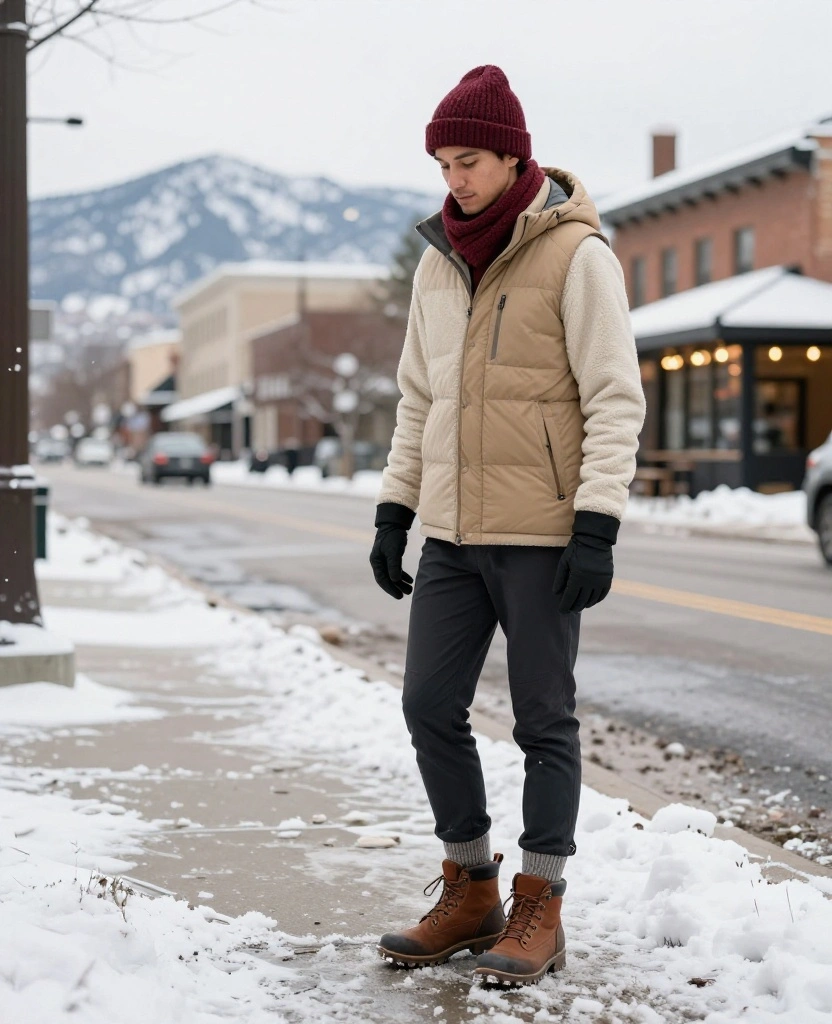
Cold feet can ruin your whole day, even when your coat and layers feel perfect.
The best boot system combines moisture control, enough space, and a sole that grips icy ground.
Use it for daily errands, transit waits, snowy walks, and longer outdoor plans around Denver.
Outfit Pieces:
– Medium-weight merino hiking socks
– Thin wool insole for extra warmth
– Waterproof leather or treated suede ankle boots
– Taller insulated boots for deep snow or long outdoor time
– Lugged rubber outsole with a moderate platform
– Spare socks stored in a small waterproof pouch
Styling Tips:
– Choose medium merino socks instead of two thick pairs that squeeze your feet.
– Make sure your toes can wiggle and your heel stays mostly in place.
– Leave room for a thermal sock without creating a loose ankle gap.
– Snug the lower laces for stability, then keep the upper lacing comfortable for circulation.
– Use a taller boot or gaiter when slush reaches above the ankle.
– Dry wet boots at room temperature with the insoles removed, away from direct heat.
A waterproof ankle boot suits jeans, trousers, and wool coats for everyday city wear.
Choose a taller insulated style for hiking, shoveling, or long waits outside.
Treat Socks and Boots as Part of the Layering S…
Editor’s Choice

Womens Winter Snow Boots Warm Fur Lined Anti-Slip Ankle Booties Walking …
Amazon$43.99
Mens Merino Wool Crew Socks Thermal and Warm Socks for Winter Work Hikin…
Amazon$14.99
Wool Felt Warm Insoles Soft Winter Replacement Inserts for Boots & Shoes
Amazon$9.9910. Seal the Neck and Wrists With Light Accessories
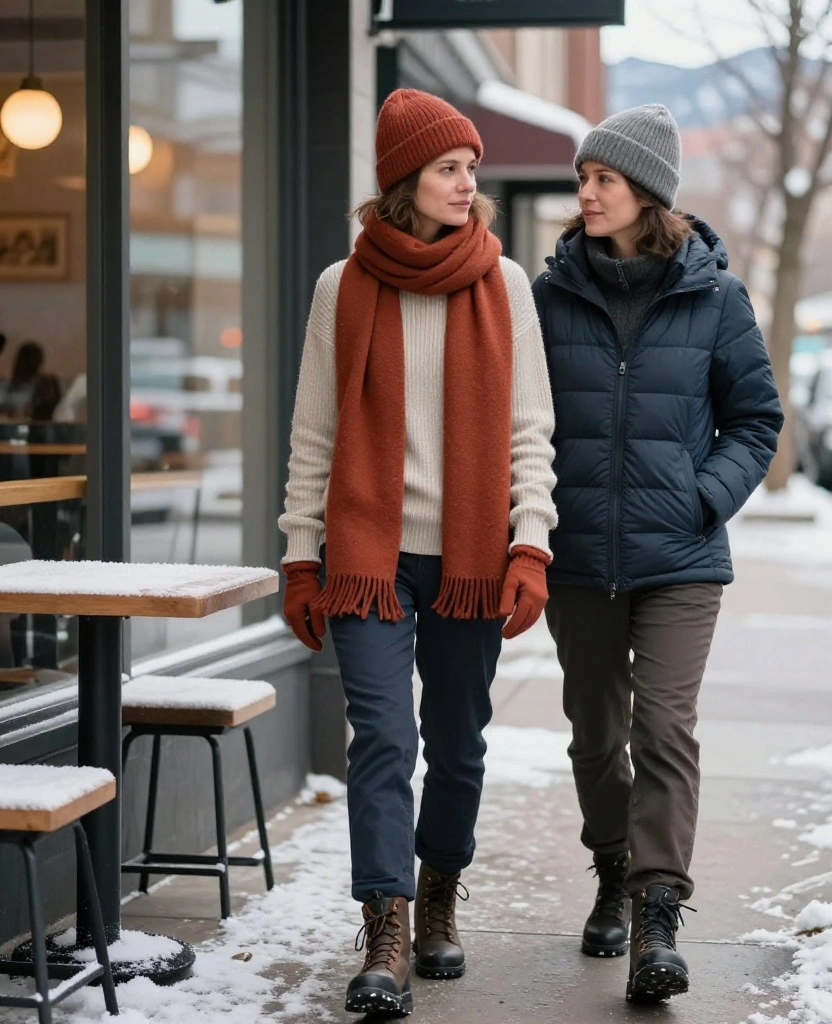
Small gaps at your neck and wrists can make a warm outfit feel surprisingly cold.
A light scarf, secure hat, and useful gloves close those openings without forcing you into a heavier coat.
These accessories work for commutes, shopping, outdoor dining, and casual winter walks.
Outfit Pieces:
– Fine merino or cashmere-blend scarf
– Ribbed beanie that covers the ears
– Touchscreen knit gloves for short city trips
– Insulated soft-shell gloves for long outdoor waits
– Thin liner gloves under weather-resistant mittens
– Lightweight neck gaiter for active plans
Styling Tips:
– Wear a thin scarf inside a tailored wool coat and a medium knit scarf over a crew neck.
– Use a simple loop or loose tuck instead of wrapping a bulky scarf several times.
– Choose mittens for maximum warmth and gloves when you need keys or phone access.
– Pick a beanie that fits under your hood without pressing your glasses or temples.
– Repeat one accessory color in your bag, boots, or coat trim for a finished look.
– Store accessories together in one coat pocket or a small pouch.
Try a rust scarf with a charcoal coat or berry gloves with navy outerwear for easy color.
Swap the scarf for a gaiter when wind is strong or your plans include brisk outdoor movement.
Seal the Neck and Wrists With Light Accessories
Editor’s Choice


Cashmere Triangle Scarf for Women, Lightweight Merino Wool Blend
Amazon$44.9911. Use Venting and Easy-Open Layers for Indoor Heat
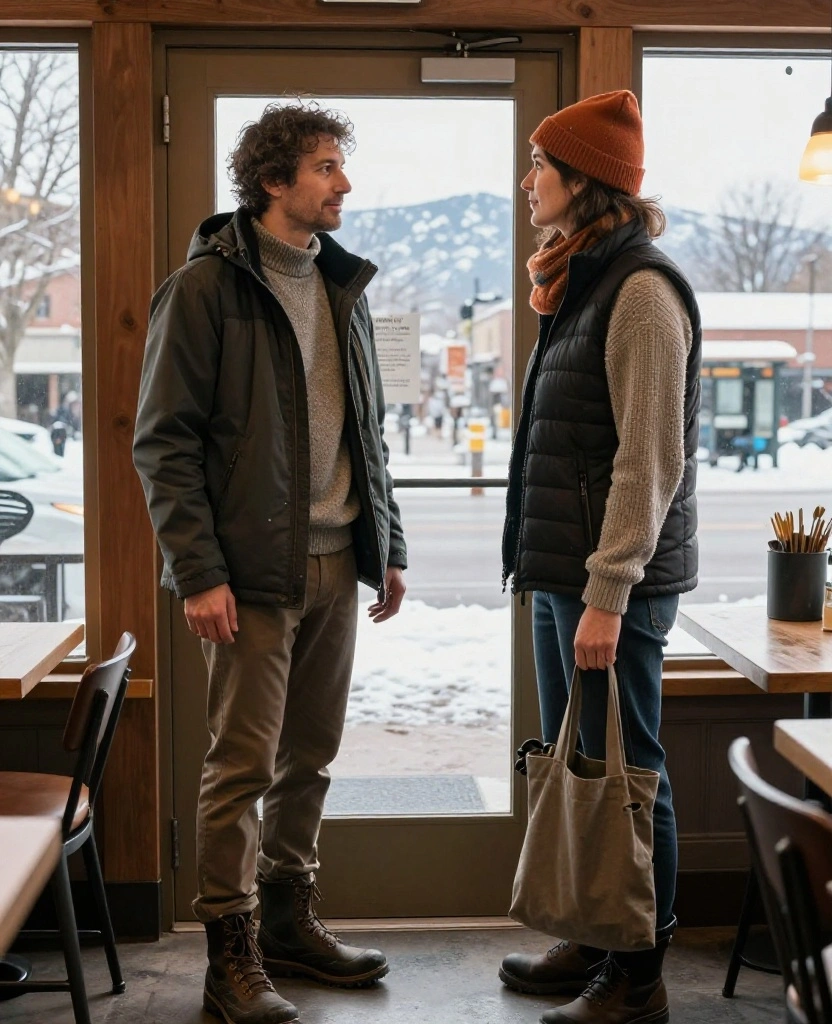
Denver winter outfits must handle cold sidewalks and overheated interiors in the same afternoon.
Easy-open layers let you release heat before sweat builds up, so you can return outdoors without feeling damp.
This setup suits museums, cafes, offices, shops, and travel days with many indoor stops.
Outfit Pieces:
– Smooth thermal top that looks tidy on its own
– Quarter-zip fleece with a soft stand collar
– Fine cardigan or removable insulated vest
– Two-way zip coat or shell
– Flat-folding scarf and compact gloves
– Small reusable tote for extra layers
Styling Tips:
– Open the shell before you start sweating rather than waiting until you feel overheated.
– Choose a cardigan that can come off without disturbing the base layer.
– Use a two-way zipper to release heat from the bottom while sitting or walking.
– Keep the base layer neat enough for a quick sweater-free indoor moment.
– Pick a scarf that folds flat instead of a bulky wrap that fills your arms.
– Carry a small tote for your vest, hat, gloves, and scarf during long indoor stops.
A removable vest works well in cool buildings because it keeps your core warm while the coat comes off.
Build an outfit you can open, remove, and rebuild without disturbing the rest of your layers.
Use Venting and Easy-Open Layers for Indoor Heat
Editor’s Choice

Men’s Quarter Zip Pullover Sweatshirt Fleece Lined Golf Shirt
Amazon$26.99
Women’s Lightweight Water-Resistant Packable Puffer Vest
Amazon$23.29
100% Merino Wool Base Layer Women Set – Thermal Underwear Women Top, Bottom
Amazon$119.9912. Dress for Wind First When You Will Be Waiting Outside
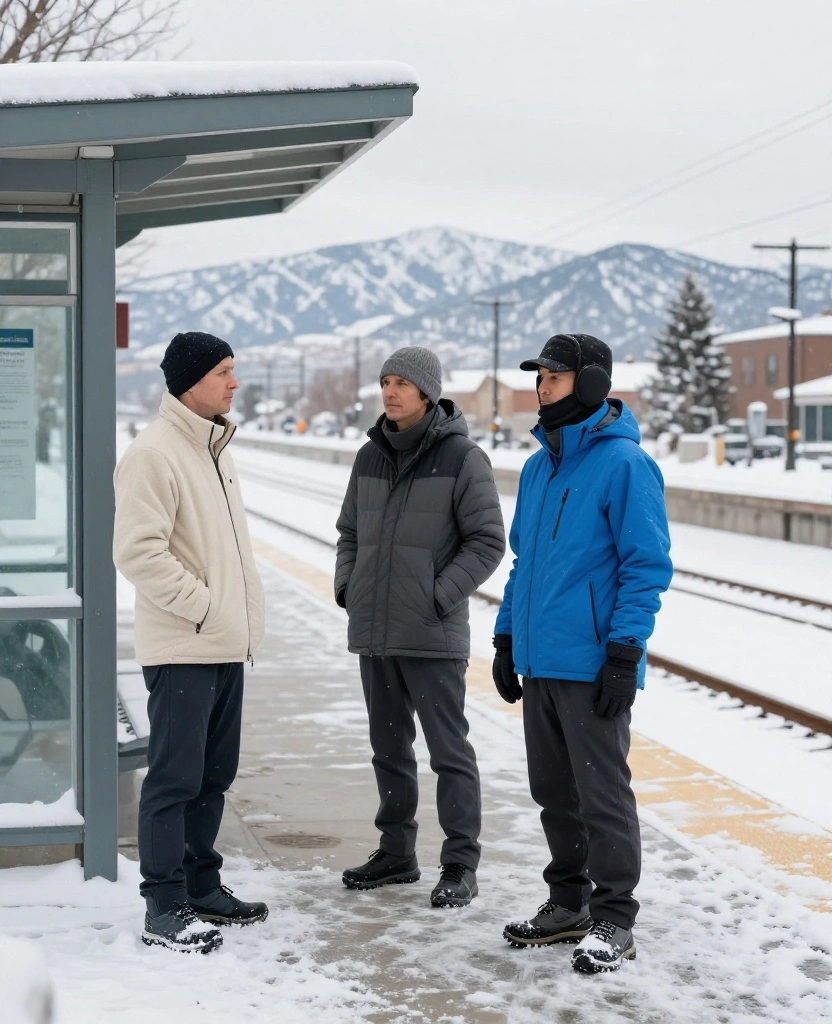
Standing still at a transit stop feels much colder than walking, even when the temperature stays the same.
Wind steals warmth from exposed hands, feet, and the center of your body, so waiting outfits need more protection than active ones.
Use this approach for outdoor events, train platforms, bus stops, and long lines.
Outfit Pieces:
– Merino thermal top and thin thermal bottoms
– Fine fleece or lightweight wool sweater
– Packable down or synthetic insulated jacket
– Longer waterproof or windproof shell
– Insulated mittens, ear-covering hat, and neck gaiter
– Wool socks and waterproof boots with a grippy sole
– Compact insulated seat pad for cold benches
Styling Tips:
– Close the coat from your chin to the hem before the wind picks up.
– Choose mittens instead of thin fashion gloves for long waits.
– Keep enough room in your boots for circulation and warm socks.
– Cover the neck, wrists, waist, and ankles because these gaps let cold air enter quickly.
– Use a longer coat or shell to protect your hips and upper legs.
– Carry hand warmers as backup, but keep them away from bare skin.
Wind protection often matters more than adding another thick sweater.
Once the shell closes the gaps, lighter insulation can keep you warm without making the walk to your destination uncomfortable.
You Might Also Like
Dress for Wind First When You Will Be Waiting O…
Editor’s Choice

Winter Waterproof Ski Gloves Men Women, Snow Warm Cycling Cold Weather, …
Amazon$17.99
100% Merino Wool Base Layer Men Set – Thermal Long Underwear with Balaclava
Amazon$91.99
13. Pack a Small Layering Kit for Changing Plans
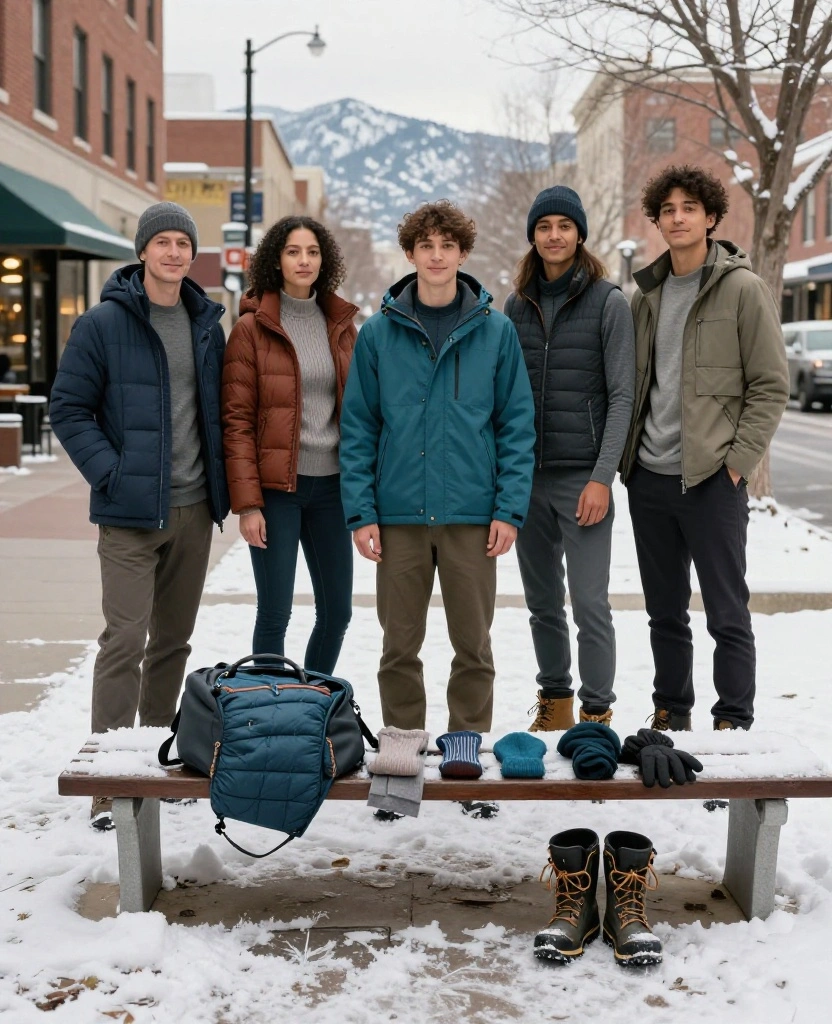
A small backup kit can save an outfit when a sunny afternoon turns cold or wet.
Denver plans often stretch from coffee shops to outdoor walks, so light layers give you flexibility without a second heavy coat.
Pack this system for travel, full sightseeing days, and evening plans.
Outfit Pieces:
– Thin merino or synthetic thermal top
– Packable down or synthetic jacket
– Windproof or waterproof shell
– Compact hat, gloves, and scarf or neck gaiter
– Spare merino socks in a sealed pouch
– Small reusable tote or zippered accessory bag
– Plastic bag for wet gloves or socks
Styling Tips:
– Choose a shell when your main coat is wool and snow is expected.
– Pack insulation when your main layer is a thin rain shell.
– Keep backup colors compatible with your main outfit, such as navy, charcoal, olive, or cream.
– Roll thin pieces instead of folding them into a stiff bundle.
– Keep damp accessories separate from your phone, notebook, and wallet.
– Let down regain its loft after you return home instead of storing it compressed for days.
For a short city outing, gloves and a shell may be enough.
Add insulation and spare socks for a full outdoor day, then swap boots or accessories as the weather changes.
Pack a Small Layering Kit for Changing Plans
Editor’s Choice

Women Rain Jacket Lightweight Waterproof Packable Raincoat with Hood
Amazon$21.65

Women’s Down Jacket Hooded Winter Light Weight Short Puffer Coats Packab…
Amazon$56.9914. Balance Color and Texture Instead of Adding More Pieces
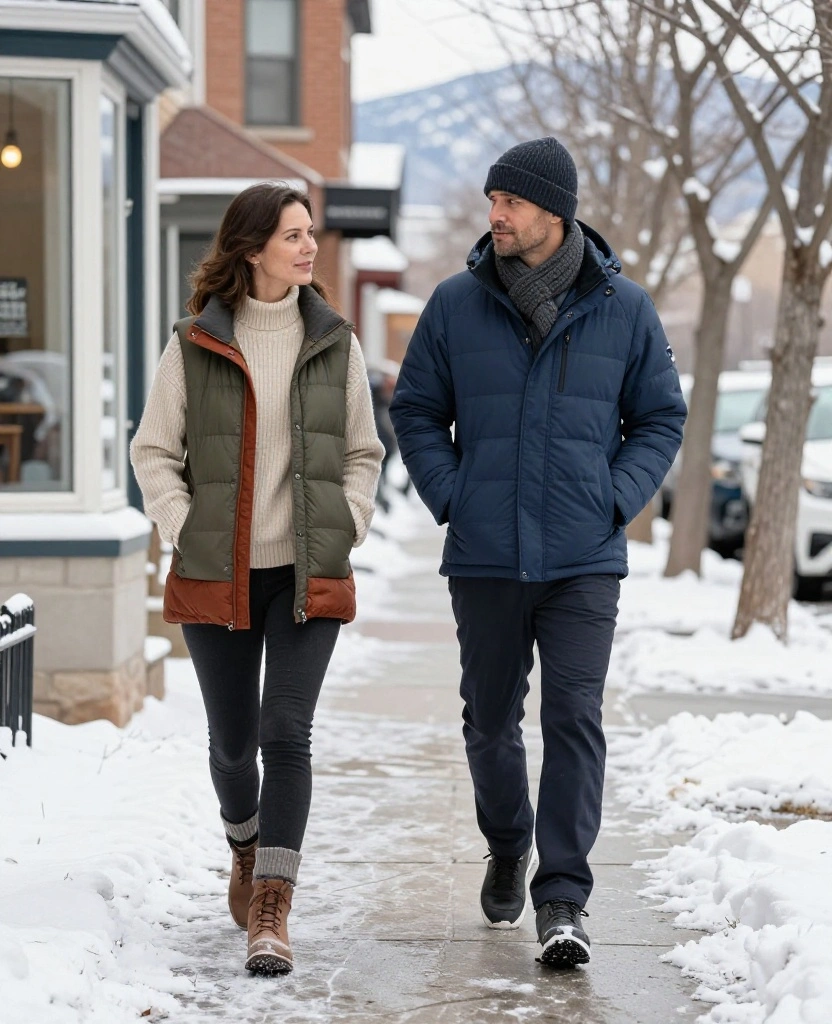
You do not need extra layers to make a winter outfit look interesting.
A mix of color and low-profile texture adds depth while keeping the shape comfortable under a coat.
This idea works for polished city outfits, casual weekends, office days, and outdoor plans.
Outfit Pieces:
– Charcoal, navy, cream, or black thermal base
– Fine fleece or merino sweater
– Quilted vest or matte nylon shell
– Brushed wool trousers or dark lined jeans
– Textured scarf, ribbed beanie, or colorful gloves
– Leather boots in tan, brown, or black
Styling Tips:
– Start with two neutral colors and add one clear accent, such as rust, berry, cobalt, pine, or mustard.
– Use fine ribbing, smooth fleece, quilted channels, and brushed wool instead of thick cables under a coat.
– Repeat one accessory color in your bag, boots, or scarf for a connected look.
– Try charcoal, cream, olive, black, and tan for a relaxed outdoor palette.
– Combine navy, gray, camel, burgundy, and dark boots for a polished city outfit.
– Keep loud logos and large patterns limited when you want a cleaner silhouette.
Texture can create the cozy feeling of winter clothing without filling your sleeves. A bright scarf or polished boot also lets you change the mood of the same base layers.
Balance Color and Texture Instead of Adding Mor…
Editor’s Choice

Womens Sherpa Fleece Vest Stand Collar Zip Up Puffer Quilted Jacket
Amazon$29.99
Mens Thermal Long Sleeve Shirt Basic Undershirt Lightweight Pullover Bas…
Amazon$13.49
15. Care for Each Layer So It Stays Light and Warm
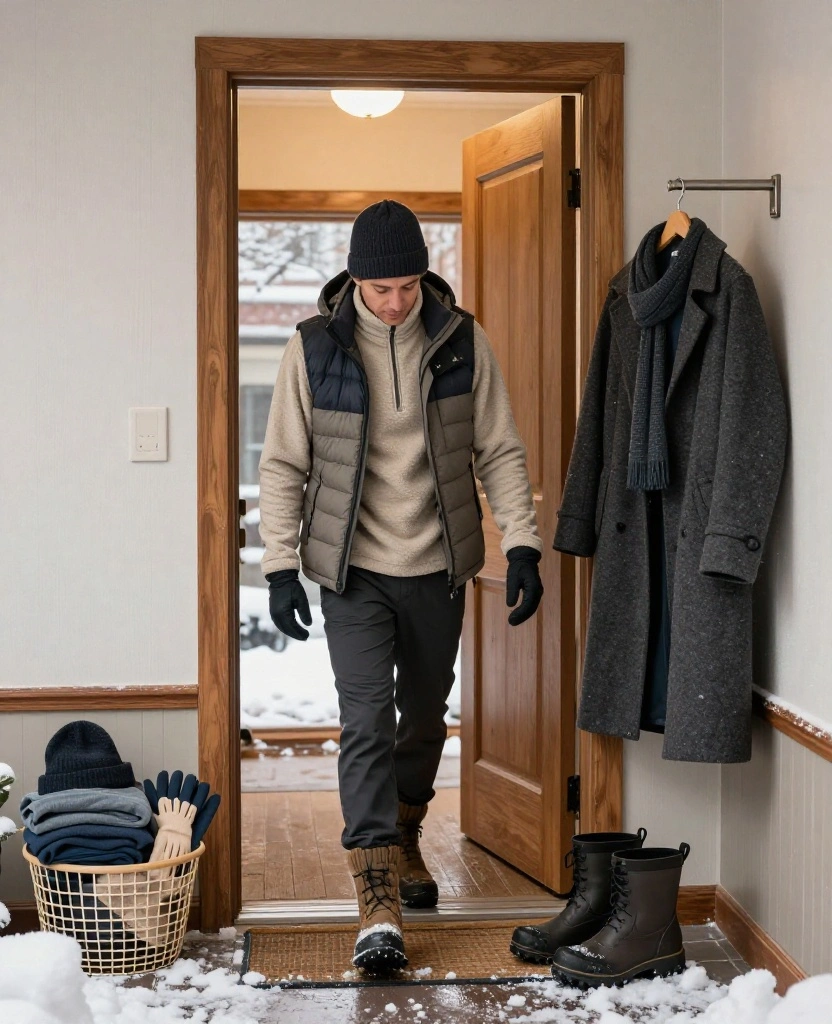
Warm clothing works best when it stays clean, dry, and lofted.
Stretchy thermals, fluffy insulation, and dry boots all help your outfit feel lighter because you do not need extra pieces to make up for worn-out gear.
These care habits support everyday dressing, travel packing, and long December days outdoors.
Outfit Pieces:
– Merino thermal top washed according to its care label
– Synthetic base layer cleaned without fabric softener
– Down or synthetic jacket fully dried after damp weather
– Wool coat brushed and aired between wears
– Waterproof shell refreshed when water stops beading
– Boots dried with removable insoles and clean wool socks
Styling Tips:
– Hang coats where air can move around them instead of leaving them on a crowded chair.
– Air out wool and down before reaching for another layer.
– Wash synthetic thermals often enough to remove sweat, but avoid products that reduce moisture control.
– Keep fleece away from rough hook-and-loop fasteners that cause pilling.
– Check cuffs and hems for salt marks before they become harder to remove.
– Store hats, gloves, and scarves in one visible basket so you can grab them quickly.
Well-cared-for layers stay smooth, fresh, and easy to pack.
A clean thermal, dry boot, and fully lofted jacket can provide more comfort than several neglected pieces piled together.
Care for Each Layer So It Stays Light and Warm
Editor’s Choice

Nikwax Tech Wash,10 fl. oz Tech Wash Technical Cleaner for Jackets and O…
Amazon$10.95
Woolly Mammoth Wool Wash, Emu Oil Delicate Laundry Detergent, 16.9oz, 1-pc
Amazon$19.79
Boot Dryer,Shoe Dryer,Foot Dryer ! Eliminate bad odor and dry shoes!
Amazon$17.99Conclusion: Build a Flexible Denver December Uniform
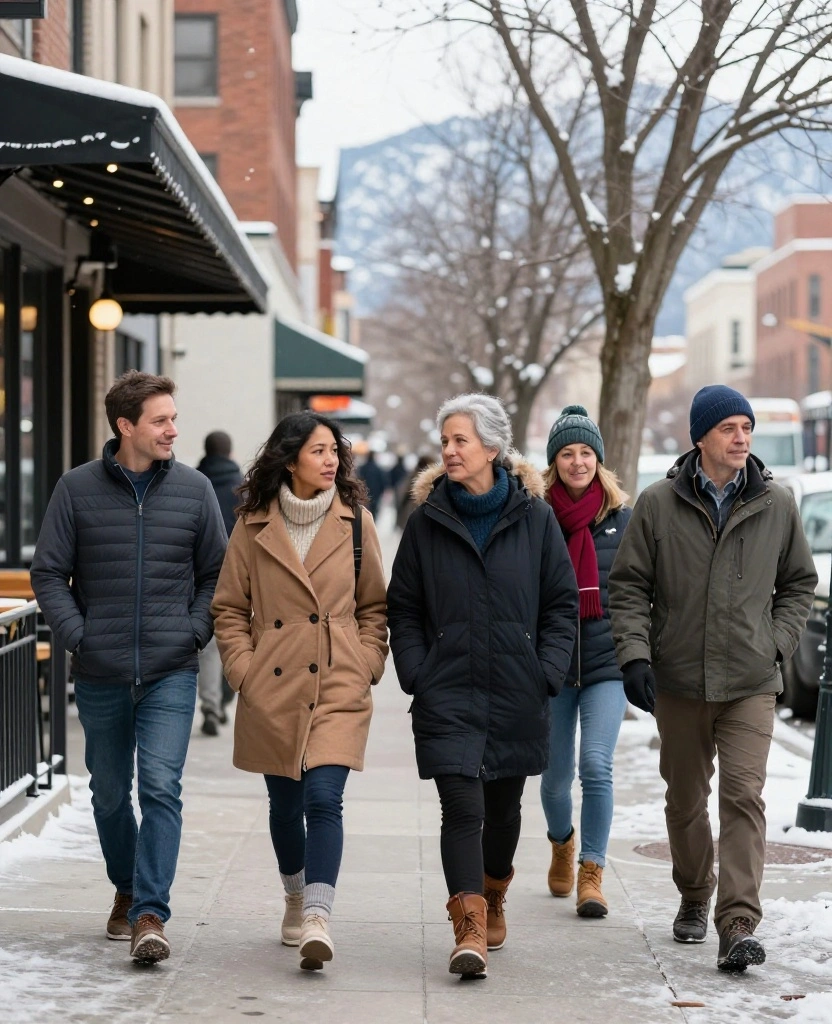
The easiest answer to what to wear in Denver in December is a flexible system:
Breathable thermal layers, one slim insulating middle layer, weather-blocking outerwear, and warm accessories that close the gaps.
Choose pieces that work together, leave room to move, and can open or come off when indoor heat arrives.
With these layering tips, winter clothing feels lighter, more useful, and ready for everything from a frosty commute to a sunny cafe stop.
Which combination keeps you warmest without the bulk?
Note: We aim to provide accurate product links, but some may occasionally expire or become unavailable.
If this happens, please search directly on Amazon for the product or a suitable alternative.
This post contains Amazon affiliate links, meaning we may earn a small commission if you purchase through our links, at no extra cost to you.
Frequently Asked Questions
Q. What are the best Denver outfit ideas for December?
Warm sweaters, thermal layers, jeans or insulated pants, fleece jackets, winter coats, and comfortable boots are great choices for exploring Denver in December.
Q. What is the Denver December weather like?
Denver can be cold in December, with chilly mornings and evenings and the possibility of snow. Dressing in layers makes it easier to stay comfortable outdoors.
Q. What are the best December packing tips for Denver?
Pack thermal tops, cozy sweaters, fleece layers, a warm insulated coat, jeans or winter pants, waterproof boots, warm socks, gloves, a scarf, and a winter hat.
Q. What are the best Denver winter outfits for women?
Try a chunky sweater with fleece-lined leggings and winter boots, thermal layers with jeans and an insulated coat, or a sweater dress with tights, a long coat, and boots.
Q. What should I include in a Denver travel wardrobe?
Build your winter wardrobe around thermal base layers, warm sweaters, insulated outerwear, weather-resistant boots, comfortable pants, and accessories such as gloves, scarves, and beanies.

10 Stylish San Francisco Outfits for August That Will Keep You Cool and Chic!

10 Must-Have San Francisco Outfits for June That’ll Make You the Envy of Every Tourist!
10 Must-Have Outfits for San Francisco in May That Will WOW the Locals!
