What to wear in Switzerland in December? I asked myself that on the Quai du Mont-Blanc, where the bise, Geneva’s famous cold wind, swept off the lake and cut straight through my stylish coat.
Geneva winter weather is chilly, damp, and wonderfully festive, with lights glowing along the water.
After a few shivery lessons, I’ve gathered 14 foolproof layering ideas that kept me warm at the Jet d’Eau, in the Old Town, and at every cozy fondue stop.
1. Start with a Second-Skin Thermal Base Layer
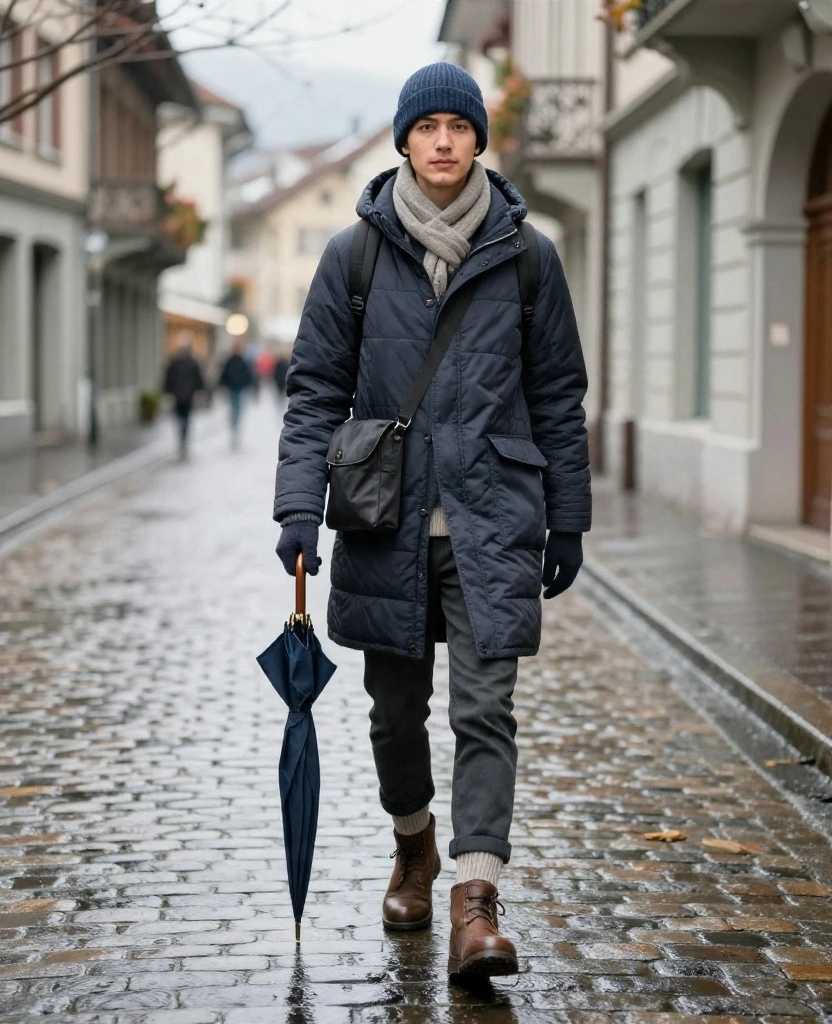
Cold streets feel much easier when your first layer traps warmth without adding bulk.
Choose a close-fitting merino or technical top that feels smooth beneath sweaters, coats, and scarves.
This foundation keeps you comfortable during long walks, early train rides, and chilly evenings beside the lake.
The best base layer manages sweat while holding in body heat.
Merino wool feels soft, breathes well, and stays fresher during repeated wear.
A lightweight synthetic blend dries faster and works well if you have sensitive skin.
Look for flat seams and sleeves that end neatly at your wrists.
Outfit Pieces:
– Fine merino or moisture-wicking thermal long-sleeve top
– Lightweight thermal leggings or warm tights
– Merino wool-blend socks with cushioned soles
– Smooth bra or camisole to prevent extra bulk
– Jeans, trousers, or a midi skirt for the visible layer
Styling Tips:
– Choose a snug fit that skims your body without squeezing your ribs or shoulders.
– Match the base color to your outfit, such as black under dark denim or cream under pale knitwear.
– Tuck the thermal top fully into trousers to stop cold air reaching your lower back.
– Avoid cotton next to your skin because it holds moisture and can feel cold once you stop moving.
– Pack one spare top for snowy day trips, hikes, or busy walking days.
This simple layer supports nearly every winter outfit.
Add a polished sweater or stylish coat on top, and you can stay warm without looking padded.
Start with a Second-Skin Thermal Base Layer
Editor’s Choice




📹 Related Video: Cold Weather Layering: Part 1 – How to Choose a Base Layer
2. Add a Fine Knit Sweater Under a Tailored Wool Coat
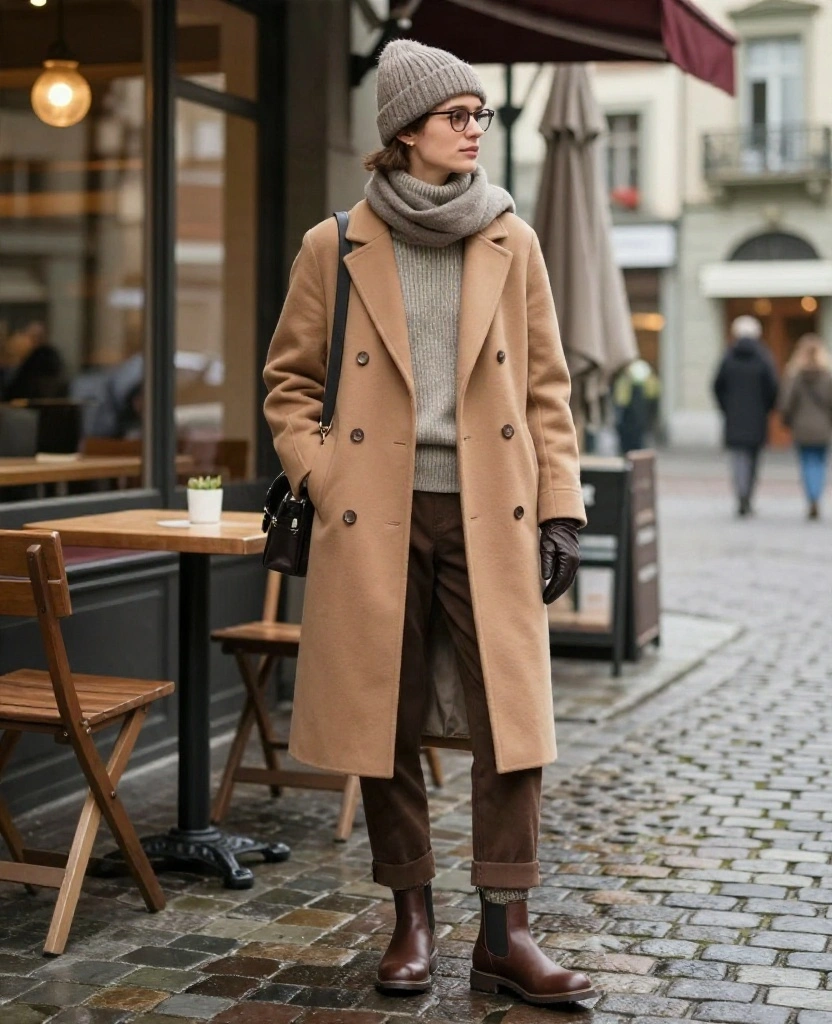
A fine knit sweater under a wool coat gives you a polished city look without sacrificing warmth.
The slim layers sit neatly beneath the coat, while soft wool or cashmere adds a gentle, cozy feel against your skin.
This pairing suits museum visits, restaurant dinners, gallery afternoons, and long walks through Geneva.
Texture makes the combination work.
A smooth fine-gauge knit balances the dense surface of wool, and a tailored coat keeps the overall shape clean.
Choose a relaxed coat rather than an extra-tight style so you can add a thermal top underneath without restricting your shoulders.
Outfit Pieces:
– Thin thermal long-sleeve base layer
– Fine merino, cashmere, lambswool, or alpaca-blend sweater
– Crew neck, mock neck, or slim turtleneck cut
– Camel, charcoal, navy, black, or chocolate wool coat
– Straight-leg trousers or thermal-lined jeans
– Leather Chelsea boots with weather-resistant soles
– Berry, forest-green, or mustard scarf for color
Styling Tips:
– Leave a small gap between the sweater neckline and coat collar for a lighter look.
– Use a loose French tuck with trousers, but keep the sweater untucked under a fitted skirt.
– Choose a coat with lined sleeves and enough room across the back for movement.
– Tuck a long scarf inside the lapels to seal cold air around your neck.
– Match your boots and bag in similar dark tones for a tidy finish.
– Close the coat fully outdoors, then open it inside heated cafés.
Swap the trousers for a midi skirt and thermal tights when you want a dressier shape.
Add a thin down vest beneath the coat on colder days without changing the elegant outer line.
3. Use a Fleece or Thin Down Vest as the Hidden Warmth Layer
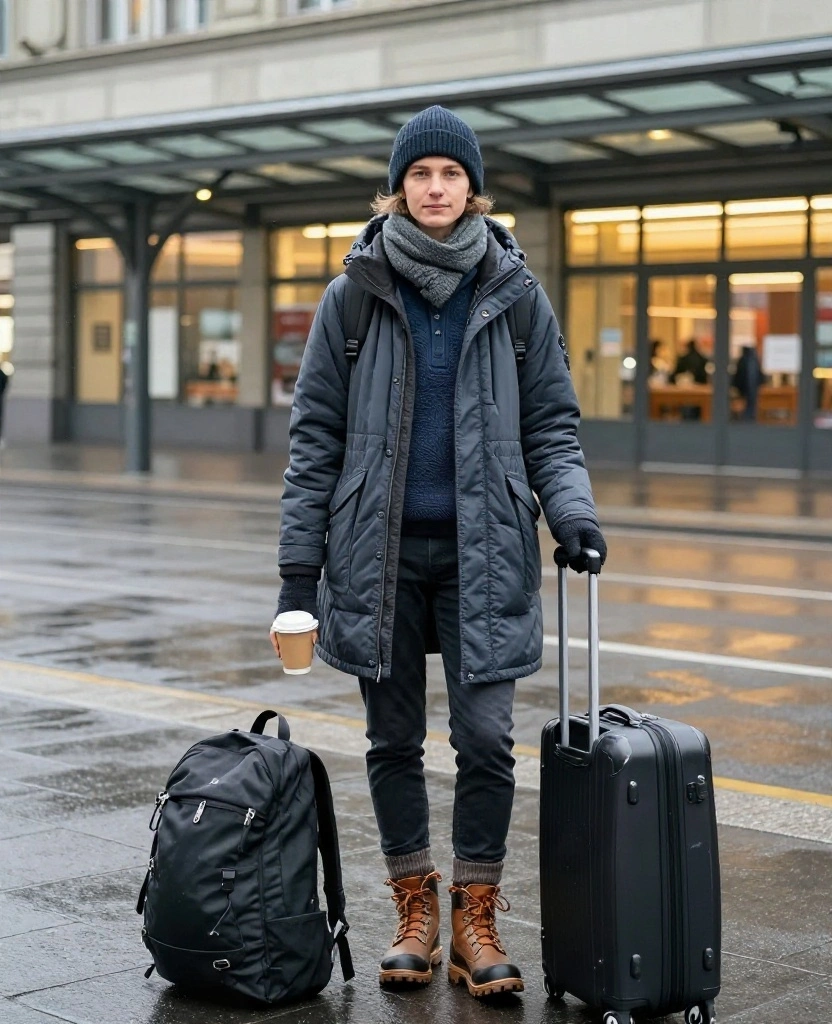
A slim vest warms your core while leaving your arms free for sightseeing, photography, and luggage.
It slips beneath a wool coat or over a shirt without creating the bulky feeling of several full sleeves.
This flexible layer shines on train journeys, mild city days, and outdoor café stops when temperatures keep changing.
Fleece feels soft and handles damp air well, while down or synthetic insulation offers more warmth in a thinner shape.
Choose a smooth, low-profile finish that slides easily beneath your coat.
A high neck also protects the small space around your collar without needing a thick scarf indoors.
Outfit Pieces:
– Lightweight thermal shirt
– Flannel shirt, fine knit, or thin fleece pullover
– Slim quilted down or synthetic vest with a high neck
– Water-resistant wool coat or hooded shell
– Stretch trousers, corduroy pants, or dark jeans
– Wool socks and supportive waterproof boots
Styling Tips:
– Try the vest over your thickest planned sweater before packing it.
– Leave enough room at the armholes for easy movement, but avoid large side gaps.
– Match the vest to your coat for a quiet layered look, or choose olive, ink blue, or espresso as a deep accent.
– Keep the vest zipped under the coat when wind reaches your chest.
– Remove the coat first indoors, then open the vest if the room feels warm.
– Wear a longer sweater beneath a shorter vest so your waist and lower back stay covered.
This hidden layer works for casual and polished outfits alike.
Replace fleece with a fine cardigan for dinner, or pack the vest into a day bag when afternoon sunshine appears.
4. Balance a Puffer Jacket with Sleek Bottom Layers
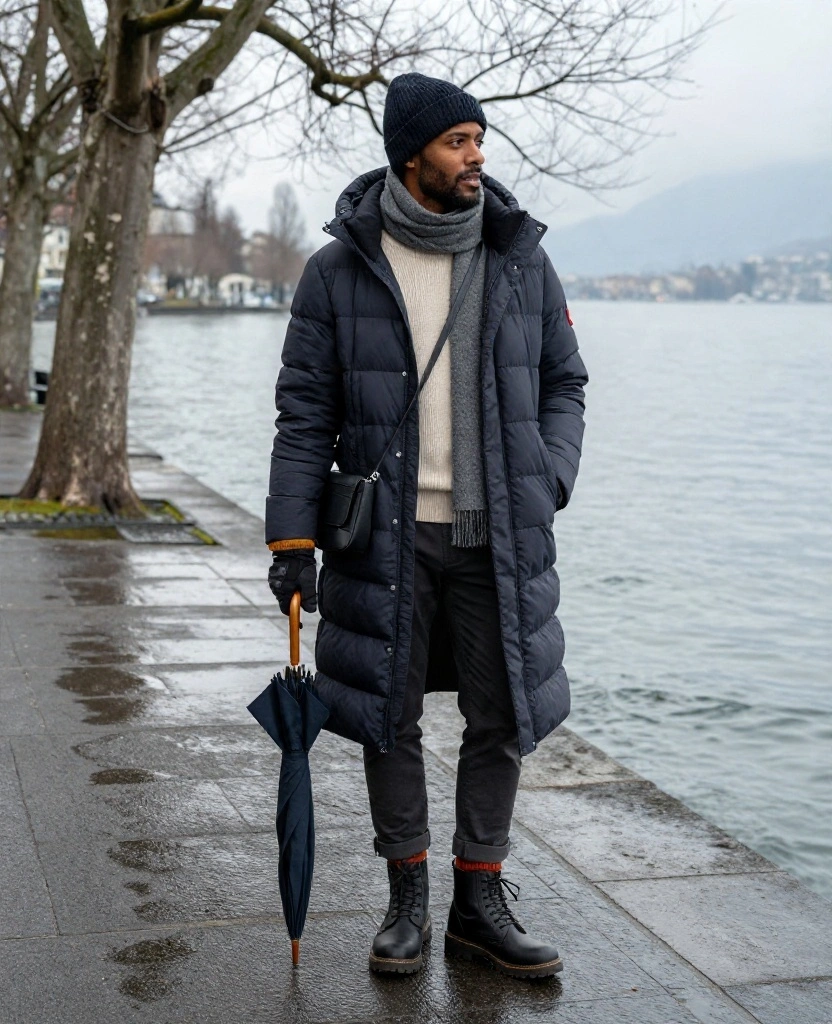
A puffer jacket can handle sharp wind, damp snow, and long waits outside, but its volume needs a little balance.
Pair it with slim or straight bottom layers so the outfit feels warm rather than oversized from head to toe.
This practical formula works for lake walks, Christmas markets, bus stops, and active sightseeing.
Look for real or synthetic insulation, a high collar, elastic cuffs, and a hood that fits over a beanie.
A long puffer offers better coverage for exposed streets, while a hip-length cut gives you more freedom on bicycles or busy trains.
Water-resistant fabric adds useful protection against mist and wet snow.
Outfit Pieces:
– Thin thermal long-sleeve top
– Fine ribbed sweater or fleece half-zip
– Mid-length or hip-length insulated puffer jacket
– Straight-leg jeans with thermal leggings underneath
– Tapered trousers or slim corduroy pants
– Waterproof boots, warm socks, scarf, gloves, and beanie
Styling Tips:
– Keep the middle layer simple so the puffer provides most of the insulation.
– Pair a roomy jacket with narrow trousers and a small crossbody bag.
– Wear high-waisted trousers or a longer sweater with a cropped puffer to cover your lower back.
– Avoid a huge hoodie beneath a fitted jacket because it can restrict your shoulders.
– Choose cream with dark bottoms for a crisp look, or use rust, pine, or deep red for winter color.
– Match your beanie or scarf to one small detail, not every piece in the outfit.
Reliable warmth always looks better than shivering in a delicate coat.
Switch the boots for sleek leather sneakers only on dry days with clean pavements.
Balance a Puffer Jacket with Sleek Bottom Layers
Editor’s Choice


5. Build a Rain-Ready Shell Outfit for Wet December Days
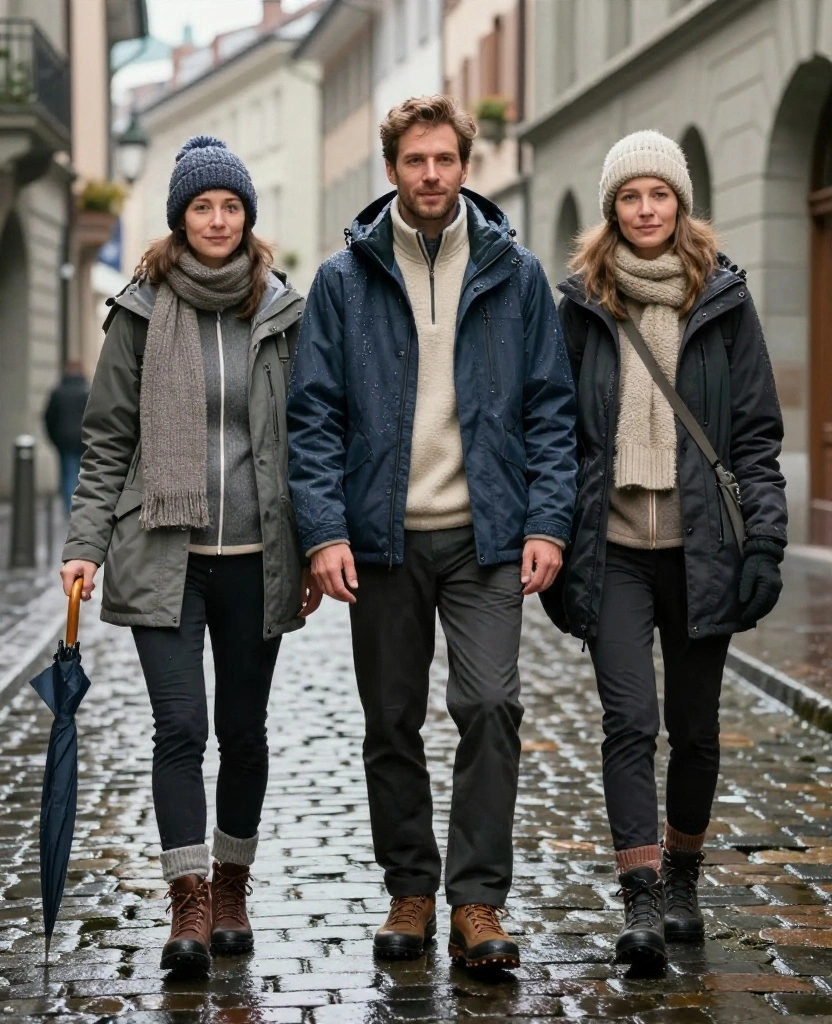
Rain and wet snow can make December feel colder than the temperature suggests.
A waterproof shell protects the warm layers underneath, so you can keep walking without carrying a soaked coat.
This outfit is ideal for misty lake paths, rainy markets, train platforms, and gray city afternoons.
A clean-cut shell does not need to look like hiking gear.
Choose black, navy, olive, or stone with a hood, sealed seams, adjustable cuffs, and a hem that covers the top of your trousers.
The roomier outer layer works because it traps warm air while blocking wind and moisture.
Outfit Pieces:
– Moisture-wicking thermal top and leggings when needed
– Merino sweater, fleece, or thin synthetic insulated layer
– Waterproof hooded shell in a straight or slightly relaxed cut
– Quick-drying stretch trousers or dark denim
– Wool-blend socks and waterproof boots with grippy soles
– Compact umbrella for calmer, less windy streets
Styling Tips:
– Choose a shell large enough for one warm middle layer without pulling across your back.
– Pull the hood over a knit hat and tighten the opening slightly around your face.
– Close the cuffs over your gloves so rain cannot run up your sleeves.
– Skip cotton canvas shoes and untreated suede when the pavement is wet.
– Use a dark trouser and boot combination to make the practical outfit look streamlined.
– Open the shell indoors and hang it somewhere airy instead of packing it while damp.
Keep a waterproof pouch for wet gloves, socks, or a folded umbrella.
A rain-ready shell may look simple, yet it keeps an entire sightseeing day comfortable when the sky turns gray.
6. Wear a Skirt with Thermal Tights and Tall Boots
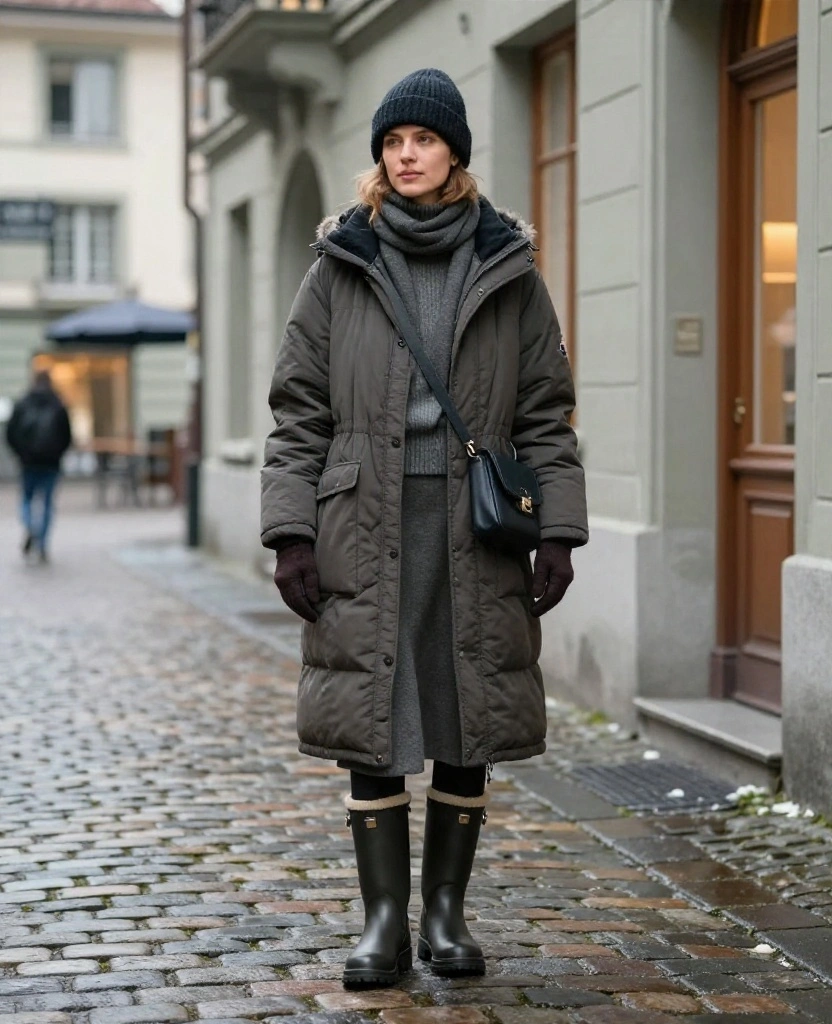
You can wear a skirt in Switzerland in December when the layers underneath do the real warming.
Thick thermal tights protect your legs, while a heavier midi skirt adds movement and coverage.
Tall boots close the gap from ankle to knee, making this combination useful for dinners, museums, holiday markets, and polished city days.
Choose fleece-lined tights for bitter cold or merino tights for a lighter feel.
Wool, corduroy, denim, and heavy knit skirts block more wind than thin satin.
A smooth slip or thermal short beneath the skirt also reduces static and makes walking easier.
Outfit Pieces:
– Moisture-wicking thermal top
– Fine turtleneck or soft wool sweater
– Wool, corduroy, denim, or pleated midi skirt
– Fleece-lined, merino, or thermal tights
– Tall weatherproof boots with a stable sole
– Long insulated coat, scarf, gloves, and knit hat
Styling Tips:
– Tuck a thin sweater into the skirt and add a narrow belt to define your waist.
– Keep the sweater untucked if it is chunky, then choose a coat with a clean straight cut.
– Wear dark brown or burgundy tights when black feels too stark against a warm neutral skirt.
– Add thermal shorts beneath the skirt for extra comfort on windy promenades.
– Choose boots with enough space for wool socks, but avoid a loose shaft that lets in cold air.
– Keep the coat open indoors so the outfit can breathe in heated restaurants.
A midi skirt looks dressed up without losing winter comfort.
Swap tall boots for sleek ankle boots on dry days, keeping the tights thick and the coat long.
Wear a Skirt with Thermal Tights and Tall Boots
Editor’s Choice


You might also like

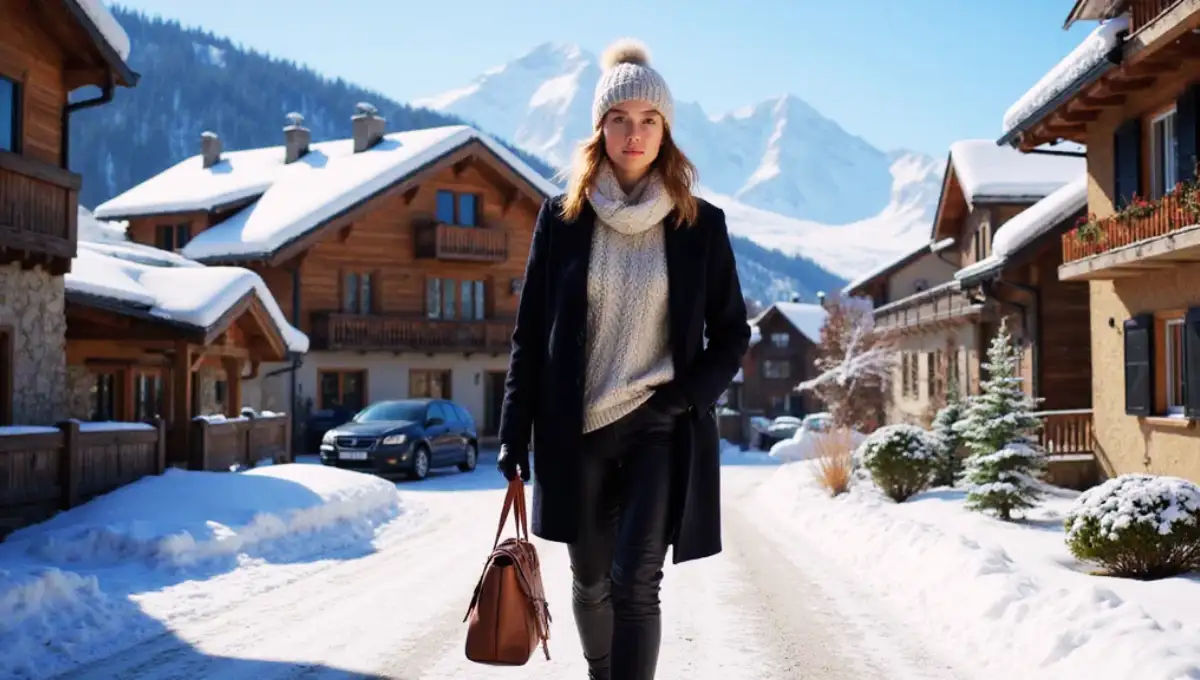
7. Layer Thermal Leggings Under Trousers for Long Walking Days
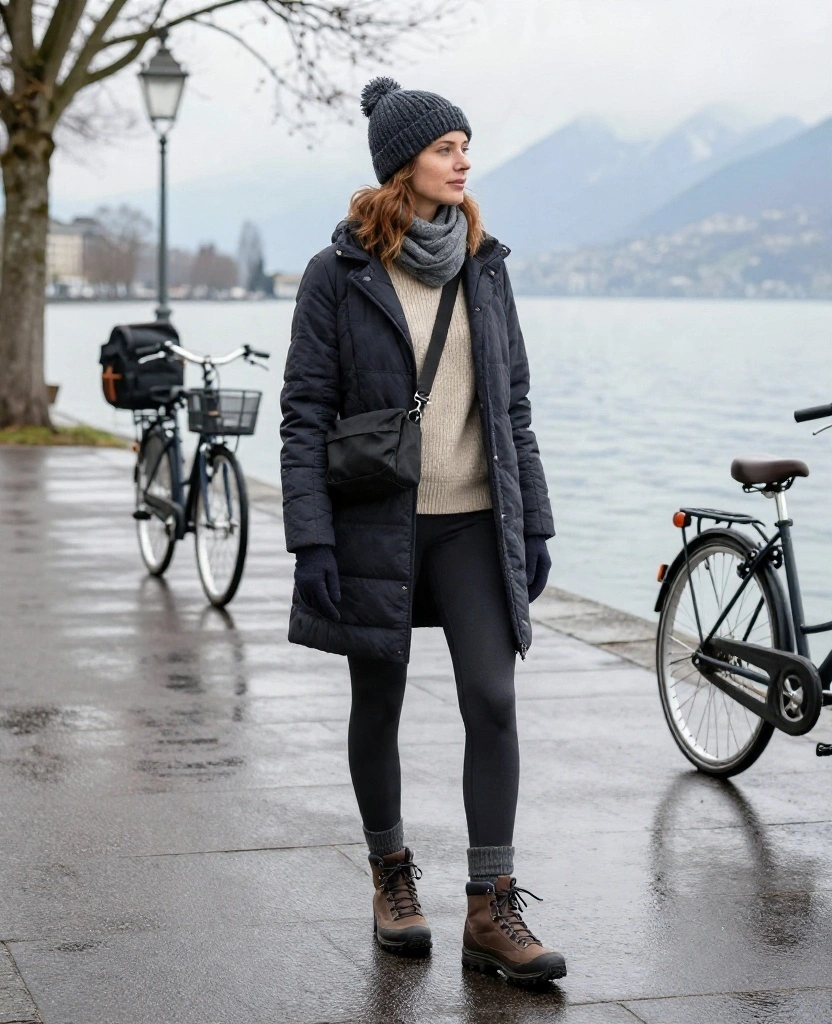
Thermal leggings under trousers give you extra warmth without forcing you into heavy winter pants.
The hidden layer works especially well for Christmas markets, lakeside paths, day trips, and long waits on cold platforms.
You can keep the same visible outfit while adjusting the warmth underneath.
Choose a smooth base with a flat waistband and soft seams.
Merino feels breathable and warm, while technical fabric dries quickly after damp weather.
Relaxed jeans, corduroy, wide-leg trousers, and straight cuts offer enough room.
Very tight jeans may feel uncomfortable once you add a second layer.
Outfit Pieces:
– Lightweight moisture-wicking thermal leggings
– Relaxed jeans, pleated trousers, corduroy pants, or chinos
– Thermal long-sleeve top
– Fleece, fine sweater, or wool cardigan
– Insulated parka or long wool-blend coat
– Supportive waterproof boots and cushioned wool socks
Styling Tips:
– Test the complete outfit before your trip so the waistband does not dig into your stomach.
– Tuck the base top into the leggings, then pull trousers over both layers for a smooth line.
– Choose a slightly wider trouser leg when wearing thicker fleece-lined leggings.
– Keep toes comfortable inside boots because tight footwear reduces circulation.
– Add a cushioned wool insole if your boots have spare room.
– Carry one dry pair of socks in a small pouch when slush or rain is expected.
Use pleated trousers and a tucked knit for a polished city look, or dark denim with fleece for casual exploring.
These leggings pack small and support several outfits.
8. Let a Big Wool Scarf Do More Than Add Color
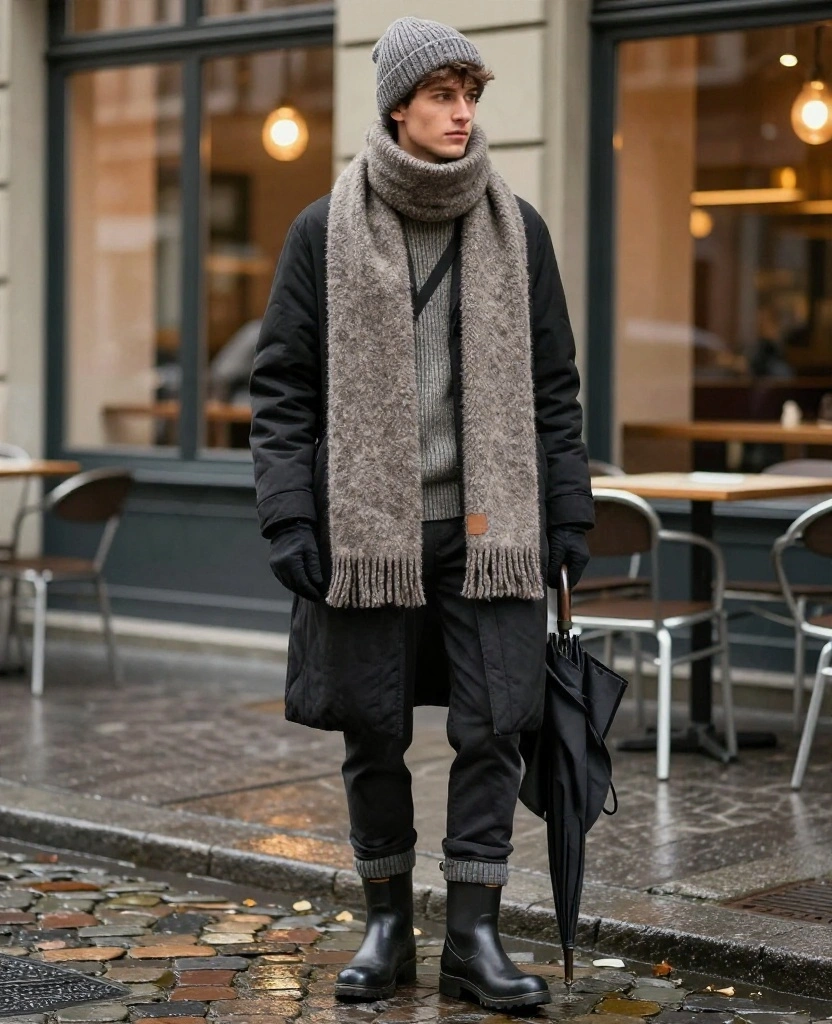
A large wool scarf can change how warm an outfit feels within seconds.
It blocks wind at your neck, shields your face beside the lake, and works as a soft wrap when you sit outside a café.
Choose a long, tightly woven style that wraps twice without pressing against your throat.
Texture gives a simple coat more character.
Brushed wool feels soft and cozy, while dense merino or a cashmere blend offers warmth without too much weight.
Use a neutral coat as a background for rust, red, cobalt, pine, or a classic plaid pattern.
Outfit Pieces:
– Large merino, lambswool, cashmere-blend, or brushed wool scarf
– Neutral wool coat or puffer jacket
– Fine thermal top and warm middle layer
– Ribbed beanie in a matching or contrasting shade
– Leather or wool-blend gloves
– Crossbody bag or backpack with a secure closure
Styling Tips:
– Wrap the scarf twice and tuck both ends into the coat for the strongest wind protection.
– Drape it loosely over the lapels when moving between indoor and outdoor settings.
– Pull one end over your shoulder when sitting on a cold terrace.
– Choose a simple solid scarf if your coat has checks, stripes, or another bold pattern.
– Keep the ends above your bag straps so they do not catch on doors or crowded train seats.
– Remove the scarf first indoors, then loosen the coat to prevent overheating.
One strong scarf can refresh several neutral outfits without filling your luggage.
It adds color, softness, and useful warmth to everything from a puffer to a tailored coat.
9. Choose Weatherproof Boots and Warm Socks First
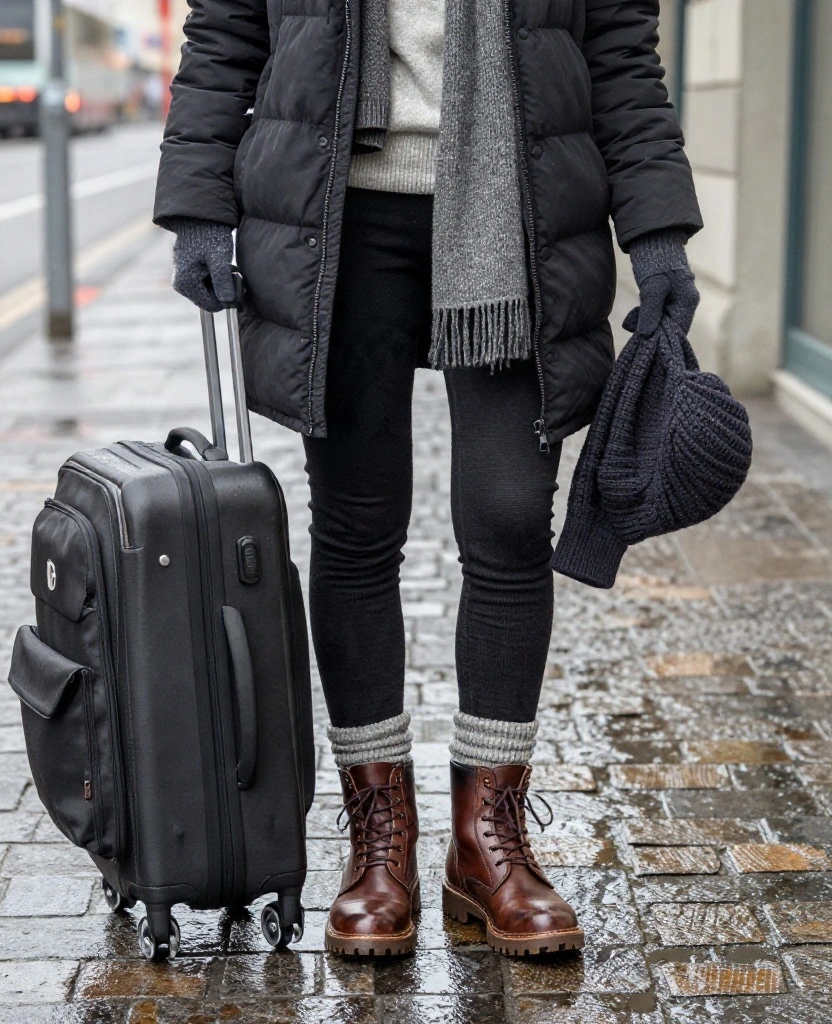
Cold, wet feet can ruin even the best planned winter outfit.
Start with boots you can walk in for several hours, then build the rest of your clothing around them.
Weatherproof leather, treated suede, rubber panels, and waterproof membranes all help on wet pavement, while grippy soles give you confidence on slick stone.
Warm socks matter just as much.
Wool blends move moisture away from your skin and provide heat without needing extreme thickness.
Try boots with the exact socks you plan to pack, and leave space for your toes to move freely.
Outfit Pieces:
– Waterproof or water-resistant leather, suede, or rubber-panel boots
– Chelsea, lace-up hiker, riding boot, or neat ankle-boot shape
– Merino or wool-blend socks
– Thermal insoles for feet that get cold easily
– Straight trousers, dark denim, or a midi skirt
– Long coat, puffer, scarf, and practical crossbody bag
Styling Tips:
– Look for soles with deep enough tread for wet cobblestones and light snow.
– Try boots in the afternoon when feet are slightly larger from normal movement.
– Break in new footwear at home, then take a short outdoor walk before traveling.
– Keep trousers straight or slightly cropped so they do not drag through puddles.
– Use a slim merino sock with city boots and a cushioned hiking sock for full-day walks.
– Pack blister patches and a small bag for wet socks.
Sturdy boots look city-ready with a long coat and soft scarf.
For dinner, wipe away road salt and moisture before entering a restaurant.
Choose Weatherproof Boots and Warm Socks First
Editor’s Choice


10. Use a Zip-Up Mid-Layer for Easy Temperature Control
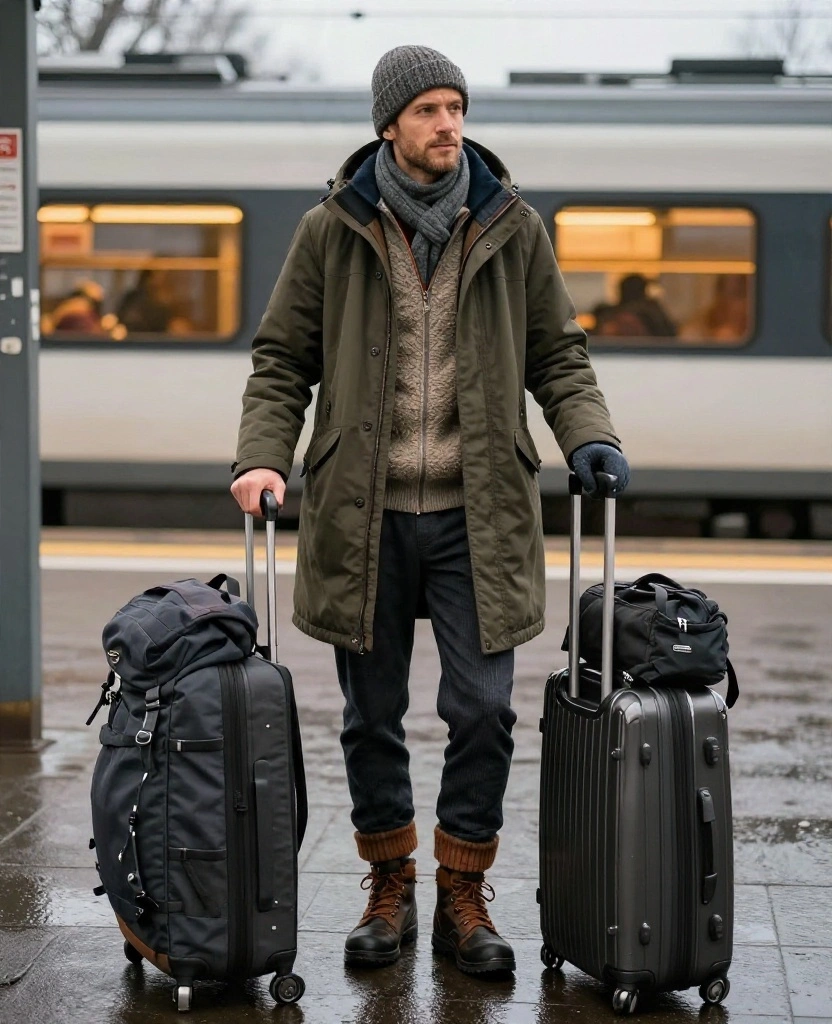
A zip-up middle layer gives you control when your day moves between cold streets and overheated trains.
Open it quickly when you enter a café, then close it before walking outside again.
This small adjustment helps prevent sweat, which can leave you feeling colder later.
Fleece feels casual and soft, while a merino cardigan or zip-neck sweater looks more refined.
A thin quilted jacket adds insulation under a roomy coat.
Choose a smooth front so the middle layer slides easily beneath your outerwear without catching or bunching.
Outfit Pieces:
– Moisture-wicking thermal shirt
– Full-zip fleece, merino cardigan, or zip-neck wool sweater
– Waterproof shell, puffer, or insulated wool coat
– Stretch trousers with thermal leggings when needed
– Wool socks, weatherproof boots, scarf, gloves, and hat
Styling Tips:
– Pick a mid-layer that covers your waist when you sit, bend, or lift luggage.
– Use a two-way zipper on the outer coat to create space while sitting or walking.
– Keep the base top tucked into your trousers so opening the zipper does not expose cold skin.
– Choose closed pockets for your phone, transit card, and small camera.
– Wear a neat cardigan with wool trousers for city plans, or fleece with stretch pants for active days.
– Remove the coat first indoors, then open the zip-up layer gradually.
This formula is especially useful for train travel and changing weather.
It gives you more comfort without making you carry a separate indoor outfit.
11. Create an Office-to-Dinner Outfit with One Smart Coat
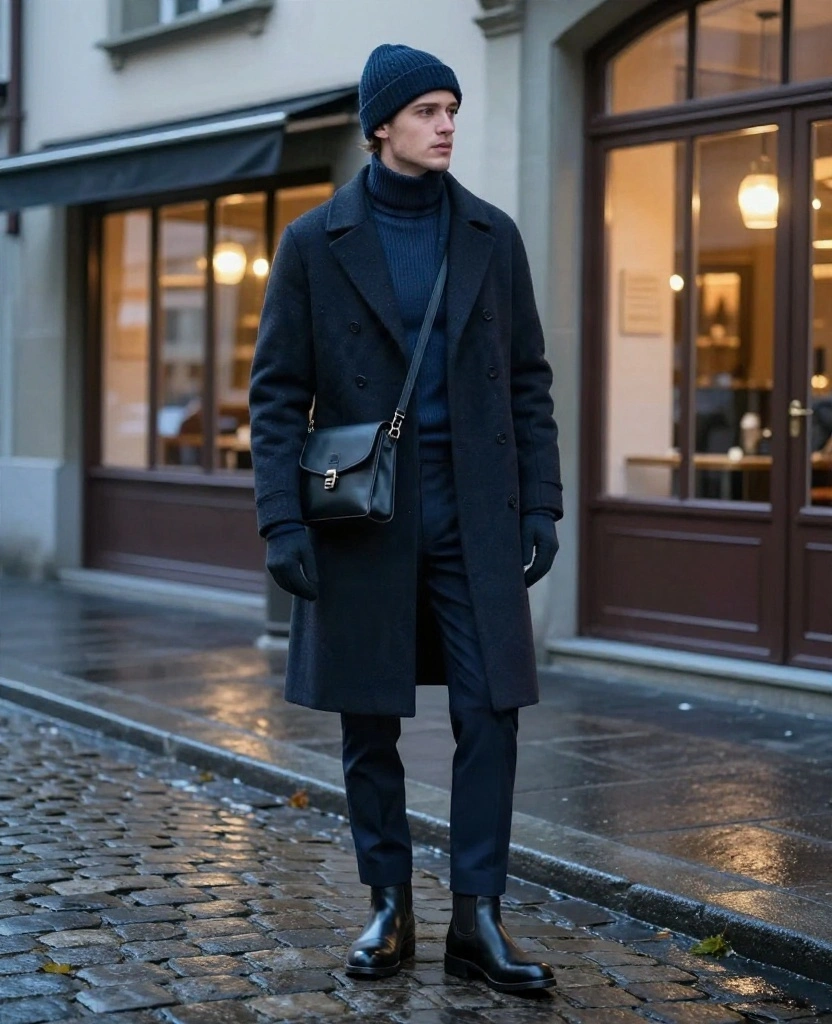
One polished coat can carry you from a business meeting to dinner when the layers underneath stay slim and flexible.
A thermal camisole or long-sleeve base disappears beneath a blouse, fine turtleneck, or knit shell.
Tailored trousers or a midi skirt keep the outfit ready for restaurants, concerts, and city walks.
Choose wrinkle-friendly fabrics such as merino, ponte, wool blends, and structured dark denim.
A calm palette of navy, black, cream, gray, camel, and burgundy makes it easy to change the mood with one accessory rather than a full outfit.
Outfit Pieces:
– Smooth thermal camisole or fitted long-sleeve base layer
– Fine turtleneck, blouse, or soft knit shell
– Tailored trousers or midi skirt with thermal tights
– Structured wool coat with room for layers
– Clean-shaped weatherproof ankle boots
– Gold-tone earrings, slim belt, or silk-feel scarf for evening
Styling Tips:
– Choose a neckline that hides the thermal layer, or match the base color to the visible top.
– Tuck a fine knit into high-waisted trousers and add a slim belt for shape.
– Wear a long coat over a skirt to keep the silhouette balanced and your legs covered.
– Keep practical boots in a simple leather shape so they work indoors too.
– Store evening earrings or a small crossbody in your day bag for a quick change.
– Remove your scarf and coat first when entering a heated restaurant.
This approach saves suitcase space while covering several plans.
Swap the trousers for a skirt, or replace the blouse with a jewel-toned knit for a warmer evening look.
You Might Also Like
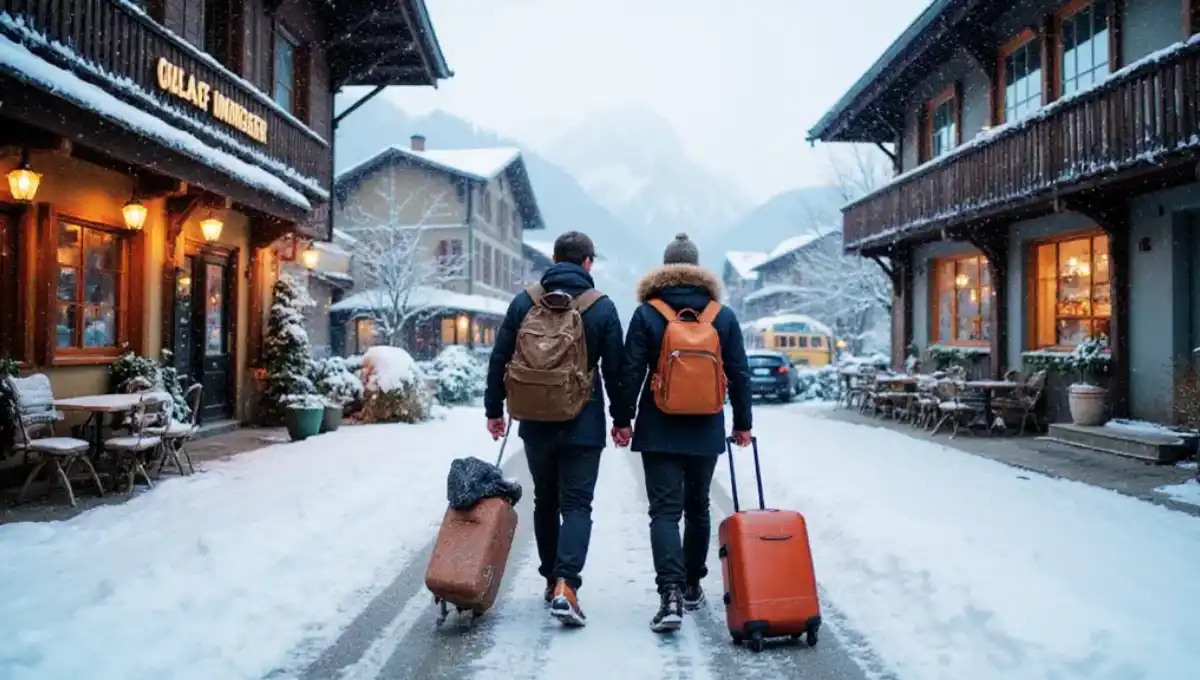

12. Build a Small Neutral Capsule with One Colorful Accent
A compact winter capsule makes daily dressing easier and leaves room in your suitcase for souvenirs.
Start with neutral layers that mix freely, then add one bright accent such as a berry sweater, cobalt hat, or patterned scarf.
Neutral colors hide small marks from wet streets and keep every combination easy to wear.
The strongest capsule includes the full layering system, not just attractive outer pieces.
Thin base layers, warm middle pieces, one protective coat, and weatherproof shoes let you adapt when Geneva shifts from clear morning air to damp evening cold.
Outfit Pieces:
– Two moisture-wicking thermal tops
– One pair of thermal leggings
– Two fine sweaters or one sweater and one fleece
– One thin vest or cardigan
– One insulated coat and rain shell when needed
– Two pairs of trousers plus one skirt or extra bottom
– Two pairs of wool-blend socks and weatherproof boots
– One colorful scarf, hat, or sweater
Styling Tips:
– Keep the main palette to black, navy, gray, cream, camel, and olive.
– Use different textures, such as smooth jersey, fluffy fleece, fine knit, and quilted insulation.
– Choose one accent shade that works with every coat and bottom.
– Pack thin layers instead of several bulky sweaters to create more combinations.
– Keep a second dry bottom available if rain or slush is expected.
– Add a foldable tote for layers removed inside warm cafés or trains.
One bright accessory makes neutral outfits feel personal without adding much weight.
This capsule suits travelers who want fewer pieces but plenty of warm, practical combinations.
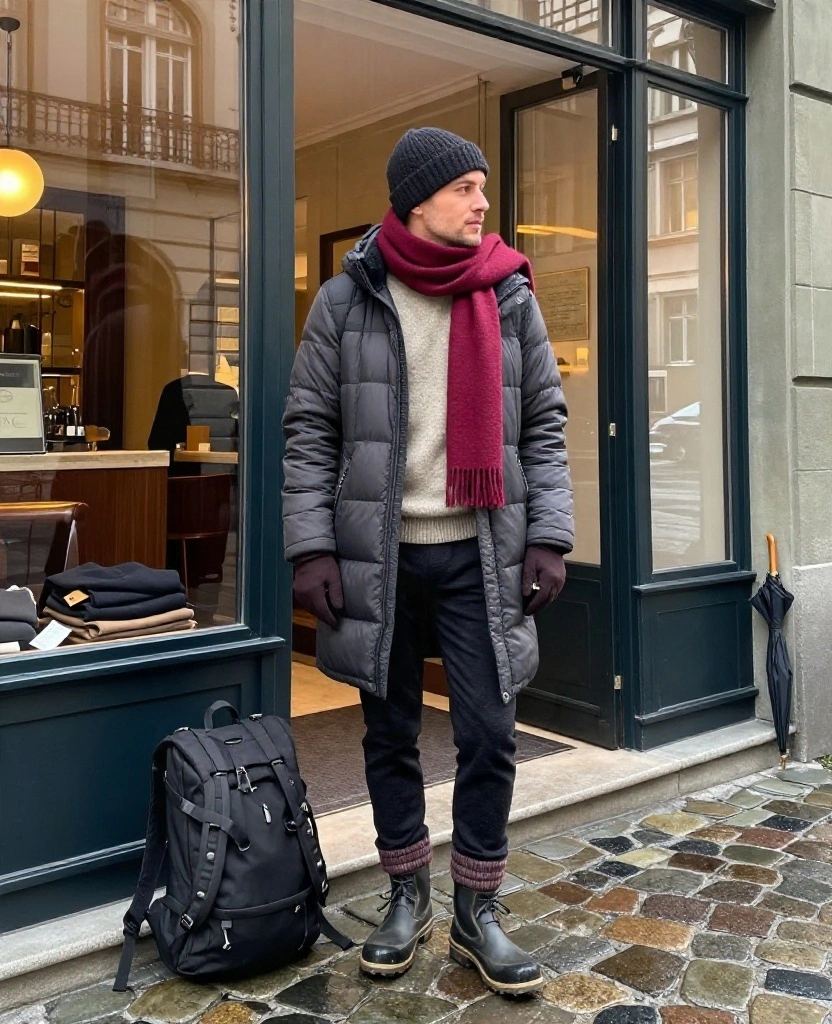
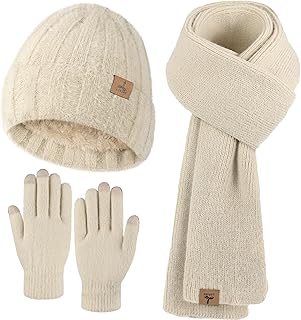
13. Finish Every Outfit with a Hat, Gloves, and a Useful Bag
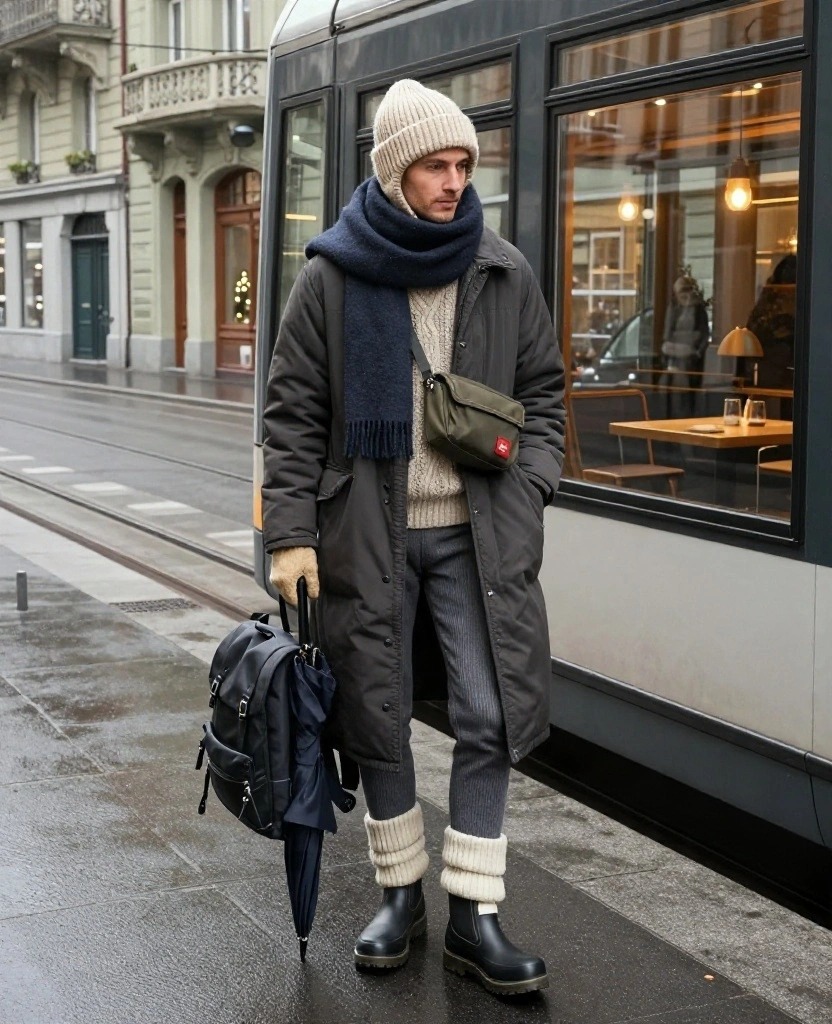
Winter accessories can decide whether a day feels cozy or frustrating.
A warm hat protects your ears, gloves keep your hands ready for phones and train tickets, and the right bag carries extra layers without digging into your shoulders.
Treat these pieces as part of the outfit from the start, not as last-minute extras.
Choose a beanie that covers your ears without slipping over your eyes.
Wool and merino blends breathe well, while fleece lining adds comfort in strong wind.
Touchscreen gloves are helpful, but make sure the fit still allows warmth and movement.
Outfit Pieces:
– Ribbed wool or merino beanie that covers the ears
– Lined leather, wool, or water-resistant touchscreen gloves
– Large scarf in a solid color or winter pattern
– Secure zip crossbody bag or compact backpack
– Waterproof pouch for electronics and travel documents
– Optional thin glove liners for very cold days
Styling Tips:
– Match the beanie to your scarf or boots instead of matching every accessory exactly.
– Choose wide bag straps that sit comfortably over a puffer jacket.
– Use a crossbody for city walks and a small backpack for extra layers, water, and snacks.
– Keep your phone and transit card in a zipped inner pocket, not an open outer pocket.
– Carry a compact tote for your coat when indoor heat rises.
– Pack spare lightweight gloves because they are easy to remove and forget in cafés.
A deep red hat or checked scarf can wake up a neutral coat with almost no packing cost.
Before leaving, check your ears, hands, and bag closure so small oversights do not interrupt the day.
Finish Every Outfit with a Hat, Gloves, and a U…
Editor’s Choice



14. Pack a Flexible Three-Layer Formula for Every Day
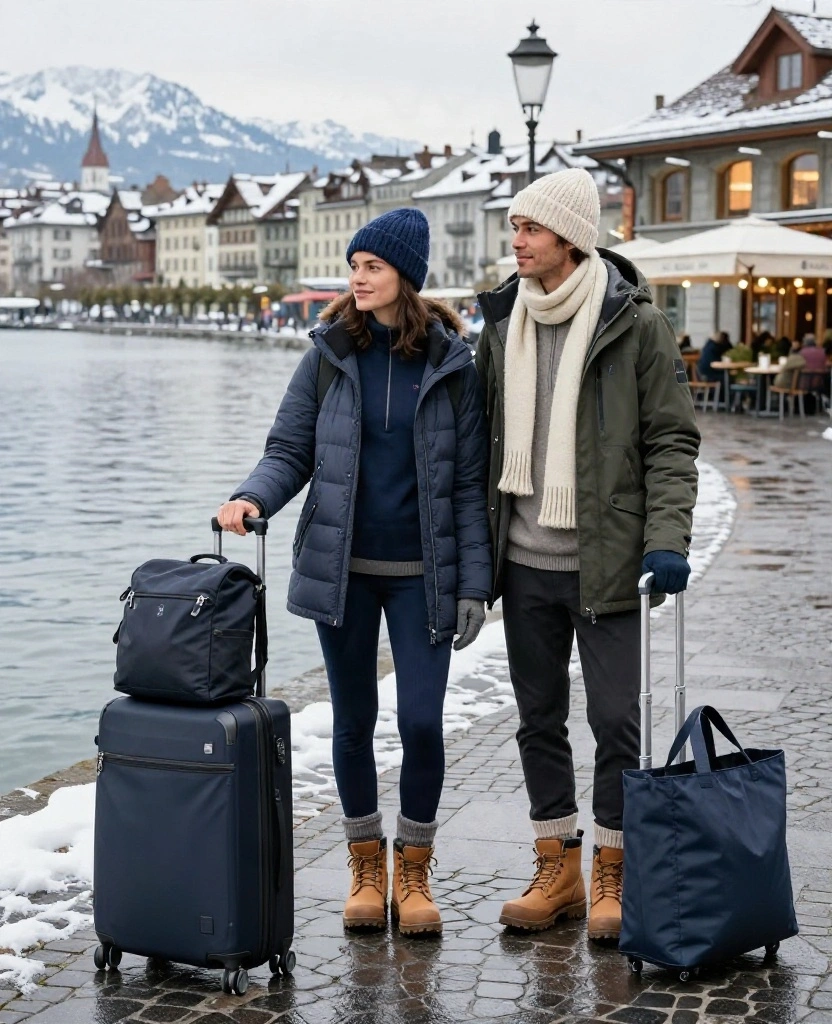
When the December forecast feels uncertain, use three clear layers: a breathable base, a warm middle, and a protective outer piece.
This simple system works for café mornings, windy lake walks, rainy commutes, and cold train platforms.
Each layer has one job, so you can adjust quickly instead of changing your whole outfit.
The base layer manages moisture with merino or technical fabric.
The middle layer traps heat through a sweater, fleece, cardigan, or thin vest.
The outer layer blocks wind and rain with a wool coat, puffer, or waterproof shell.
Together, these pieces handle more weather than one heavy garment.
Outfit Pieces:
– Merino or technical thermal top
– Thermal leggings for long outdoor days
– Fine sweater, fleece, cardigan, or thin insulated vest
– Wool coat for dry weather, puffer for deep cold, or rain shell for wet days
– Warm socks and weatherproof boots
– Scarf, gloves, hat, and foldable tote
Styling Tips:
– Check wind, rain, and temperature changes before choosing the outer layer.
– Select the base layer first, then make sure the coat has room for the middle piece.
– Keep the visible colors coordinated, such as cream with camel and chocolate or navy with gray.
– Close the coat and add the scarf before you start feeling chilled.
– Carry the hat and gloves even when the morning feels mild.
– Pack the most versatile layers in your day bag for trips beyond the city, where temperatures may drop quickly.
This formula lets you pack fewer pieces while creating many outfits.
Add a colorful scarf or swap boots for a dressier pair, and you are ready for both daytime exploring and evening plans.
Conclusion: Warm Layers Make Geneva More Enjoyable
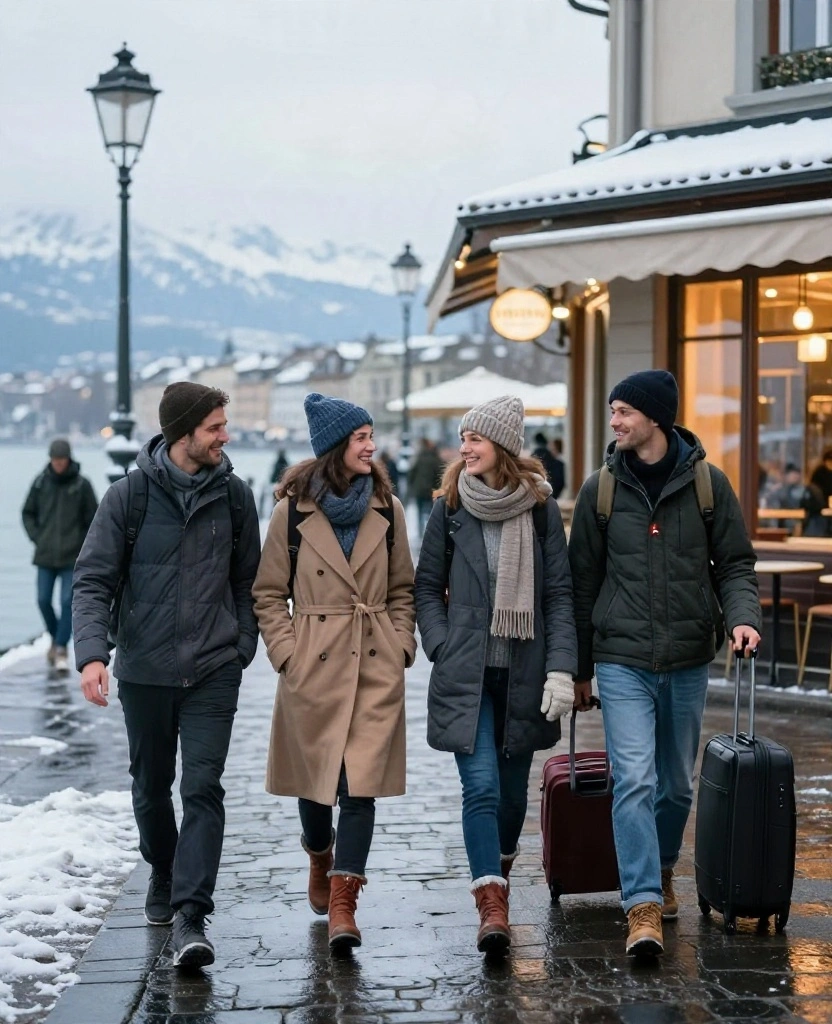
The best answer to what to wear in Switzerland in December is a flexible outfit that can change with the weather.
Start with thermal clothing, add a breathable warm layer, finish with insulated or waterproof outerwear, and never underestimate good socks, sturdy boots, a scarf, gloves, and a hat.
With these 14 combinations, Geneva’s chilly streets, lake breezes, cafés, and train platforms become much easier to enjoy in comfort and style.
Save the ideas that fit your trip, then build a small capsule around them.
A little planning means less shivering, lighter packing, and more time enjoying Switzerland.
Note: We aim to provide accurate product links, but some may occasionally expire or become unavailable.
If this happens, please search directly on Amazon for the product or a suitable alternative.
This post contains Amazon affiliate links, meaning we may earn a small commission if you purchase through our links, at no extra cost to you.
Frequently Asked Questions
Q. How cold is Geneva in December?
Usually around -1°C to 6°C (30°F to 43°F). Fog, damp air, and the bise wind can make it feel much colder.
Q. What is the bise, and how do I dress for it?
It is a cold, dry northerly wind that blows across Lake Geneva. A windproof outer layer, a scarf, and a hat that covers your ears make a big difference.
Q. What shoes should I wear in Geneva in winter?
Waterproof, insulated or leather boots with good grip. Pavements and Old Town cobblestones can be wet or icy.
Q. Is the weather the same across Switzerland in December?
No. Cities like Geneva and Zurich are chilly and damp, while mountain areas such as Zermatt or Interlaken’s high peaks are far colder, so pack extra layers for Alpine trips.
Q. How much daylight does Geneva get in December?
About eight hours, with sunrise near 8:10 a.m. and sunset around 4:45 p.m. Plan outdoor sightseeing for midday.

10 Stylish San Francisco Outfits for August That Will Keep You Cool and Chic!

10 Must-Have San Francisco Outfits for June That’ll Make You the Envy of Every Tourist!
10 Must-Have Outfits for San Francisco in May That Will WOW the Locals!
