A major air traffic control communications problem forced the FAA to halt departures across the country on Friday, November 13, 2026, leaving travelers facing widespread delays and cancellations.
Air travel across the United States was thrown into chaos Friday afternoon when the Federal Aviation Administration (FAA) issued a nationwide ground stop following a communications failure affecting regional air traffic control centers.
The emergency safety measure prevented departing aircraft from taking off while officials investigated the disruption.
Airports across the country were affected, including major hubs serving millions of travelers.
Transportation Secretary Sean Duffy confirmed that the communications problem affected the nation’s 22 Air Route Traffic Control Centers, which manage aircraft traveling between airports.
The FAA ordered the ground stop as a precaution to protect passengers, flight crews, and the national airspace system.
Flight-tracking service FlightAware reported that nearly 7,000 flights had been delayed or canceled during the disruption, according to Reuters.
For passengers, the consequences could extend beyond the initial shutdown. Even after flights are cleared to depart, airlines may need hours to reposition aircraft, arrange crews, and recover their schedules.
Here’s what happened, why the FAA stopped flights nationwide, and what travelers should do if their flights are affected.
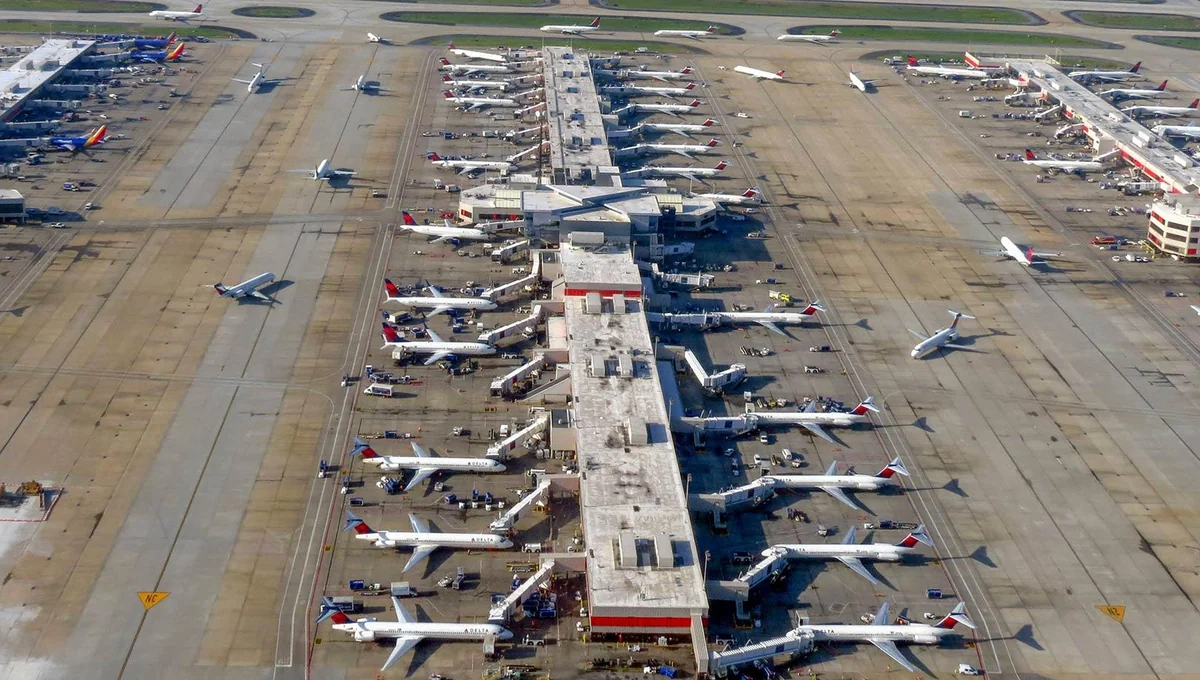
Why Did the FAA Ground Flights Nationwide?
The nationwide ground stop followed a serious communications problem involving the systems used by air traffic control centers.
These centers are responsible for coordinating aircraft traveling through large sections of U.S. airspace, particularly flights operating at higher altitudes between airports.
When communication systems become unreliable, controllers may lose access to the normal tools needed to coordinate aircraft safely.
The FAA therefore ordered departing aircraft to remain on the ground while technicians investigated the problem.
Transportation Secretary Sean Duffy said the issue affected all 22 regional Air Route Traffic Control Centers.
The disruption was initially reported in connection with air traffic control communications problems in Chicago before the nationwide order was announced.
At the time of the initial reports, authorities had not publicly established the precise technical cause of the nationwide failure.
There was also no confirmed evidence in those reports that a cyberattack caused the disruption.
What Did the FAA’s Nationwide Ground Stop Order Say?
The FAA described the situation as extraordinary and said the restrictions were necessary for safety.
The order applied nationwide and directed departing aircraft to remain grounded until further notice.
International flights arriving in the United States were to be handled individually.
That distinction is important because a ground stop is not the same as closing the entire U.S. airspace to every aircraft already in flight.
The FAA’s immediate priority was to prevent additional departures while controllers and technicians assessed the communications problem.
Were All Flights in the United States Canceled?
No.
A nationwide ground stop means aircraft scheduled to depart cannot take off while the restriction is in effect.
It does not automatically cancel every flight.
Airlines may hold aircraft at gates, delay boarding, or keep planes on the ground while waiting for updated instructions.
Some flights may eventually depart after restrictions are lifted, while others may be canceled because of scheduling problems.
Passengers should not assume their flight has been canceled simply because a ground stop has been announced.
The best source for an individual flight’s status remains the airline operating that flight.
What Happened to Planes Already in the Air?
Aircraft already airborne were not automatically ordered to make emergency landings.
A ground stop primarily affects departures.
Flights already traveling through U.S. airspace could continue to be managed under applicable air traffic control instructions and safety procedures.
However, individual flights could still experience changes, including delays, diversions, or revised arrival instructions.
The FAA also indicated that inbound international flights would be managed on a case-by-case basis.
That means travelers arriving from overseas could face different circumstances depending on their route, destination, and airline.
How Many Flights Were Delayed or Canceled?
The nationwide disruption affected thousands of flights.
Reuters reported that FlightAware had recorded nearly 7,000 delayed or canceled flights associated with the disruption.
That figure represents an early snapshot, not necessarily the final total.
The number of affected flights can change as airlines update their schedules and the aviation system recovers.
A flight may also experience multiple delays before eventually departing.
Travelers should check their airline’s latest information rather than relying on an earlier national delay count.
Which U.S. Airports Were Affected?
Because the FAA issued a nationwide departure restriction, airports across the country were subject to the order.
The impact was not limited to a single airline, airport, or region.
Major U.S. aviation hubs include:
- Hartsfield-Jackson Atlanta International Airport (ATL)
- Chicago O’Hare International Airport (ORD)
- Dallas Fort Worth International Airport (DFW)
- Denver International Airport (DEN)
- Los Angeles International Airport (LAX)
- John F. Kennedy International Airport (JFK)
- Newark Liberty International Airport (EWR)
- Miami International Airport (MIA)
- Orlando International Airport (MCO)
- San Francisco International Airport (SFO)
These airports are examples of major hubs covered by a nationwide departure restriction, not a verified ranking of the most disrupted airports.
The actual number of delayed or canceled flights at each location depends on airline schedules and local operating conditions.
How Did the Ground Stop Affect Florida Airports?
Florida travelers were also subject to the nationwide departure restriction.
Major airports in the state include:
| Florida airport | Code | Area served |
|---|---|---|
| Orlando International Airport | MCO | Orlando and Central Florida |
| Miami International Airport | MIA | Miami and South Florida |
| Fort Lauderdale-Hollywood International Airport | FLL | Fort Lauderdale and Broward County |
| Tampa International Airport | TPA | Tampa Bay |
| Southwest Florida International Airport | RSW | Fort Myers and Naples |
| Palm Beach International Airport | PBI | West Palm Beach |
| Jacksonville International Airport | JAX | Jacksonville |
| Orlando Sanford International Airport | SFB | Sanford and Central Florida |
Flights departing from these airports were subject to the national order while it was in force.
However, the nationwide announcement alone does not establish how many flights were canceled or delayed at each Florida airport.
Passengers should check airport information and airline notifications for local details.
The disruption is especially relevant to travelers flying into or out of Florida’s major vacation destinations, including Orlando, Miami, Fort Lauderdale, and Tampa.
Why Can Flight Delays Continue After a Ground Stop Ends?
One of the most frustrating aspects of a nationwide aviation shutdown is that the effects can continue after the immediate problem is resolved.
Commercial aviation operates through tightly connected schedules.
An aircraft arriving late in one city may be needed for another flight hundreds of miles away.
If that plane is delayed, the next departure can also be delayed.
Flight crews also work under federal duty-time and rest requirements.
When a disruption lasts long enough, an airline may need replacement pilots or flight attendants before a flight can depart.
Other complications include crowded airport gates, limited departure slots, missed connections, and aircraft being out of position.
For these reasons, a ground stop lasting a relatively short period can create disruptions that continue for hours afterward.
What Should You Do If Your Flight Is Delayed?
If you’re scheduled to fly during the disruption or its aftermath, a few practical steps can help.
1. Check your airline’s app first
Your airline’s mobile app or website usually provides the most relevant information about your individual reservation.
Look for departure-time changes, gate updates, cancellation notices, and rebooking options.
2. Don’t head to the airport without checking your flight
If you haven’t left home, review your flight status before traveling to the airport.
However, don’t assume a delay means you can arrive late. Airlines may revise departure times, and passengers still need to meet check-in and boarding deadlines.
3. Sign up for flight alerts
Enable text messages, email notifications, or push alerts from your airline.
These updates can be especially helpful if your departure time changes repeatedly.
4. Review your connection
If you’re taking a connecting flight, check both segments of your itinerary.
A delay on the first flight may affect your ability to reach the second one.
If the connection becomes impossible, contact the airline about rebooking.
5. Keep important receipts
If your disruption requires additional spending on meals, transportation, or accommodations, save your receipts.
Reimbursement depends on the cause of the disruption, the airline’s policies, and applicable passenger protections.
6. Avoid immediately buying an expensive replacement ticket
Before booking another flight, review the airline’s rebooking options and refund rules.
A replacement ticket on a different airline may not be reimbursed automatically.
Are Passengers Entitled to Refunds?
Possibly, depending on what happens to their flight.
Under U.S. Department of Transportation rules, passengers generally have a right to a refund when an airline cancels their flight or makes a significant schedule change and the passenger chooses not to accept the alternative transportation or other compensation offered.
This applies even when the cancellation is caused by circumstances outside the airline’s control.
However, a delay does not automatically mean every passenger is entitled to cash compensation.
Airlines may provide meals, hotel accommodations, or other assistance under their customer-service commitments, but the availability of those benefits can depend on whether the disruption was within the airline’s control.
A nationwide FAA communications failure is different from a routine airline scheduling problem.
Travelers should check their airline’s published policies and the DOT’s official passenger-rights resources before making reimbursement decisions.
Is This the First Nationwide Ground Stop in U.S. History?
No, but nationwide ground stops are extremely rare.
The last comparable nationwide departure halt occurred in January 2023, when an FAA computer-system malfunction disrupted the Notice to Air Missions system, commonly known as NOTAM.
That system provides important safety information to pilots and flight crews.
The FAA temporarily halted domestic departures while the problem was addressed.
Before the January 2023 incident, the most notable nationwide shutdown occurred following the September 11, 2001, terrorist attacks.
The November 13, 2026, disruption is another reminder of how dependent modern aviation is on reliable communications and information systems.
Why Is the FAA’s Aging Technology a Concern?
The incident has renewed attention on the condition of America’s air traffic control infrastructure.
Some systems used by air traffic controllers rely on older communications technology that requires modernization.
Congress approved $12.5 billion in funding in 2025 for upgrades to the national air traffic control system.
Projects include replacing aging copper wiring with fiber-optic connections and upgrading communications equipment.
Transportation Secretary Sean Duffy has said that substantially more funding will be needed to complete the modernization effort.
Although the precise cause of Friday’s nationwide communications failure had not been confirmed in the initial reporting, the disruption highlighted the importance of resilient backup systems and dependable air traffic control technology.
How Can You Check Current FAA Ground Stops and Airport Delays?
Travelers can use several official resources.
FAA National Airspace System Status:
https://nasstatus.faa.gov/
This provides information about airport delays, ground stops, and other air traffic restrictions.
FAA Air Traffic Report:
https://www.faa.gov/newsroom/faa-daily-air-traffic-report
This provides a general overview of expected aviation conditions.
U.S. Department of Transportation:
https://www.transportation.gov/individuals/aviation-consumer-protection
This explains passenger rights, refunds, and airline responsibilities.
Your airline’s website or mobile app:
For your specific flight, check directly with the airline. Airport-wide FAA information may not reflect every change to an individual reservation.
Frequently Asked Questions
Q. Why did the FAA stop flights nationwide on November 13, 2026?
A. The FAA issued the order after communications problems affected regional air traffic control centers. The nationwide departure halt was a safety precaution.
Q. Were all U.S. airports affected?
A. The FAA’s order applied to departing flights nationwide, although individual airports and airlines could experience different levels of disruption.
Q. Were planes already in the air forced to land?
A. No. The ground stop did not automatically require every airborne aircraft to land immediately.
Q. Were international flights affected?
A. Yes, international operations could be affected. The FAA said inbound international flights would be managed individually.
Q. How many flights were delayed?
A. Reuters reported that FlightAware had recorded nearly 7,000 delayed or canceled flights during the disruption. The final total may differ.
Q. Is the nationwide ground stop still active?
A. The original order was issued November 13. Travelers should consult the FAA’s live status system and their airline for the latest operational information rather than assuming the original restriction remains active.
Q. Can I get a refund if my flight is canceled?
A. If your airline cancels your flight and you decline the alternative offered, you generally have a right to a refund under DOT rules.
Q. Will flights return to normal immediately?
A. Not necessarily. Aircraft positioning, crew schedules, missed connections, and airport congestion can cause additional delays after restrictions are lifted.
Final Thoughts
The FAA’s November 13 nationwide ground stop was one of the most significant U.S. aviation disruptions in recent years.
A communications failure affecting regional air traffic control centers led federal officials to halt departures across the country as a safety precaution.
Thousands of travelers faced delays and cancellations, and the disruption raised fresh questions about the reliability of America’s aging air traffic control infrastructure.
For anyone flying in the aftermath, the most important advice is simple: check your flight directly with your airline, monitor FAA updates, and allow extra time for possible schedule changes.
The nationwide order may have been temporary, but the ripple effects of a disruption this large can last much longer.


Florida’s King Tides Are Back: Why Streets Could Flood Without a Drop of Rain This Week
These 10 States Have the Worst Drivers in America, According to a Study — And New Jersey Is No. 2
