Imagine walking outside on a beautiful Florida morning.
The sun is shining. There are no dark clouds. And it hasn’t rained.
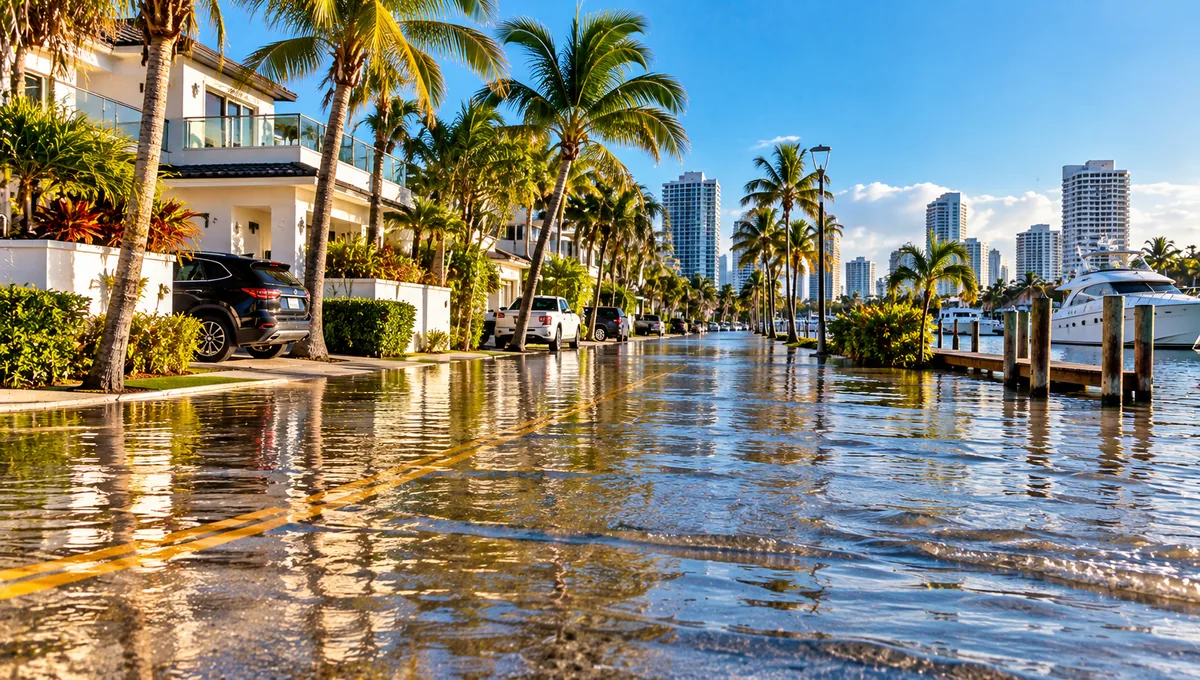
But somehow, the street in front of your house is covered in water.
It might look like a broken water main or the aftermath of a storm.
But in parts of coastal Florida, something else could be responsible.
King tides.
Florida is entering one of its highest predicted tide periods of 2026, with unusually high water levels expected along parts of the coast.
And here’s what makes these events so surprising.
Streets can flood even when the weather looks perfectly fine.
For people living near canals, marinas, and low-lying coastal neighborhoods, these tides are more than an unusual sight.
They can disrupt commutes, damage vehicles, and leave saltwater in places that normally stay dry.
Here’s what Florida residents and visitors need to know.
What Is a King Tide?
A king tide is an informal name for an especially high astronomical tide.
Tides happen because of the gravitational pull of the moon and sun.
During certain times of the year, those gravitational forces combine with the moon’s position to produce higher-than-normal tides.
King tides are predictable natural events.
They are not hurricanes, tsunamis, or storm surges.
But when ocean levels rise high enough, water can spill over seawalls, move through drainage systems, or reach low-lying streets.
That’s when residents may experience what is commonly called sunny-day flooding.
And because the flooding can happen without rainfall, it often catches visitors by surprise.
When Are Florida’s King Tides in 2026?
South Florida is experiencing one of its most significant predicted king tide periods of the year.
According to Miami-Dade County, the major fall 2026 periods include:
| Dates | Predicted period |
|---|---|
| September 10–13 | King tides |
| September 26–30 | King tides |
| October 7–13 | Higher peak tides |
| October 24–30 | Higher peak tides |
| November 6–9 | King tides |
| November 23–26 | King tides |
The October 24–30 period is especially important for South Florida.
The South Florida Water Management District identifies October 27, 2026, as the date of the annual maximum predicted peak along the region’s East Coast.
In the Florida Keys, the district identifies October 28 and October 30 as annual maximum predicted peak dates.
Exact high tide times and water levels vary by location.
A king tide forecast doesn’t mean every street or neighborhood will flood.
But residents in areas with a history of tidal flooding should pay attention.
Why Can Florida Streets Flood When It Isn’t Raining?
This is the part that surprises many people.
Florida’s coastal drainage systems often connect to canals, rivers, and other waterways.
When the tide rises unusually high, water levels in those waterways rise too.
In some low-lying areas, the water can reach streets through drainage systems or flow over seawalls and other low waterfront edges.
Instead of rainwater draining away, tidal water may push inland.
The result?
Puddles, flooded intersections, submerged parking spaces, and water-covered streets — all beneath a sunny sky.
The flooding often improves after the tide falls.
But that doesn’t mean it is harmless.
Saltwater can damage vehicles, affect property, and create unsafe driving conditions.
Which Florida Cities Are Most at Risk?
King tides can occur along Florida’s coast, but impacts depend on local elevation, drainage, seawalls, wind, and weather.
Some of the most closely watched communities are in South Florida.
✅ Miami and Miami Beach
Low-lying neighborhoods near Biscayne Bay, canals, and the Intracoastal Waterway can experience tidal flooding.
Miami’s official king tide guidance warns that flooding may reach streets and other low areas even without rain.
Water levels vary significantly from one neighborhood to another.
✅ Fort Lauderdale
Fort Lauderdale is especially vulnerable because of its extensive canal system and low elevation.
The city has warned residents about elevated tides during October and November 2026.
In some areas, seawalls, streets, and drainage systems may be affected when the water rises.
✅ Hollywood and Hallandale Beach
Coastal and canal-side neighborhoods in southern Broward County may also experience elevated water levels.
Drivers should be especially careful around low roads near waterways.
✅ The Florida Keys
The Keys have many low-lying coastal areas, making high tides an important concern.
The South Florida Water Management District expects particularly high predicted tides around October 28 and October 30.
✅ Other Florida Coastal Communities
High tides can also affect communities along Florida’s Gulf Coast.
However, the dates and severity of king tides differ from place to place.
The most useful forecast is always the one for your nearest local tide station.
October 27 Could Be a Major King Tide Day
For South Florida’s Atlantic coast, Tuesday, October 27, 2026, is especially important.
The South Florida Water Management District identifies it as the annual maximum predicted peak.
That doesn’t guarantee widespread flooding.
Actual water levels can rise above or remain below predictions depending on wind, weather, ocean currents, and other conditions.
But it does mean the astronomical tide is expected to be particularly high.
Residents in neighborhoods that have flooded during previous king tides should be prepared.
Moving a vehicle to higher ground and checking local tide forecasts before traveling can help avoid unnecessary problems.
Is King Tide Flooding Dangerous?
It can be.
Even shallow-looking floodwater can create problems.
For drivers, the biggest concern is not knowing how deep the water is.
Floodwater can hide potholes, road damage, and other hazards.
If the water is salty, driving through it can also damage important vehicle components.
Pedestrians face risks too.
Floodwater may contain debris, pollutants, or bacteria.
Children and pets should be kept away from flooded streets and standing water.
And if water is covering a road, the safest decision is to find another route.
Why Are King Tides Becoming a Bigger Problem in Florida?
King tides themselves are natural.
They’ve happened for generations.
But rising sea levels are making their effects more noticeable in some coastal communities.
Think of it this way.
If the ocean starts at a higher level, it doesn’t need to rise as much during high tide to reach a street, sidewalk, or seawall.
That means places that once stayed dry during ordinary high tides may experience flooding more often.
According to the National Oceanic and Atmospheric Administration, high tide flooding is becoming more frequent along many U.S. coastlines as relative sea levels rise.
Florida communities are responding with drainage improvements, pump stations, seawall projects, and tidal valves.
But these upgrades take time and don’t eliminate every flood risk.
What Should Florida Residents Do During King Tides?
You don’t need to panic when a king tide is forecast.
But a little preparation can make a big difference.
Move your car if your street floods regularly. Parking on higher ground can reduce the chance of saltwater damage.
Avoid driving through floodwater. Even if other vehicles are crossing, that doesn’t mean it’s safe.
Check local tide times. The highest water levels may occur at different times depending on your location.
Keep children and pets away from floodwater. It may contain pollutants or hidden hazards.
Protect vulnerable property. If your home has flooded during previous king tides, follow your local government’s flood preparation guidance.
Allow extra travel time. Some roads may be temporarily difficult or unsafe to use.
Report blocked roads or drainage problems. Local officials can use those reports to respond to problem areas.
For Fort Lauderdale residents, the city accepts flooding and roadway reports through its customer service center at 954-828-8000 and its FixIt FTL service.
How Long Does King Tide Flooding Last?
The highest water levels generally occur around the time of high tide.
In Miami, city guidance describes king tide conditions as typically lasting around three hours.
But the actual duration of flooding depends on the location.
Some streets may drain relatively quickly once the tide falls.
Others may stay wet longer because of drainage limitations, rainfall, or other factors.
And during a multi-day king tide period, flooding may return around successive high tides.
That’s why one dry afternoon doesn’t necessarily mean the risk is over.
Can Tourists Still Visit Miami and Fort Lauderdale?
Yes.
King tides don’t mean the entire city is underwater.
Most visitors may not encounter flooding at all.
The effects tend to be concentrated in vulnerable low-lying areas near waterways.
But if you’re driving through coastal neighborhoods, visiting a marina, or parking near the waterfront, it’s worth checking local conditions.
Don’t assume a flooded street is safe just because it’s sunny outside.
And remember that high tides can reduce clearance beneath some bridges, which matters for boaters.
Where Can You Check Florida King Tide Forecasts?
For the most reliable information, use official local and federal resources.
- Miami-Dade County King Tide Information
- City of Miami King Tide Forecast
- Fort Lauderdale King Tide Information
- South Florida Water Management District
- NOAA Tides and Currents
These sources can help residents understand predicted tide levels, flood risks, and local precautions.
Florida King Tides 2026: Quick Facts
| Question | Answer |
|---|---|
| What are king tides? | Especially high astronomical tides |
| Can flooding happen without rain? | Yes |
| Major South Florida dates | October 24–30, 2026 |
| Predicted East Coast annual peak | October 27, 2026 |
| Florida Keys annual peak dates | October 28 and 30, 2026 |
| Other fall periods | November 6–9 and November 23–26 |
| Most vulnerable places | Low-lying coastal and canal-side areas |
| Is flooding guaranteed? | No |
| Should you drive through flooded streets? | No |
The Bottom Line
Florida is famous for sunshine, beaches, and beautiful waterfront neighborhoods.
But living close to the ocean also means dealing with the power of the tides.
During king tide season, water can rise high enough to reach streets and sidewalks even without a storm.
And for people who have lived in coastal Florida for years, these events are becoming an increasingly familiar concern.
The good news is that king tides are predictable.
Residents can check forecasts, move vehicles when needed, and avoid dangerous roads.
As the October 2026 peak approaches, the most important thing is to pay attention to conditions in your own neighborhood.
Because in coastal Florida, a perfectly sunny day doesn’t always mean the streets will stay dry.
These 10 States Have the Worst Drivers in America, According to a Study — And New Jersey Is No. 2
Florida Declares State of Emergency in 25 Counties as Hurricane Isaias Threatens Gulf Coast
7 Florida Law Changes Starting This Week — Here’s What Residents Should Know
