When I first heard that Miami might build direct transit from the airport to PortMiami, I pictured something simple.
Get off the plane, collect my luggage, board a train, and ride straight to the cruise terminal.
The idea is real—but it is still only a plan.
Miami-Dade transportation officials have studied two possible ways to connect Miami International Airport with PortMiami.
One would use an automated people mover. The other would extend Metrorail.
Both could offer a “one-seat ride,” meaning passengers would not need to change vehicles. However, neither proposal would necessarily be nonstop.
More importantly, neither project has been funded or approved for construction.
Why Miami Is Studying a Direct Connection
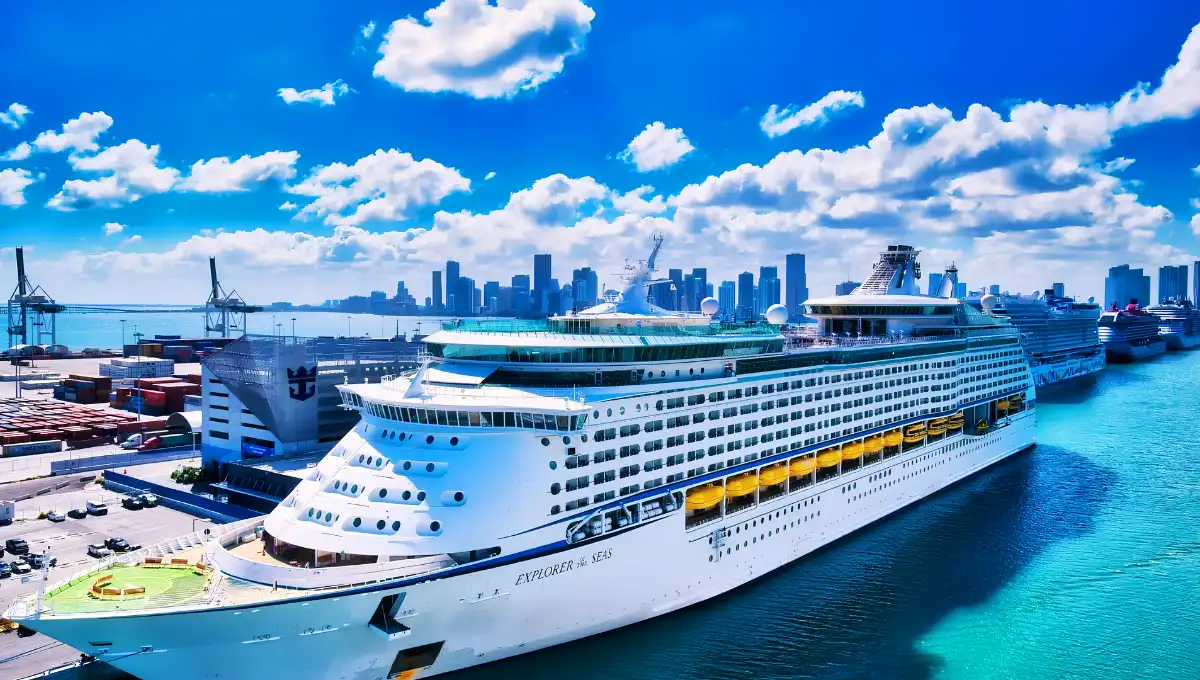
PortMiami is the world’s leading cruise port, and its passenger numbers continue to grow.
During fiscal year 2025, the port welcomed a record 8,564,225 cruise passengers. That was 4.02% more than the previous fiscal year.
Miami-Dade’s long-term planning documents estimate that cruise traffic could reach about 24 million passengers by 2050.
Miami International Airport is also closely connected to the cruise business.
An official airport economic study estimated that 766,662 travelers arrived at MIA for a PortMiami cruise in 2024. That represented about 9.3% of PortMiami’s passengers that year.
Yet there is still no one-seat public transportation service connecting the airport and cruise port.
That is the problem Miami-Dade is trying to solve.
Also Read: Yes, You Can Take a 2-Hour Ferry From Florida to The Bahamas
Five Ideas Were Studied—Two Moved Forward
The Miami-Dade Transportation Planning Organization study originally examined five types of transit:
- Automated people mover
- Bus rapid transit
- Commuter rail
- Heavy rail or Metrorail
- Light rail
After reviewing those choices, planners moved forward with two possibilities: an automated people mover and a Metrorail extension.
Here is how they compare.
| Feature | Automated People Mover | Metrorail Extension |
|---|---|---|
| Total service distance | 9 miles | 10 miles |
| New infrastructure | 9 miles | About 1.9 miles |
| New stations | 5 | 2 |
| Passenger capacity per vehicle | 50 | 75 |
| Estimated travel time | 24–34 minutes | 22–27 minutes |
| Estimated annual riders | 1.6–2.3 million | 1.5–2.1 million |
| Estimated construction cost | $600–$700 million | $700–$800 million |
| Estimated yearly operating cost | $9–$11 million | $12–$15 million |
These are early planning estimates, not final prices or guaranteed travel times.
Also Read: PortMiami Parking, Hotels and Transportation: Complete 2026 Guide
Option One: An Automated People Mover
The first proposal would build a nine-mile automated people mover between the Miami Intermodal Center near MIA and PortMiami.
It is important not to describe this simply as an extension of the current downtown Metromover.
The official study describes it as a separate automated people mover using electric, rubber-tired vehicles on a dedicated guideway.
The proposed route would include five station stops.
Those stops would serve PortMiami, downtown areas near MiamiCentral and the Overtown/Lyric Theatre Metrorail station, and the Miami Intermodal Center near the airport.
The system might be able to use an existing port bridge or Miami River bridge. However, the proposal would still require nine miles of new guideway and a new or expanded storage and maintenance facility.
Its estimated travel time is between 24 and 34 minutes.
At an estimated $600 million to $700 million, it is the less expensive of the two finalists.
Option Two: Extend Metrorail to PortMiami
The second proposal would use the existing Metrorail Orange Line from MIA to the Overtown/Lyric Theatre area.
From there, approximately 1.9 miles of new elevated track would continue through downtown and into PortMiami.
The route would likely require a new bridge across the Intracoastal Waterway before ending at a new elevated station inside the port.
Its total service distance would be about 10 miles, but most of that journey would use tracks that already exist.
The study estimates a travel time of 22 to 27 minutes.
Construction could cost between $700 million and $800 million, while yearly operating and maintenance costs could reach $12 million to $15 million.
This option would cost more, but it could connect PortMiami directly to the existing Metrorail network.
Which Option Is Better?
At first, I thought Metrorail sounded like the obvious winner.
It is slightly faster, uses more existing infrastructure, and carries more passengers per vehicle.
But the official numbers make the choice less simple.
The automated people mover is expected to cost less. It also has a slightly higher estimated ridership range and could serve more stops between the airport and port.
Metrorail would require less new guideway, but it would probably need an expensive new bridge.
The official study does not select a winner.
Instead, it says both options are technically possible and need more planning before Miami-Dade can choose a locally preferred alternative.
This Is Not a Project Scheduled to Open in 2050
This is the most important detail for cruise travelers.
Some reports make it sound as if the new transit service is scheduled to open in 2050. That is not what the official study says.
The project was recommended for the Priority IV unfunded section of Miami-Dade’s 2050 Long-Range Transportation Plan.
The year 2050 describes the planning horizon. It is not a promised opening date.
As of August 2026:
- No final route has been selected.
- No preferred transit option has been chosen.
- No construction funding has been committed.
- No groundbreaking date has been announced.
- No completion date has been established.
This means people planning a Miami cruise should not expect a new direct train anytime soon.
What Could Improve Before a New Train Is Built?
Miami-Dade’s study also recommends smaller improvements that could happen sooner.
These include branded cruise shuttles between downtown transit stations and PortMiami.
Officials also suggested combining Metrorail and shuttle fares into a single ticket, adding clearer signs, and placing customer service workers at key transit hubs during busy cruise periods.
These steps would not create a direct train, but they could make the current trip easier for passengers carrying luggage.
How to Travel From MIA to PortMiami Right Now
Cruise passengers currently have several choices.
Cruise-Line Shuttle
Most cruise lines offer prearranged transportation from Miami International Airport to PortMiami.
I would check the cruise line’s price, pickup time, luggage policy, and reservation deadline before flying.
Taxi
Taxis are available outside MIA baggage claim.
Miami-Dade has eliminated its old flat-fare taxi zones. Trips now use the meter.
A $15 minimum applies to trips beginning at MIA or PortMiami. MIA also charges a $2 airport origination fee.
Current taxi rates are listed on the official MIA transportation page.
Rideshare
Major ride-app services can pick up passengers at MIA and drop them off at designated PortMiami zones.
Prices change based on demand, traffic, vehicle type, and pickup time. Because no official fixed fare exists, I would check the app shortly before traveling.
Public Transportation
Public transportation is possible, but it requires transfers.
Passengers can take the Metrorail Orange Line from MIA to Government Center.
From there, they can use Metromover to reach Freedom Tower Station and then take the free Coral Way Trolley across the PortMiami Bridge.
The official route is explained on PortMiami’s transportation page.
This may cost less than a private ride, but carrying cruise luggage through several transfers could be difficult.
Private Shuttle or Car Service
PortMiami also provides a directory of permitted shuttle and transportation companies.
This can be useful for families or groups traveling with several bags.
PortMiami Has More Than One Road Connection
PortMiami is located on an island, but saying it depends on only one causeway is not accurate.
Vehicles can reach the port through Port Boulevard. The toll-free PortMiami Tunnel also connects port traffic directly with the highway system.
Traffic can still be difficult on busy cruise days, but the port is not served by a single vehicle connection.
What I Would Do for a Miami Cruise Today
I would plan my trip using the transportation choices that already exist.
I would compare the cruise-line shuttle with current taxi and rideshare prices.
If I chose public transportation, I would study every transfer before leaving the airport.
I would also leave extra time for traffic, baggage collection, and unexpected delays.
The proposed airport-to-port connection could make future cruise travel much easier. But right now, it remains an unfunded transportation concept—not an upcoming train travelers can start planning around.
What Happens Next?
The next major step would be selecting a locally preferred alternative.
Miami-Dade would need to choose between the automated people mover and Metrorail extension—or decide not to move forward with either one.
After that would come more engineering work, environmental reviews, station planning, funding decisions, and construction approvals.
The idea is exciting because a one-seat transit ride could remove several stressful transfers for cruise passengers.
But until Miami-Dade chooses a route, finds the money, and publishes a real construction schedule, this remains a long-term possibility.
Would you use a direct airport-to-PortMiami transit service, or would you still choose a taxi, rideshare, or cruise shuttle?

10 Stylish San Francisco Outfits for August That Will Keep You Cool and Chic!

10 Must-Have San Francisco Outfits for June That’ll Make You the Envy of Every Tourist!

10 Must-Have Outfits for San Francisco in May That Will WOW the Locals!
