What to wear in Interlaken in December? I asked myself that on the Höheweg promenade, snowflakes landing on my thin scarf while the Jungfrau glowed pink above the rooftops.
Interlaken winter weather is cold, damp, and storybook pretty, tucked between Lake Thun and Lake Brienz.
After a few chilly lessons, I’ve gathered 15 cozy layers that kept me warm in town, on lakeside walks, and on every snowy trip up to the Jungfraujoch.
1. Start With a Merino Thermal Base Layer
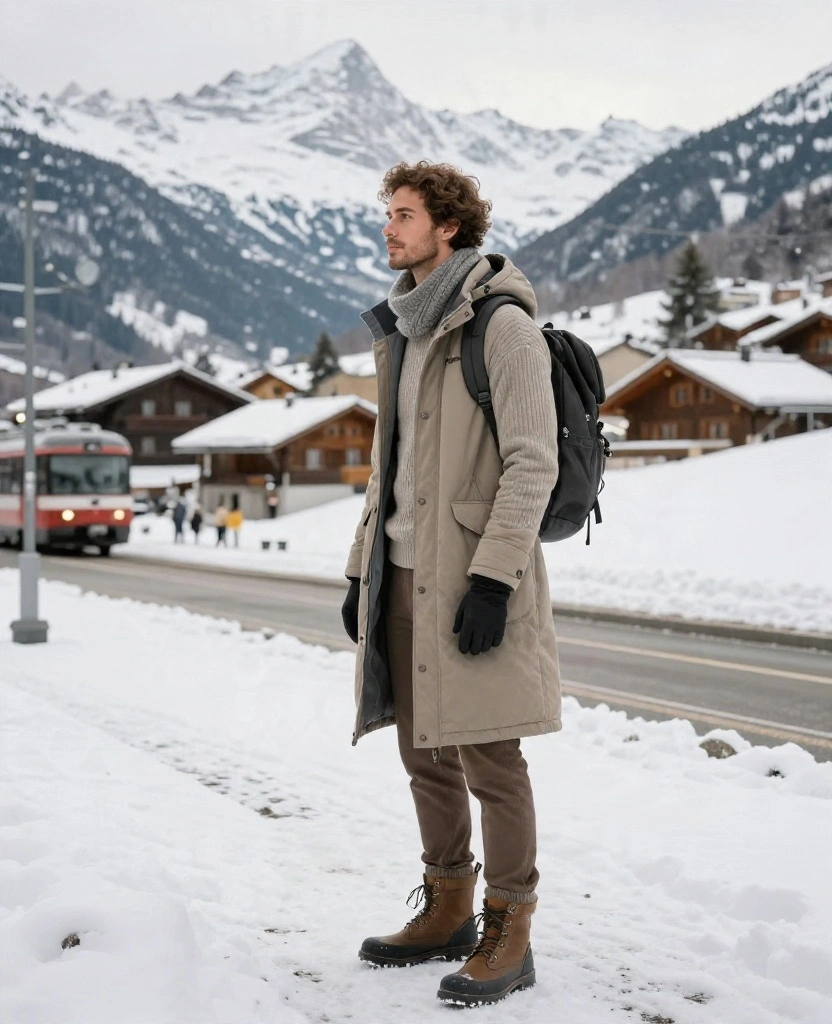
Interlaken’s December cold feels easier when your first layer keeps your skin dry and warm.
A lightweight merino top creates a smooth foundation under sweaters and coats without adding stiff bulk.
It works for train rides, snowy viewpoints, uphill walks, and relaxed café stops.
Outfit Pieces:
– Lightweight merino long-sleeve top in charcoal, cream, black, or forest green (close fit, not tight)
– Merino thermal leggings (lightweight for town, midweight for snow activities)
– Soft wool-blend trousers or lined travel pants
– Midweight fleece or fine-gauge wool sweater
– Insulated parka with a smooth lining
– Wool socks and weatherproof boots
Styling Tips:
– Choose a longer back hem so the base layer stays tucked beneath your trousers.
– Keep the neckline flat under a turtleneck, coat collar, or thick scarf.
– Avoid cotton next to your skin because it holds sweat and feels cold when damp.
– Match a dark thermal top with neutral layers for easy outfit changes.
– Air merino between wears and wash it in cool water according to the care label.
This slim foundation gives you warmth without making indoor spaces uncomfortable.
Add or remove the middle layer for sightseeing, dinners, and long mountain train rides.
Start With a Merino Thermal Base Layer
Editor’s Choice




2. Add a Fleece or Wool Mid-Layer for Easy Warmth
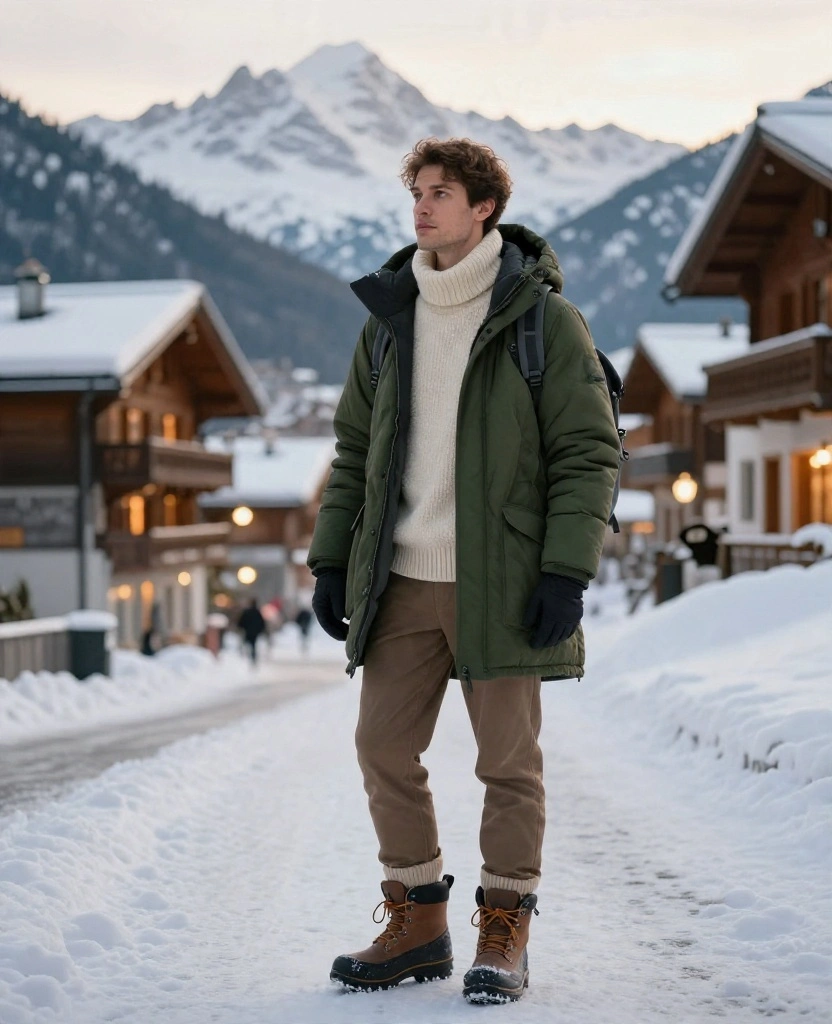
Your middle layer traps warm air while giving you room to move.
Fleece feels light and practical for active days, while wool brings a neater look to cafés, dinners, and chalet-lined streets.
Both options fit easily into a December travel wardrobe.
Outfit Pieces:
– Cream, oatmeal, navy, rust, or pine fleece half-zip (regular or slightly relaxed fit)
– Fine-gauge merino sweater or wool cardigan (hip length)
– Dark straight-leg trousers or corduroy pants
– Slim insulated vest (optional for extra warmth)
– Weatherproof parka in black, camel, or olive
– Leather-look snow boots with a lugged sole
Styling Tips:
– Leave enough room for a thermal top underneath without stretching the sweater.
– Choose a half-zip when you need quick airflow between warm interiors and cold streets.
– Keep bulky hems above the coat edge so wet snow does not collect on the fabric.
– Pair cream or oatmeal with dark trousers for a soft alpine color mix.
– Add a textured scarf or small gold earrings when you want fleece to look less sporty.
Use fleece for mountain routes and wool for town plans.
Swap the parka for a tailored coat at dinner, or add a bright scarf for simple travel photos.
Also Read: 15 Best Places to Visit in Zermatt in December
3. Choose an Insulated Parka That Blocks Wind
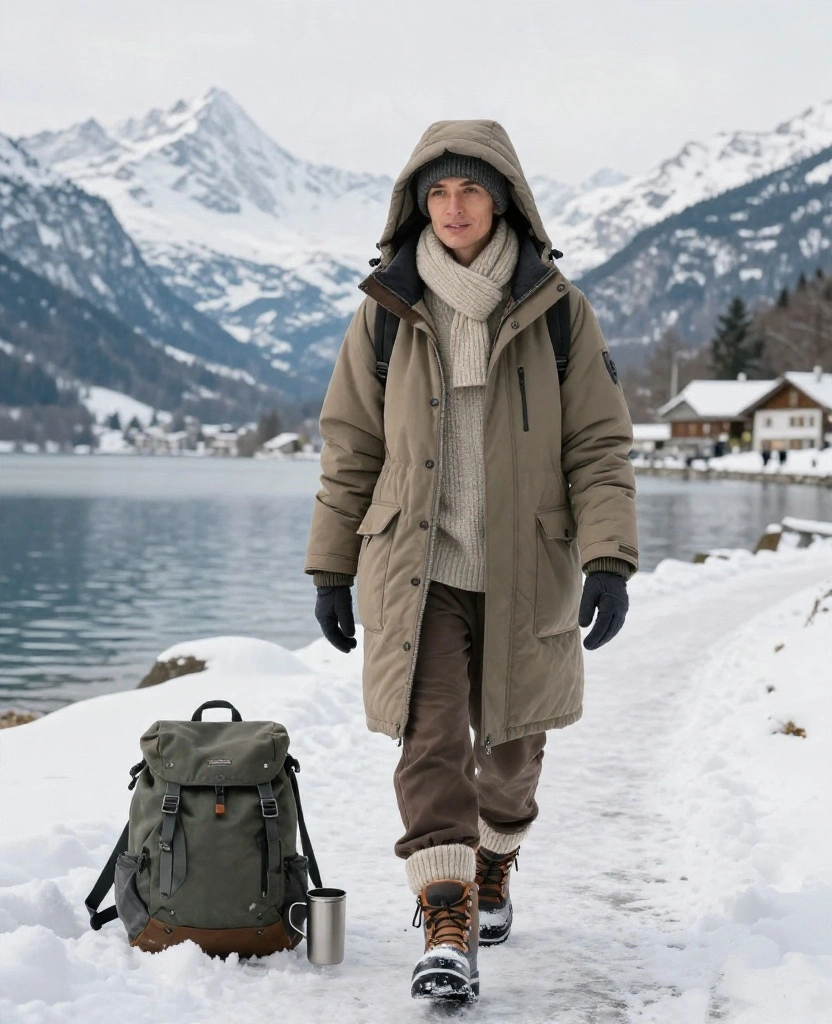
A warm parka protects you when the cold comes from every direction.
Its longer shape covers your back while you wait for trains, stand beside the lake, or pause at a windy viewpoint.
The right coat also leaves enough room for your layers without making you feel trapped.
Outfit Pieces:
– Insulated parka reaching the upper thigh or knee (down or synthetic fill)
– Water-resistant outer fabric in black, navy, olive, camel, or rich red
– Drawstring hood and high collar
– Two-way zipper with elastic cuffs
– Thermal top and medium-weight sweater
– Warm trousers, wool socks, and lug-sole snow boots
Styling Tips:
– Try the parka over every planned layer and raise your arms before packing it.
– Keep the fit relaxed through the shoulders, but avoid excess space around the waist.
– Match black or navy boots with a dark coat for a clean, longer-looking line.
– Let a bold red or cobalt parka lead while keeping your scarf and trousers simple.
– Use deep pockets for hand warmers, your phone, and a transit card.
A dependable parka makes the rest of your outfit easier to manage.
Wear it with trousers for sightseeing, or layer it over a sweater dress and thermal tights for a warmer dinner look.
Choose an Insulated Parka That Blocks Wind
Editor’s Choice


4. Slip a Packable Down Vest Under the Coat
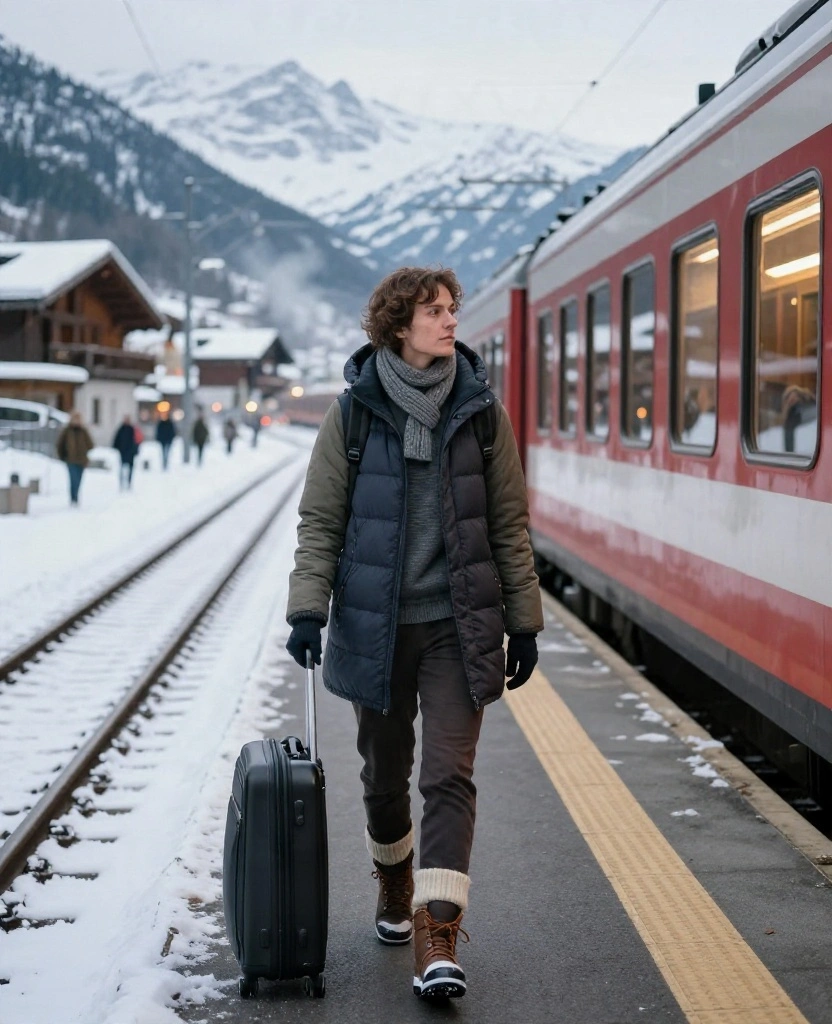
A slim insulated vest adds warmth where you need it most without restricting your arms.
It is useful when you alternate between walking, sitting on trains, and standing at snowy viewpoints.
Since it packs small, you can carry it for changing temperatures instead of wearing your heaviest sweater all day.
Outfit Pieces:
– Packable down or synthetic vest in black, navy, chocolate, or taupe
– Merino thermal top
– Thin wool sweater or long-sleeve fleece
– Roomy insulated parka or weatherproof shell
– Straight-leg trousers with space for thermal leggings
– Wool socks and insulated boots
Styling Tips:
– Wear the vest over your base layer and under the coat for a smooth three-layer fit.
– Pick a hip-length style for easy movement, or choose a longer cut to cover cold waist gaps.
– Keep the vest slim enough that your parka zipper closes without pulling.
– Use a dark vest beneath a lighter coat to create a neat, low-bulk contrast.
– Fold it into its pocket when entering a heated café, then shake it out before wearing it again.
This extra layer suits active trips, train rides, and cold pauses outdoors.
Remove it indoors, or wear it over a thin sweater with a shell when you want a lighter daytime outfit.
Slip a Packable Down Vest Under the Coat
Editor’s Choice


5. Keep a Weatherproof Shell for Snow and Drizzle
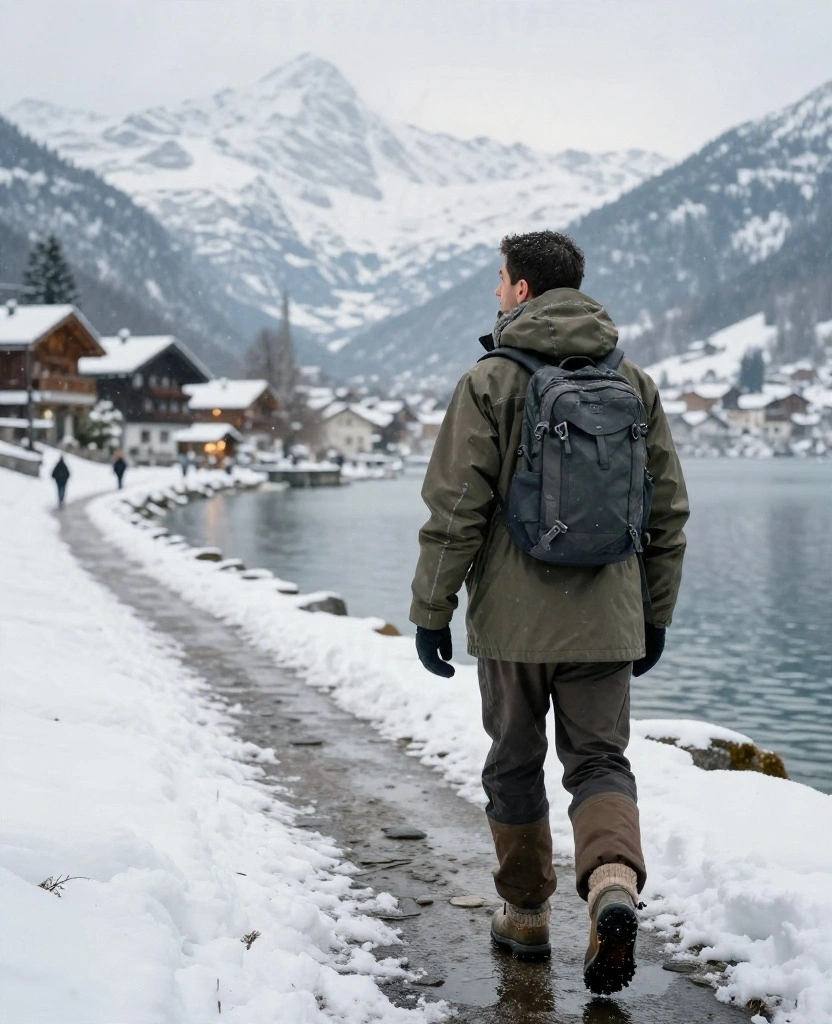
A weatherproof shell keeps damp snow and lakeside drizzle from reaching your warm layers.
It gives you protection without forcing you into one heavy coat during every outing.
Wear it for walking paths, train platforms, and changing weather around Interlaken.
Outfit Pieces:
– Two-and-a-half-layer waterproof shell in black, stone, navy, or muted green
– Adjustable hood that fits over a beanie
– Thermal top and thin fleece or merino sweater
– Packable insulated vest or light down jacket
– Water-resistant trousers or dark soft-shell pants
– Waterproof boots with sealed seams
Styling Tips:
– Check for taped seams, adjustable cuffs, and a high collar before buying.
– Layer the shell over slim insulation so the sleeves do not bunch at your wrists.
– Keep the hem below your mid-layer to stop wind and wet snow from entering.
– Use a light shell with colorful knitwear, or choose dark layers under a pale shell.
– Store it in your backpack’s outer pocket so you can put it on before drizzle begins.
A shell works well when you are moving and generating heat.
For long, still periods outside, replace the vest and shell with a longer insulated parka.
Keep a Weatherproof Shell for Snow and Drizzle
Editor’s Choice


6. Wear Warm Trousers With Room for Thermal Leggings
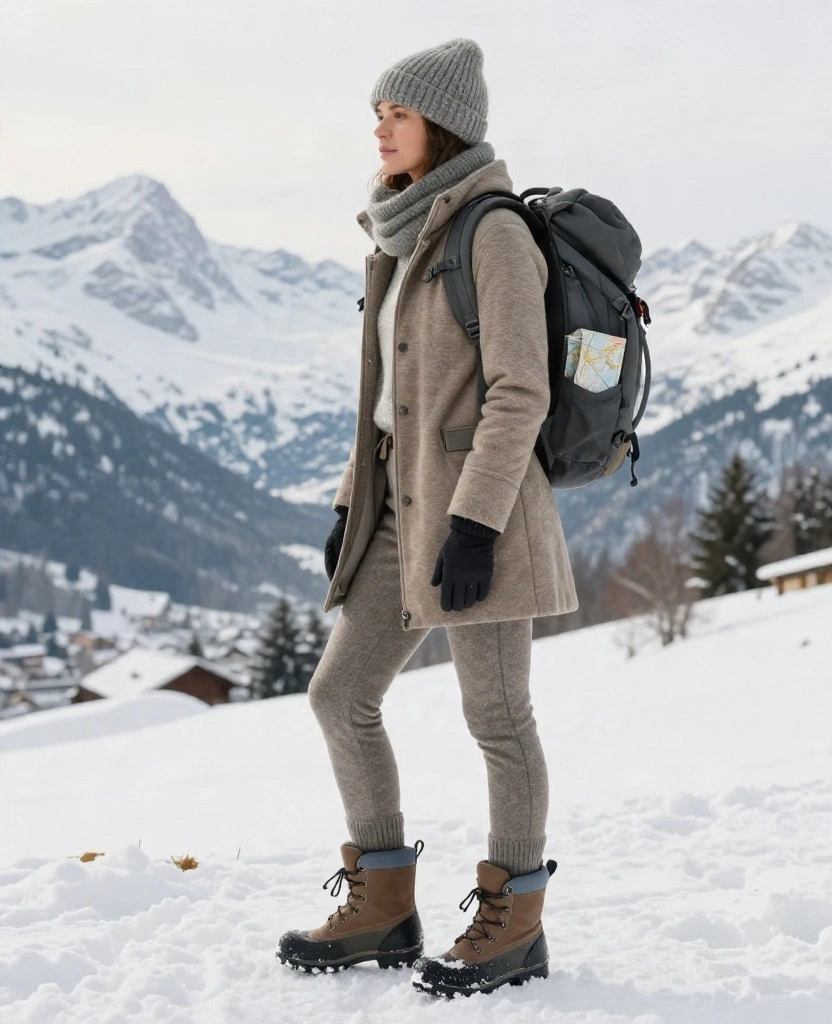
Warm trousers keep a winter day comfortable from the ground up.
Choose a pair that blocks wind, moves easily, and leaves enough space for thermal leggings.
This combination works for town walks, scenic trains, and short snowy routes without the bulk of full ski pants.
Outfit Pieces:
– Dark wool-blend trousers (straight or gently tapered fit)
– Lined soft-shell hiking pants for active days
– Thermal leggings in black or charcoal
– Cream merino sweater or fitted turtleneck
– Long insulated parka
– Tan, black, or chocolate snow boots
Styling Tips:
– Choose a high waist to close the gap between your base layer and coat.
– Check that the waistband stays comfortable beneath a backpack hip belt.
– Keep straight or tapered hems above the boot sole so they do not drag through slush.
– French tuck a sweater into high-rise trousers only when the fabric stays flat under your coat.
– Pair dark trousers with lighter knitwear for a clear, balanced winter silhouette.
You do not need technical ski pants for every plan.
Add waterproof over-trousers for sledding, heavy snow, or long hikes, and keep wool trousers for cafés and town sightseeing.
📹 Related Video: Men’s Winter Layering: Fleece Lined Tights Under Fleece Lined Jeans
7. Choose Weatherproof Boots With Real Grip
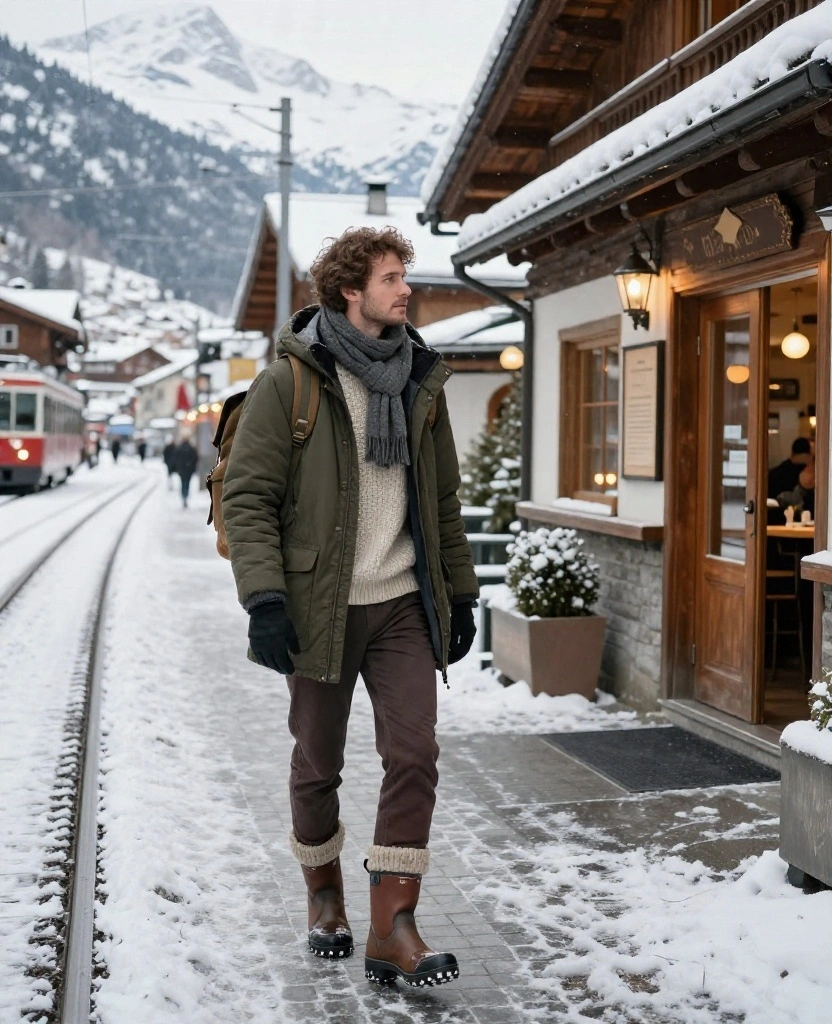
Your boots need to handle wet streets, packed snow, and slick pavement without slowing you down.
A strong rubber sole gives better grip than a smooth fashion boot, while insulation keeps your feet warm during long waits.
Choose a pair you can walk in comfortably from the first morning of your trip.
Outfit Pieces:
– Waterproof leather, treated suede, or insulated hiking boots
– Lugged rubber outsole with firm heel support
– Mid-calf shaft for deeper snow (ankle height for clear town days)
– Medium-weight merino hiking socks
– Straight-leg trousers or leggings tucked neatly inside
– Waterproof spray and spare laces
Styling Tips:
– Break boots in at home while wearing the socks you plan to pack.
– Leave toe space for movement, but keep the heel from sliding.
– Match black boots with nearly any coat, or use tan boots to warm up navy and cream layers.
– Tuck slim trousers into mid-calf boots, but keep wide hems outside with a clean break.
– Dry wet boots away from direct heat to protect leather and adhesives.
Reliable boots let you enjoy mountain paths instead of watching every step.
Pack clean indoor shoes for hotels or dinners, especially when your outdoor pair is muddy.
You might also like

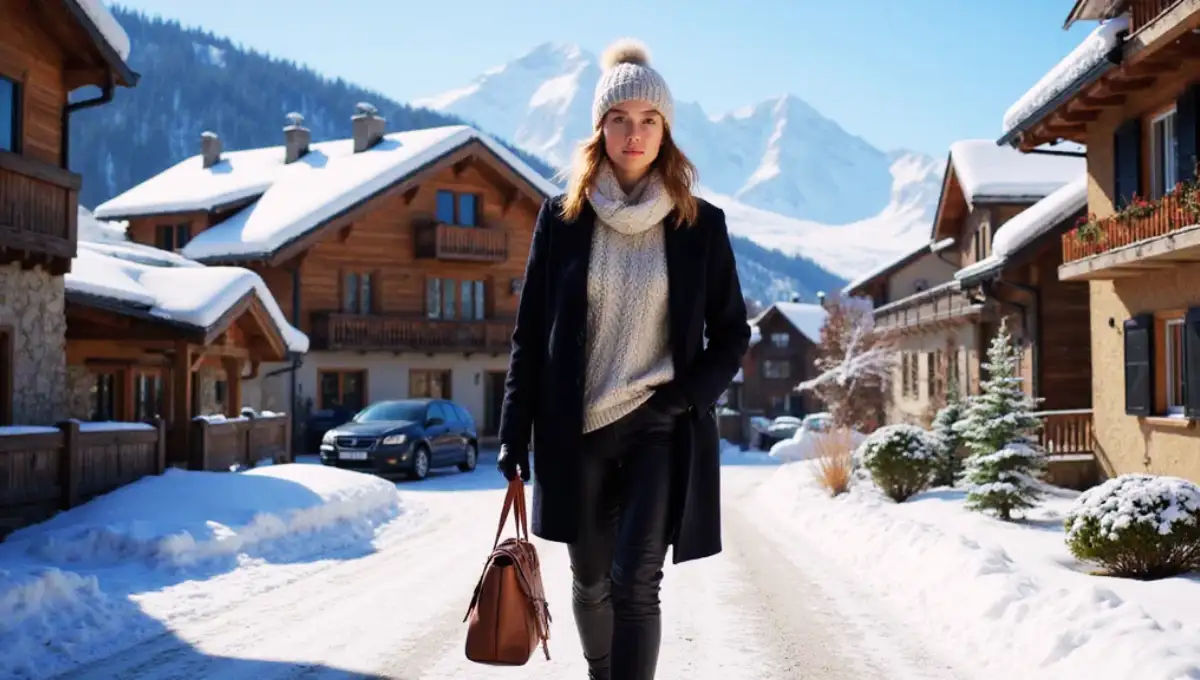
8. Treat Wool Socks as a Serious Layer
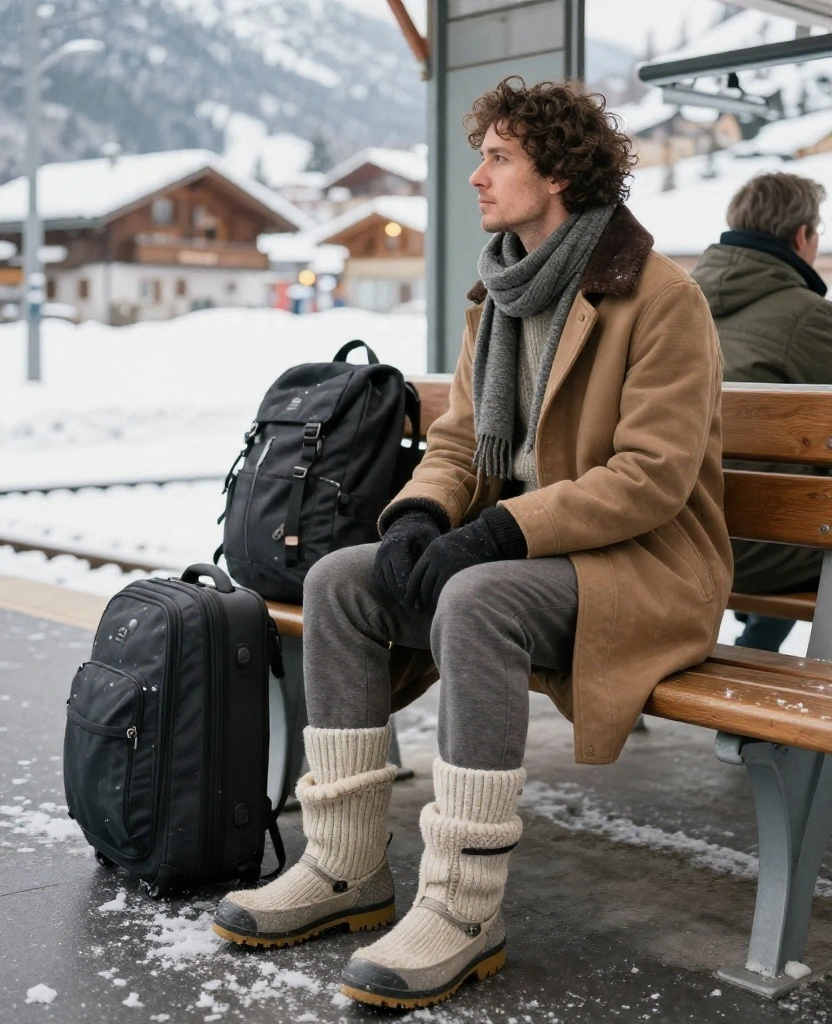
Warm socks can decide whether a full day outside feels pleasant or painful.
Merino wool moves moisture away from your skin while adding soft insulation inside your boots.
The best pair stays smooth, cushions your steps, and never squeezes your toes.
Outfit Pieces:
– Medium-weight merino hiking socks
– Cushioned heel and forefoot
– Smooth toe seam
– Crew or over-the-calf height
– Roomy waterproof boots
– Spare pair in oatmeal, gray, navy, or burgundy
Styling Tips:
– Match sock thickness to your boot fit instead of stacking two bulky pairs.
– Pull crew socks high enough to close the gap between trousers and boots.
– Choose a ribbed cuff that stays in place without digging into your calf.
– Use a small patterned cuff as a color accent when trousers sit above the boot.
– Change socks after a damp walk and let the used pair dry fully before wearing it again.
Pack one spare pair in your daypack for snowy routes or long travel days.
Wool socks work best with dry boots, moisture-wicking base layers, and trousers that keep snow away from your ankles.
9. Use a Large Wool Scarf for Warmth and Color
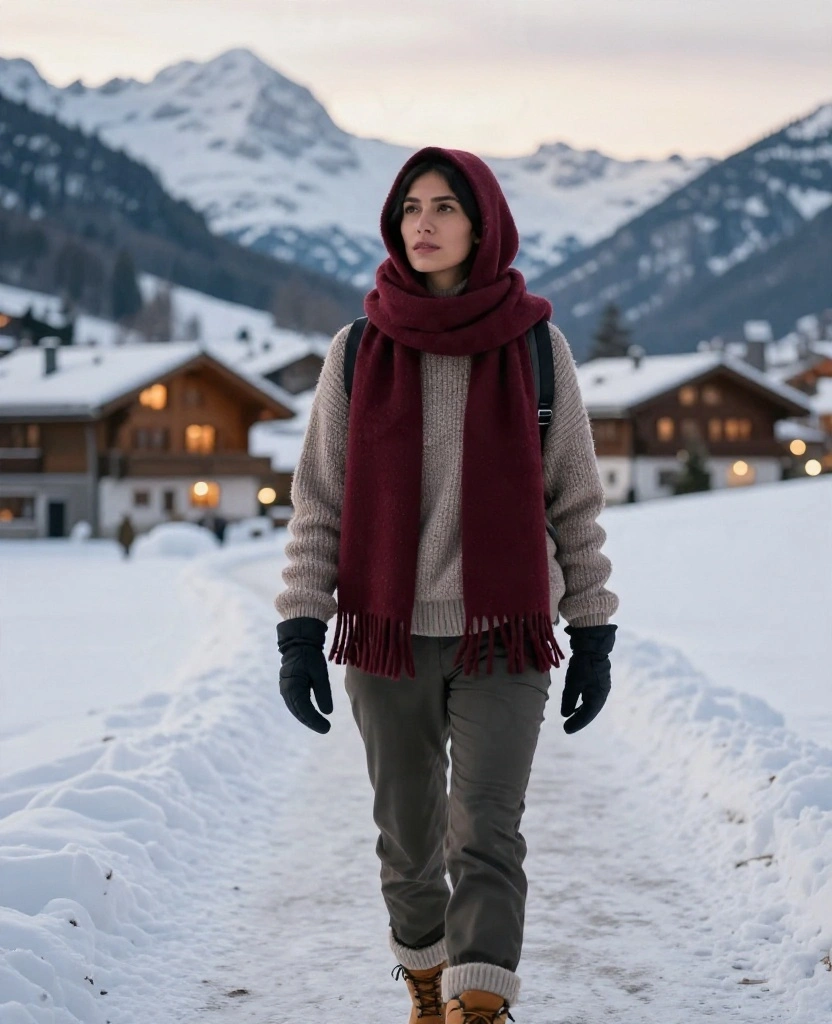
A wide scarf protects the gap around your neck when wind slips beneath your coat.
It also gives a neutral winter outfit color, texture, and a softer finish.
Choose one that works from a chilly lakeside walk to a warm restaurant without taking over your suitcase.
Outfit Pieces:
– Large merino, wool, or cashmere-blend scarf
– Long rectangular shape or compact blanket style
– Ribbed, brushed, or thick woven texture
– Charcoal coat with a rust scarf (or navy coat with icy blue)
– Cream sweater and dark trousers
– Slim neck gaiter for active plans
Styling Tips:
– Wrap the scarf once and tuck both ends inside your coat when wind rises.
– Use a loose loop indoors so you can cool down without removing the whole outfit.
– Keep the scarf longer than your coat collar for a relaxed vertical line.
– Let a mustard, rust, or red scarf brighten black boots and neutral outerwear.
– Avoid long loose fringe near train doors, lifts, or outdoor equipment.
A good scarf adds warmth without much weight.
Swap it for a neck gaiter on active days, or choose a plaid design when the rest of your outfit stays solid and simple.
10. Protect Your Hands With Liner Gloves and Mittens
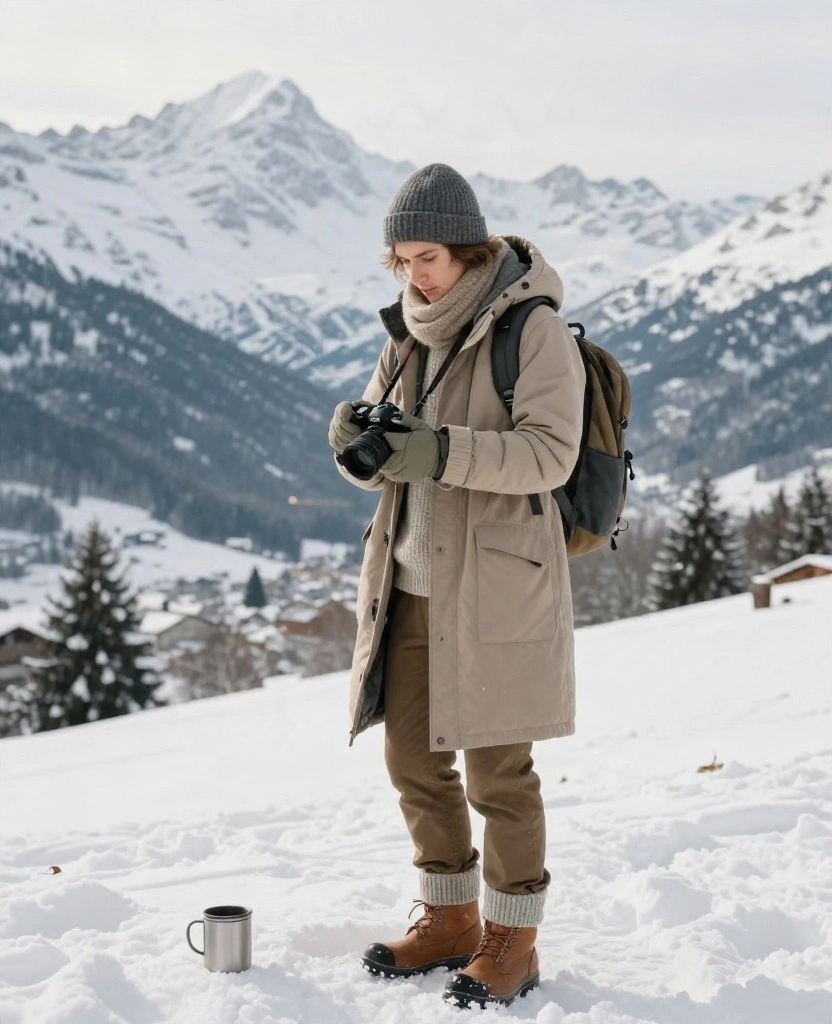
Cold fingers make travel tasks feel harder, from opening a train app to adjusting a backpack.
A liner-and-mitten system gives you finger control when needed and deep warmth when you stop moving.
It suits snowy viewpoints, boat decks, train platforms, and everyday town walks.
Outfit Pieces:
– Lightweight merino or synthetic liner gloves
– Touchscreen-compatible fingertips
– Insulated mittens in black, cream, red, or orange
– Waterproof outer gloves for sledding or heavy snow
– Wrist straps or long gauntlet cuffs
– Hand warmers stored in an inside coat pocket
Styling Tips:
– Wear liners under mittens so you can remove the outer layer without bare hands.
– Choose long cuffs that tuck beneath your coat sleeves and block snow.
– Coordinate gloves with your scarf or beanie for a simple, finished look.
– Use bright orange or red gloves when you want an accent that is easy to find.
– Carry a spare pair in a waterproof pouch if snow or rain is expected.
Mittens provide the most warmth when you stand still, while liners help with phone use and zippers.
Remove wet gloves indoors and let them dry naturally before your next outing.
11. Add a Beanie That Covers Your Ears
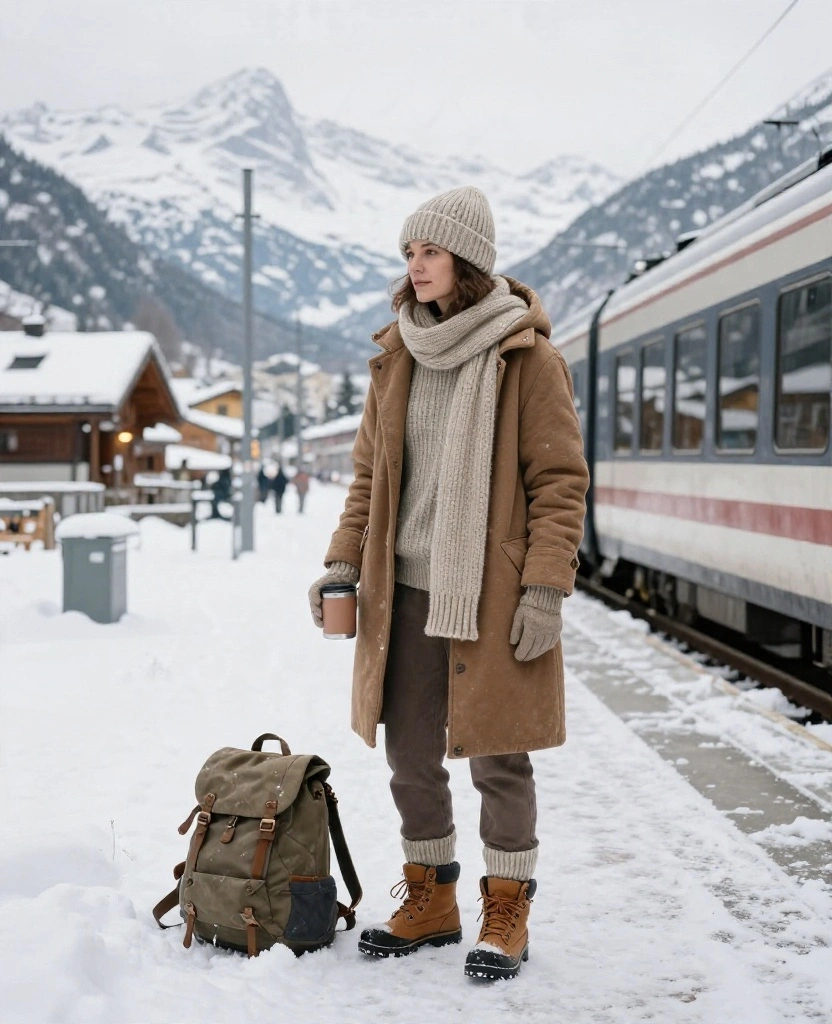
A warm beanie quickly changes how cold you feel outdoors.
It covers your ears during windy platform waits and keeps heat close when you pause at a high viewpoint.
A soft ribbed style packs easily and works with nearly every December coat.
Outfit Pieces:
– Merino, wool-blend, or fleece-lined beanie
– Folded cuff that covers the ears
– Deep crown for thick hair
– Charcoal parka with an oatmeal hat (or navy coat with forest green)
– Brushed wool scarf
– Optional pom-pom style for casual sightseeing
Styling Tips:
– Choose a close fit that stays in place without pressing your forehead.
– Pull the cuff fully over your ears before adding the hood.
– Use cream or oatmeal to soften a dark coat, or red for a bright travel accent.
– Keep the hat texture different from the coat, such as chunky ribbing with smooth nylon.
– Dry the beanie before storing it so you do not start the next morning with damp fabric.
Wear a simple watch cap under a hood for mountain trips, or choose a pom-pom version for relaxed town days.
Keep the rest of your accessories neat when the hat has a bold shape.
12. Try a Sweater Dress With Thermal Tights
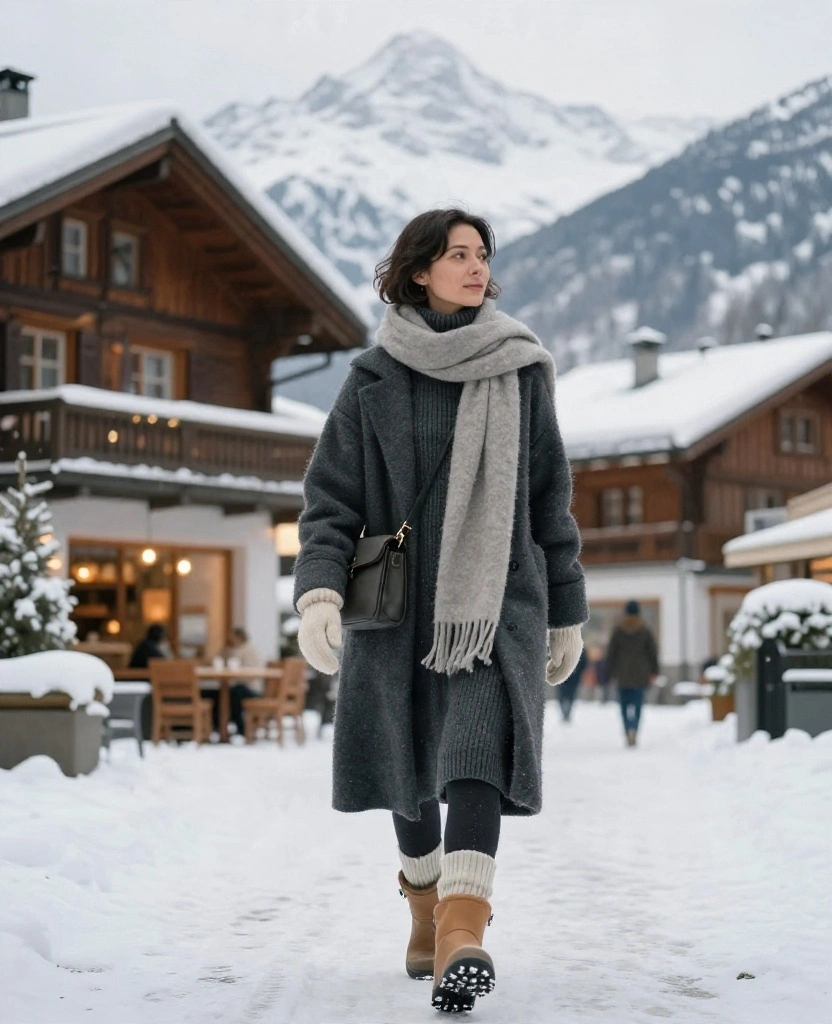
A sweater dress gives you a polished change from trousers while keeping the softness of a winter knit.
The secret is building it over genuine cold-weather layers.
With thermal tights, warm socks, and grippy boots, it works for cafés, dinners, and gentle town walks.
Outfit Pieces:
– Knee-length ribbed sweater dress in charcoal, oatmeal, chocolate, or deep red
– Fleece-lined or thermal tights
– Thin merino top beneath the dress (when the neckline allows)
– Long insulated coat at least as long as the dress
– Mid-calf waterproof boots
– Wide wool scarf and simple earrings
Styling Tips:
– Choose a straight or gently fitted shape that sits smoothly under your coat.
– Keep the dress hem inside the coat to protect the knit from wet snow.
– Add fitted shorts or base-layer bottoms beneath the dress for comfort on stairs and trains.
– Use a belt only indoors or under an open coat, since bulky layers can feel tight outside.
– Match boots to the coat for a longer line, then add color through the scarf.
This look suits a restaurant or chalet evening better than a deep-snow excursion.
Swap boots for low block heels indoors, or replace the dress with warm trousers for a more active day.
You Might Also Like


13. Build a Café-to-Viewpoint Outfit
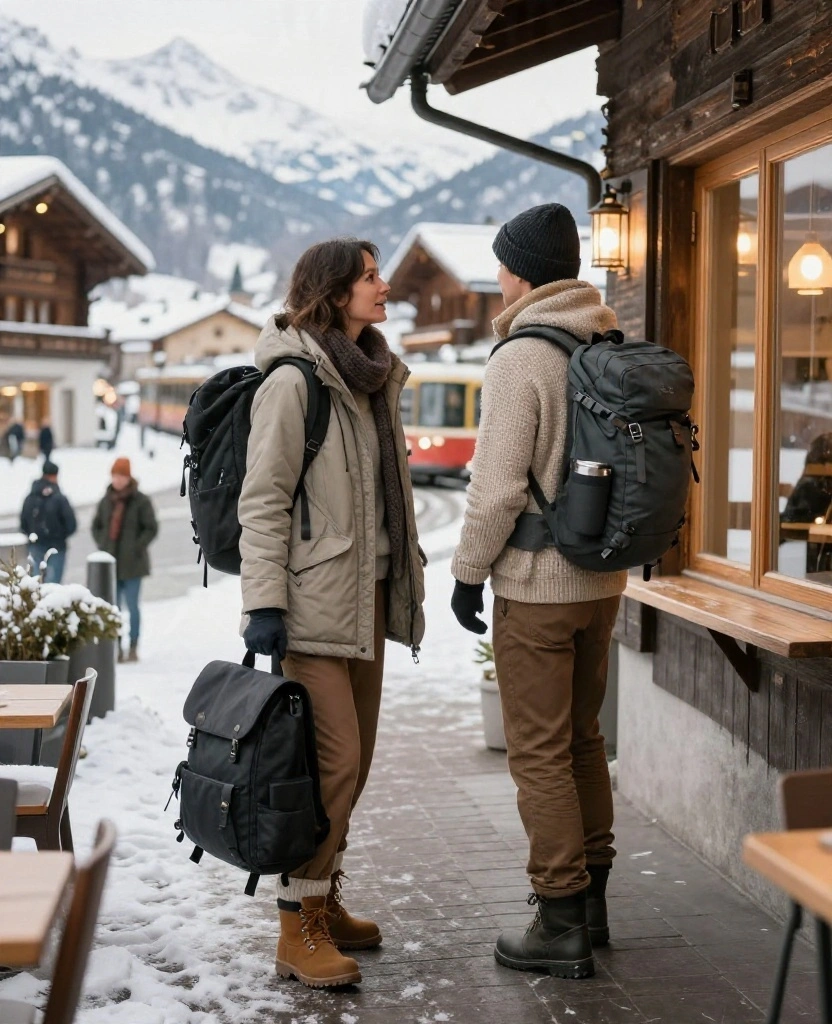
Interlaken days can move from a warm café to a windy mountain platform in minutes.
Build an outfit that opens and closes easily instead of relying on one oversized sweater.
Each layer should look tidy indoors and perform well outside.
Outfit Pieces:
– Thin merino thermal top
– Neat wool sweater in cream, gray, or burgundy
– Medium-weight insulated parka
– Packable insulated vest in black or navy
– Dark warm trousers with thermal leggings if needed
– Weatherproof boots, scarf, beanie, and gloves
Styling Tips:
– Keep the sweater slim enough to fit beneath the vest and coat without bunching.
– Open the parka and loosen the scarf indoors, but keep the base layer ready for the next stop.
– Store the vest in your backpack for long platform waits or high viewpoints.
– Use dark trousers and boots as a simple base, then add one bright accessory.
– Pack spare socks and liner gloves in case snow makes your first pair damp.
This flexible outfit moves from breakfast to scenic trains without a full change.
Replace the parka with a shell on active days, or switch the boots for clean indoor shoes at dinner.
14. Let Your Backpack Carry the Extra Layers
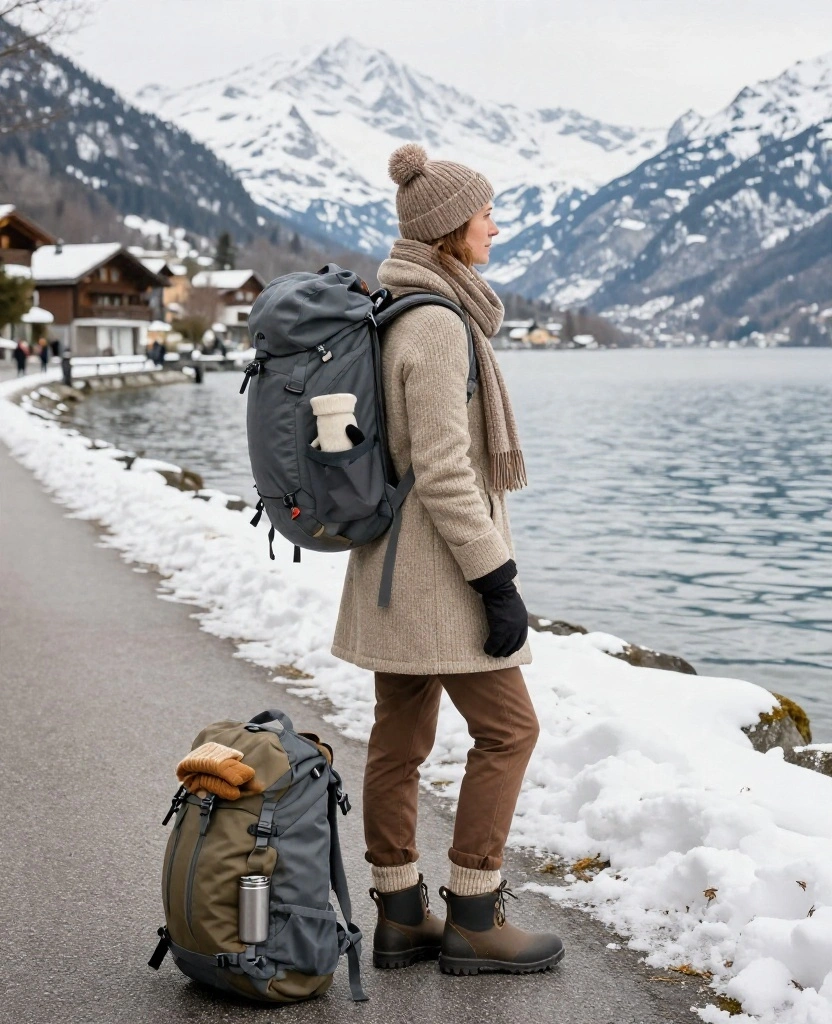
A useful daypack keeps your outfit flexible when the weather changes.
It gives you space for a shell, vest, scarf, gloves, and spare socks while leaving your hands free on snowy paths.
Choose comfort and weather protection over a tiny bag that cannot hold the layers you need.
Outfit Pieces:
– Weather-resistant backpack of about 18 to 25 liters
– Padded shoulder straps and optional chest strap
– Compact shell or insulated vest
– Spare wool socks and liner gloves
– Leakproof water bottle or insulated mug
– Portable charger, lip balm, tissues, and small waterproof pouch
Styling Tips:
– Keep the backpack close to your back so it does not pull your coat out of shape.
– Put wet-weather layers in the outer pocket for quick access.
– Use a waterproof pouch for socks, gloves, and electronics.
– Match a black, olive, or tan pack with your boots for a calm color story.
– Leave space for removed layers so you do not tie a scarf or vest around your waist.
A practical backpack becomes part of the outfit when it keeps every layer dry and organized.
Use a small crossbody bag inside it for dinner, or carry a lightweight tote for groceries and souvenirs.
15. Use a Simple Three-Layer System for Changing Weather
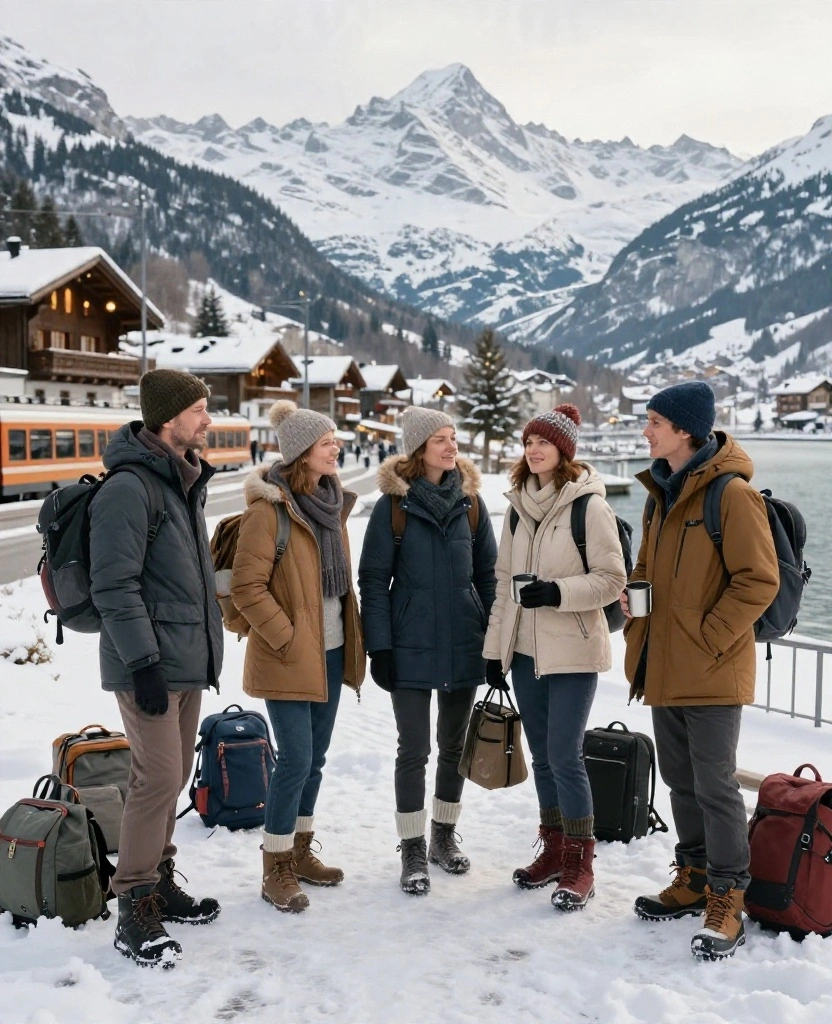
A three-layer system gives you control when Interlaken shifts from sunny streets to snowy viewpoints.
The base layer manages moisture, the middle layer holds warmth, and the outer layer blocks wind and wet weather.
Together, these pieces work for trains, cafés, mountain routes, and evening dinners.
Outfit Pieces:
– Close-fitting merino thermal top and optional thermal leggings
– Fleece, wool sweater, or slim insulated vest
– Waterproof shell or insulated parka
– Warm straight-leg trousers
– Merino socks and broken-in boots with traction
– Wool scarf, ear-covering beanie, liner gloves, and mittens
Styling Tips:
– Test every layer together before your trip by sitting, walking, and raising your arms.
– Keep the base layer smooth and tucked so the middle layer sits flat.
– Choose a relaxed coat fit that allows insulation without creating cold gaps.
– Use earthy neutrals for easy mixing, then add one accent such as a red scarf or blue hat.
– Remove the outer layer indoors first, followed by the vest or sweater if you still feel warm.
This system keeps your suitcase focused and your choices simple.
Swap a parka for a shell on active days, or trade trousers for a sweater dress and thermal tights when you want a polished dinner outfit.
Use a Simple Three-Layer System for Changing We…
Editor’s Choice


Conclusion: Warmth Makes Room for More Alpine Days
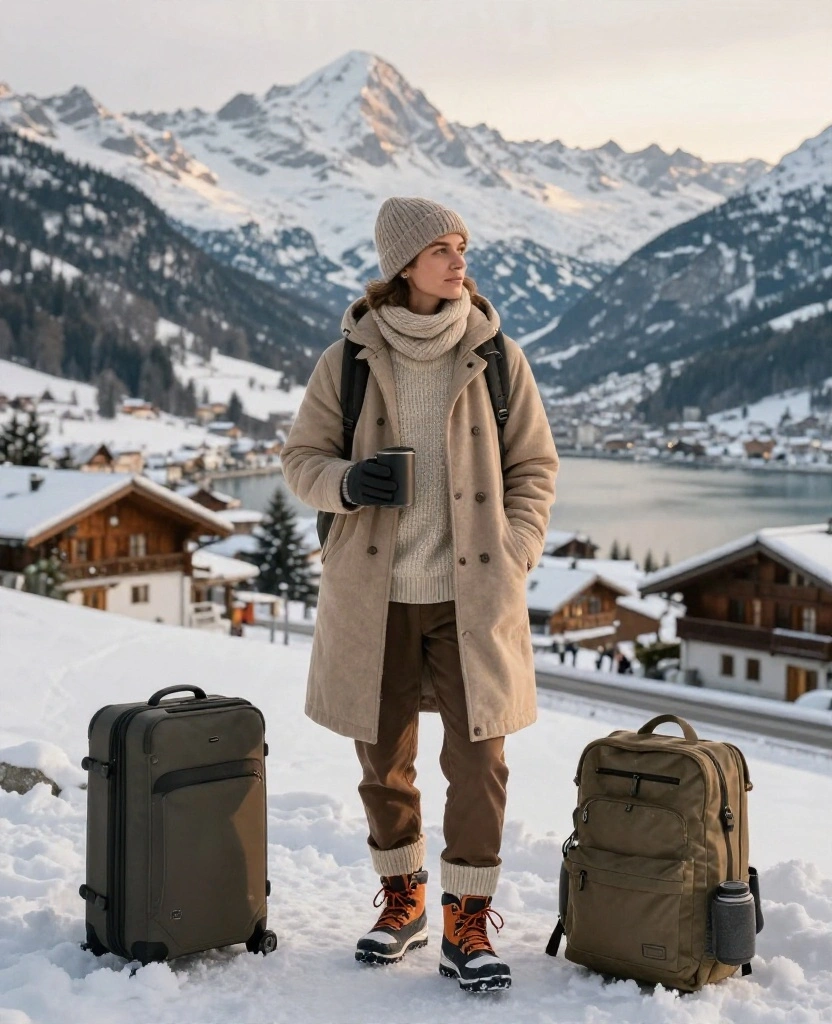
The best outfits for Interlaken in December are built for movement, changing weather, and long days outside.
Start with a thermal base, add wool or fleece, finish with a windproof coat, and give your feet, hands, neck, and ears the same careful attention.
With these practical winter layers packed, you can enjoy snowy streets, mountain trains, lake paths, and cozy cafés without letting the Alpine chill call the shots.
Note: We aim to provide accurate product links, but some may occasionally expire or become unavailable.
If this happens, please search directly on Amazon for the product or a suitable alternative.
This post contains Amazon affiliate links, meaning we may earn a small commission if you purchase through our links, at no extra cost to you.
Frequently Asked Questions
Q. How cold is Interlaken in December?
Usually around -3°C to 4°C (27°F to 39°F) in town. It is much colder at altitude, such as Jungfraujoch, where temperatures can fall well below -15°C with wind chill.
Q. What should I wear for the Jungfraujoch?
Full winter layers: thermal base, fleece, insulated jacket, warm hat, gloves, and sunglasses. The summit is far colder, windier, and brighter than Interlaken.
Q. What shoes should I wear in Interlaken in winter?
Insulated, waterproof boots with a deep tread. Pavements and lakeside paths can be icy, and slip-on ice cleats help on frosty days.
Q. Is it very snowy in Interlaken in December?
Snow is common but not guaranteed in town, since the valley sits at around 570 meters. Higher villages like Grindelwald and Wengen usually have more reliable snow.
Q. How much daylight does Interlaken get in December?
About eight hours, with sunrise near 8:10 a.m. and sunset around 4:30 p.m. The surrounding mountains can shade the valley earlier, so plan outdoor time for midday.

10 Stylish San Francisco Outfits for August That Will Keep You Cool and Chic!

10 Must-Have San Francisco Outfits for June That’ll Make You the Envy of Every Tourist!

10 Must-Have Outfits for San Francisco in May That Will WOW the Locals!
